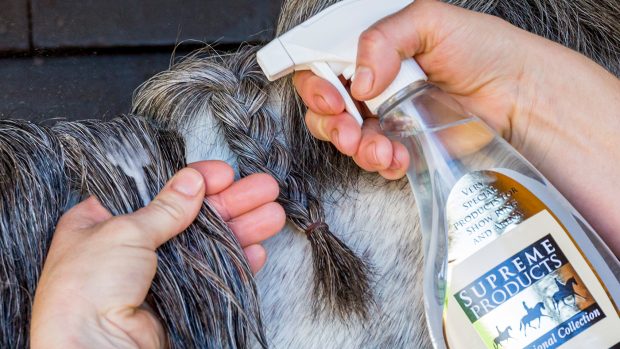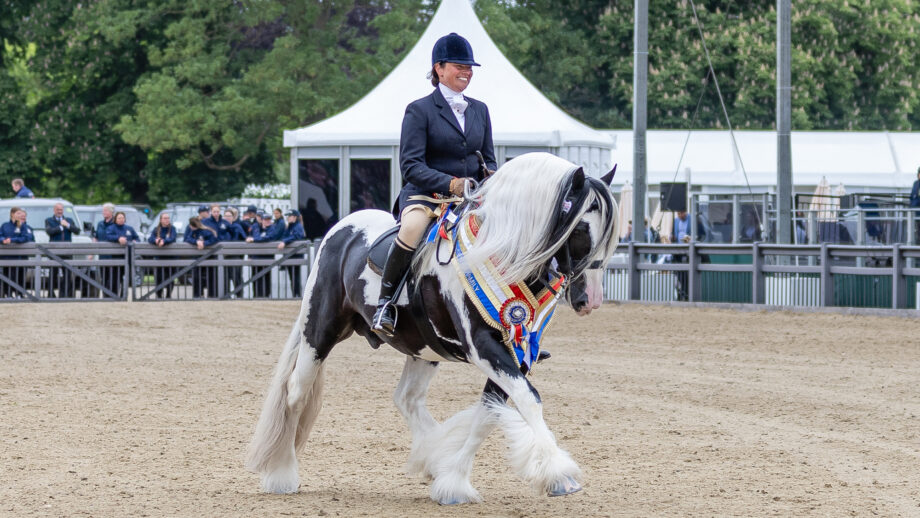
These quick and easy feather hacks have helped the team at H&H keep their horses spotless over the years
Whether you own a mountain and moorland, a traditional cob or a heavy, like many horse owners you spend a lot of time wondering how to keep your horse’s feather clean. It can seem like an uphill battle, as well as a thankless task. For one thing, you might spend half a day washing your horse’s legs with your best horse shampoo. Then, feather gleaming, you turn him out through a muddy gateway into a boggy field, and all your work is undone. What’s the point?
If this sounds like you, don’t stress. As someone plugged in to the Horse & Hound network, I can bring you the very best advice from the inside. And trust me, these owners, breeders, competitors and producers really know what they’re doing.
So, if you want to know the processes and products to use that will not only get horse feather clean but also keep them that way, read on.
Five steps for clean feather
1. Use purple shampoo on white feather
For that initial feather wash, make sure you opt for a powerful shampoo (like this one on Amazon). As products editor Franchesca Slack told me, purple and blue shampoos are a must for whitening. “They will remove brassy tones in the hair,” she says. “Make sure you use warm water to lift dirt better”.
Our former showing editor Alex Robinson tested the best whitening shampoos on the market and she picked out the Supreme Products Blue Shampoo as her favourite.
While it can be tempting to reach for washing up liquid, it’s not ideal for feather. “It cleans well but it dries the hair out,” says showing editor Bethan Simons.”
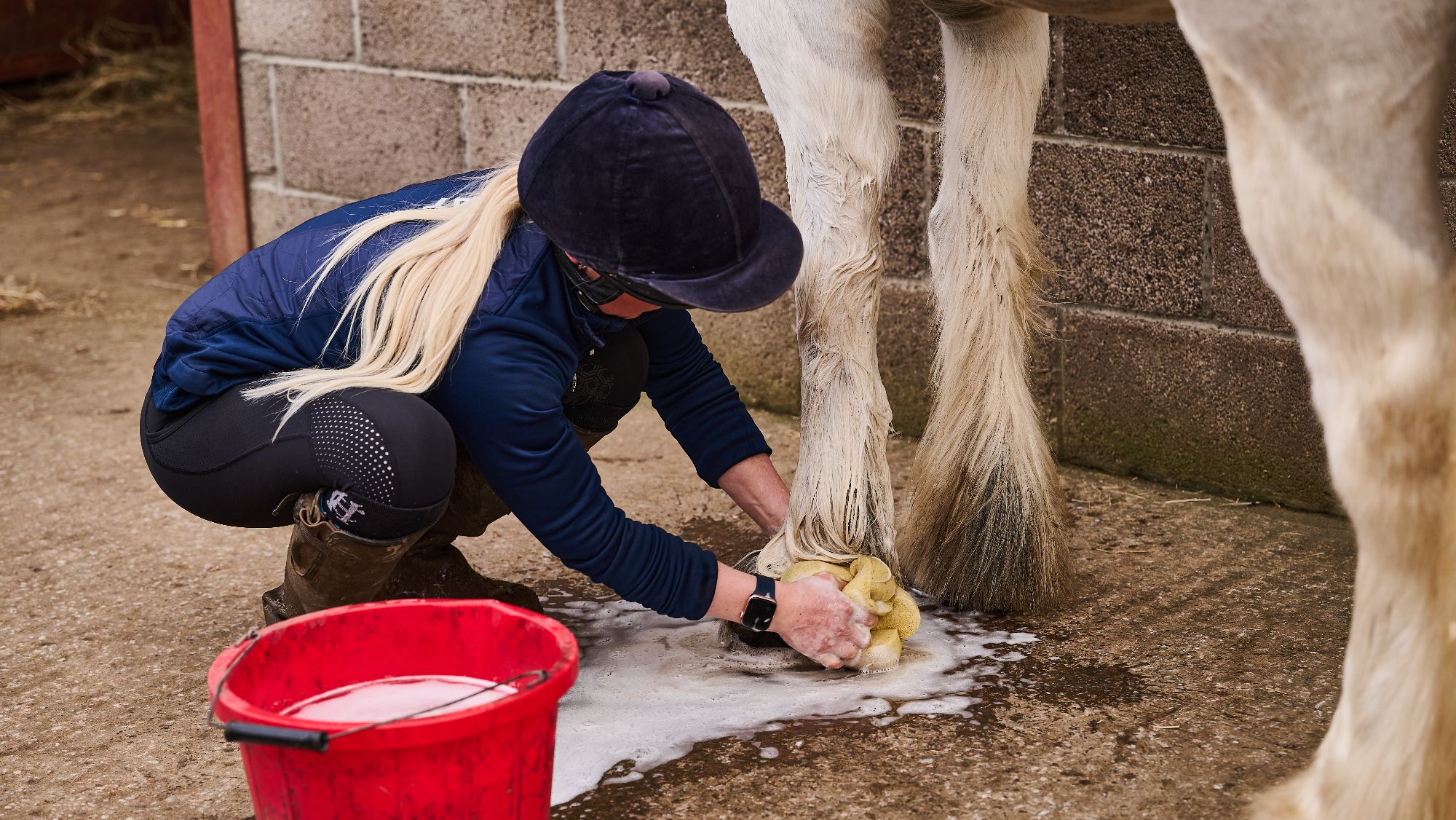
Use warm water to lift stains. Credit: Phillip Barker
2. Don’t forget to condition
“We use hair masks for humans on the feather to keep them well-conditioned,” says Bethan. There are plenty of horse-specific conditioning shampoos on the market too, however, such as the Carr & Day & Martin Gallop, which comes recommended by deputy website editor Georgia Guerin.
3. Treat stains as they come up
Franchesca added that keeping on top of feather staining is important, but you don’t need to spend hours and hours bathing your horse. Instead, use one of the best dry shampoos to spot clean and remove stains from the legs. Fran particularly recommends this one from Absorbine and this one from Supreme Products.
“It’s tricky through the wetter months, but try to keep your horse out of the mud and wet as much as possible,” adds Bethan. “It damages the hair and can stop them having good cover over the hoof.
“Using turnout pens or the school for periods where you can will help,” she adds.
4. Prevent stains setting in
Keeping horse feather clean is much easier when you apply one of the best coat shine sprays or pig/showing oil, such as this oil product on Amazon that Bethan loves. “I get through loads of this!” she says.
It works by making the hair shaft smoother and, therefore, harder for mud to stick.
“In the summer especially, I apply it at night so that it soaks in and doesn’t contribute to any burning during the day,” adds Bethan. She also makes sure to apply to oil to dry legs.
“Through winter, I wash my horse’s legs off at night and oil them before turnout to stop mud sticking.”
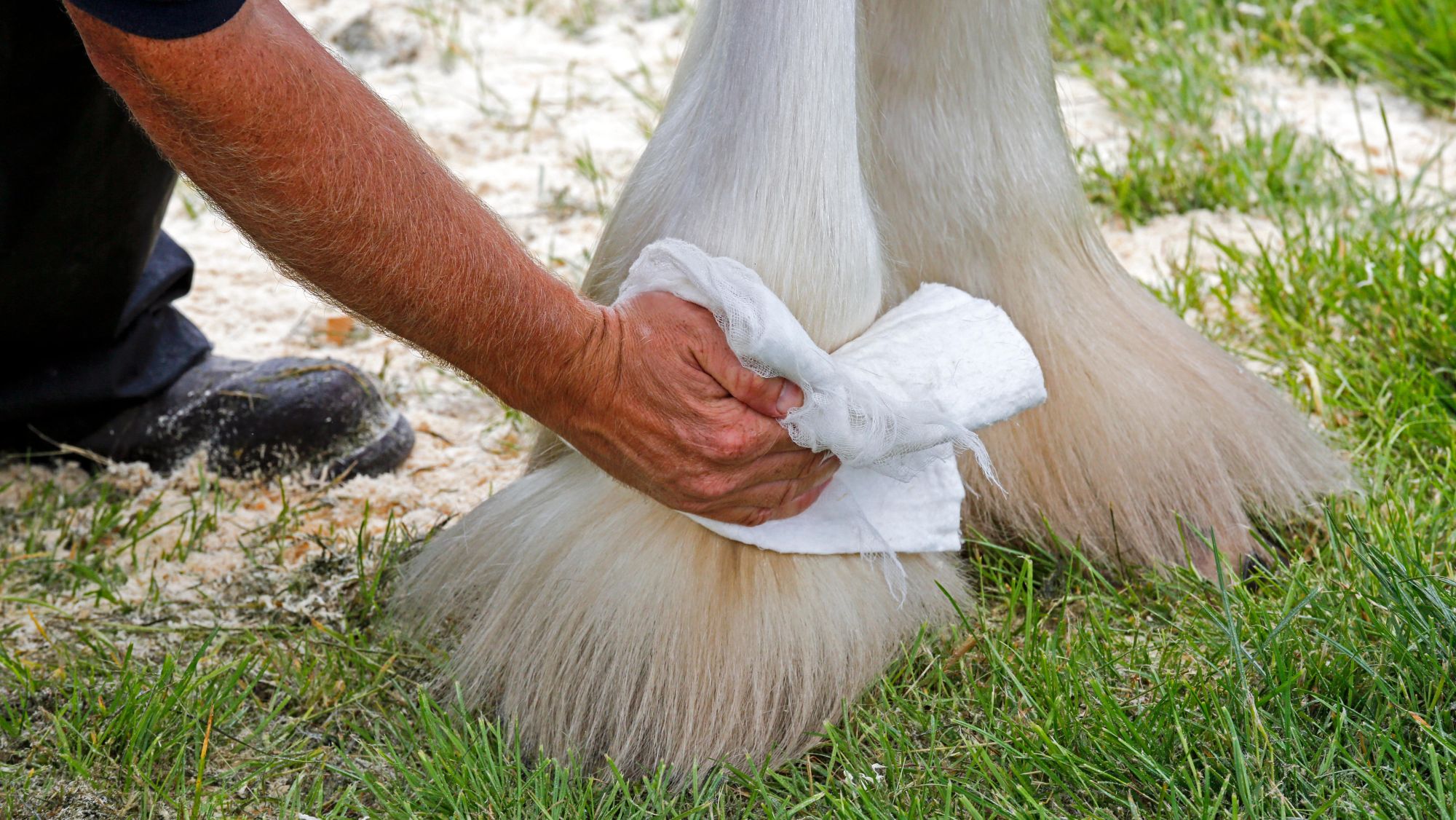
Spot cleaning will help you keep on top of your horse’s feather. Photo: Findlay/Alamy
5. Add a little touch-up
To achieve brilliant white legs, apply a little chalk – this will neutralise yellow areas and give a brilliant finish.
“It’s best to use a paste [like this one] rather than a powder; they’re easier to apply and I find them less wasteful,” Bethan advises. “Or, take a chalk product like this show preparation powder, mix it with a little water and make a paste yourself.”
How to keep horse feather clean overnight
I spent more than fifteen years keeping white legs and feather clean for shows. Here’s what I learned:
- Stable your horse if possible on a deep, clean bed
- Skip out as late as possible the night before your show to minimise the chance of poo stains
- Bandage your horse’s legs – but ensure the legs themselves are washed, conditioned and dry beforehand. Bandaging damp legs increases risk of skin irritation and other skin problems, but can also cause any missed dirt at the root of the hair to be absorbed by the bandage, compromising the clean feather
- Use clean bandages so there’s no risk of transferring dirt
- If you plan to bandage the legs, avoid using too much oil or coat shine after washing them, as the bandages may slip. However, you can apply it above the bandages at the knees and hocks
- If you can, keep the bandages on while travelling and fit travel boots over the top
- Take a spot-cleaning kit with stain removers and chalk in my grooming bag for touch-ups before my classes
- For unlimited access to advice on how best to care for your horse, subscribe to the Horse & Hound website

19 shampoos that will get your horse whiter than white

14 dry shampoos and stain removers that will leave your horse gleaming
13 hacks and tips to make winter horse care easier
6 frequently asked showing questions – and the answers you need to help you stand out
Best barrier creams for protection against wet and mud
A competitor’s guide to the 2026 HOYS showing qualifiers

Subscribe to Horse & Hound magazine today – and enjoy unlimited website access all year round