How researching your former racehorse’s past can put you on the best possible footing for the future
Former racehorses are often accompanied by a “digital footprint” in terms of racing history, but speaking to grooms, jockeys, former owners and breeders can really help shape your relationship going forward

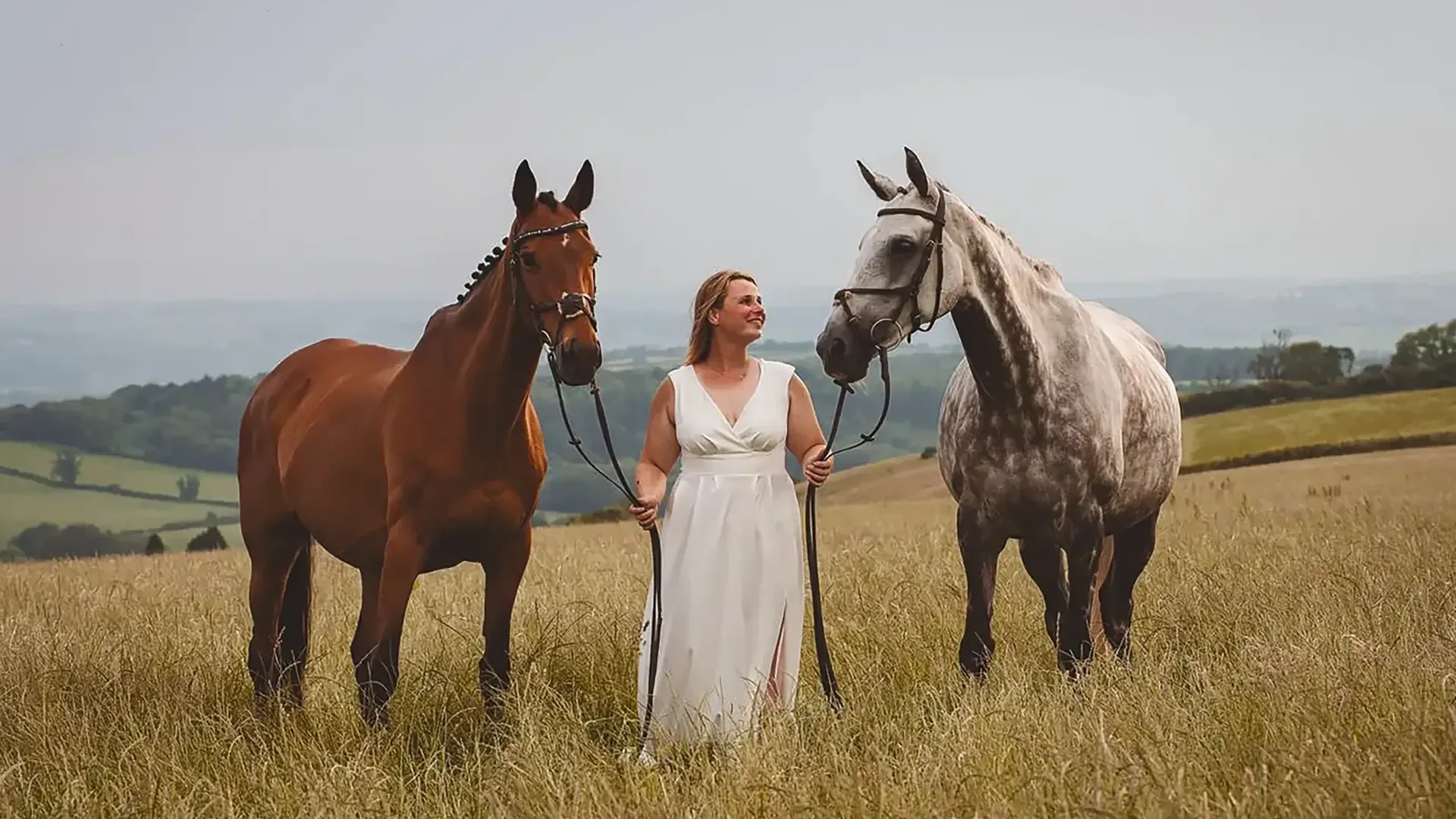
Buying any horse can feel like a leap into the unknown. What you know about their past often depends on the knowledge – and sometimes honesty – of the person selling them to you. With one notable exception: racehorses.
“Compared with many other breeds and riding horses, former racehorses lead the way on traceability and visibility of their racing careers and lives before leaving racing,” explains Philippa Gilmore, head of welfare operations at Retraining of Racehorses (RoR).
“However, the amount a new owner may discover can vary enormously depending on the horse in question; a high-profile horse, for example, may leave a huge digital footprint with a lot of searchable information, compared to an unraced horse that spent a short time in training.”
Haidee Cambrook has owned and ridden several former racehorses and agrees there is a wealth of potential information about them.
“I have spoken to grooms, jockeys, owners and even breeders,” she says. “What has surprised me most is how many people genuinely want to know how these horses are getting on in their new lives and are willing to help.”

When Haidee uncovered some of her mare “Bambi’s” quirks from her former life, it “definitely made sense”, she says
One of her ex-racehorses, Munstead Moonshine (Bambi), was given to her after suffering a suspensory injury. At that point, Haidee knew very little about her, but what she was able to uncover helped her manage the mare’s return to ridden work.
“I was particularly interested in understanding her behaviour. I discovered that she had been a bit of a nuisance to get on and could be unpredictable when ridden, which definitely made sense when I found that out.”
Never miss out on the latest happenings in the equestrian world
Another of her former racehorses, Ioupy Collonges (Youpy), had enjoyed a more illustrious career.
“I know considerably more about him because of his racing success,” Haidee says. “He was sold for £165,000 just three years ago. I wanted to find out more about the horse behind the racing record, what he’d been like at home and especially what he was like to ride.”
Haidee’s detective work revealed him to be more straightforward than Bambi.
“There don’t seem to be any particular quirks. He was simply described as a lovely horse to have around.”
“He previously sold for £165,000, but I wanted to find out about the horse behind the racing record”
HAIDEE CAMBROOK
It was while she was researching a horse she rode for someone else that Haidee made her most surprising discovery yet.
“We found out that he’d actually broken his leg while racing, undergone surgery and then returned to racing,” she says. “We had no idea about this when he was bought, so finding out about it completely changed our understanding of his history.”
Where to start your research
There are various ways to dig into a racehorse’s past, and websites such as the Racing Post and At the Races are a good starting point, as Philippa explains: “If the horse has raced there will be information available about its races, the racecourses it ran on, distances, the type of going, finishing position and more.”
Haidee uses what she gleans from these sites to dig deeper.
“From there, I get a little bit nosey,” she says. “I look up photographers who covered their races, as you can often find photographs showing the horse being paraded and racing.”
Similarly, sales records and catalogues have helped her trace a horse back through its early life. Next, she tries social media.
“Facebook groups such as Racehorses, where are they now? are particularly useful. I usually put up a simple post asking whether anyone remembers the horse, whether they worked with them day to day, or even if they simply recognise the name.”

“You can get a feel for their personality,” Sophie Pinkett says. Knowing a horse’s racing form can help you understand how they’ll take to a new job, like hunting
Can AI help researching racehorses?
When Cecilia Dixon started looking into her ex-racehorse’s background she found a surprisingly helpful resource in artificial intelligence (AI).
“I wanted to find out everything I could about Phoenix’s history. People on Facebook mainly found information about his placings, but ChatGPT did better. It found out that he’d fallen in one race, and had also raced on the Flat, where I’d believed he was purely a pointer. AI was awesome for me; you just keep asking it to do more digging.”

Cecilia Dixon found an unusual ally in ChatGPT when digging up Phoenix’s backstory. “You just ask it to keep digging,” she says
Cecilia is at the beginning of her retraining journey with Phoenix, but says what she’s learnt has already been helpful.
“It allowed me to work out how best to approach it,” she says. “He needs gentle and quiet training with real reassurance as he’s nervous, and I wonder if that relates to the fall.”
Watch their races
Another valuable resource is the footage of a horse’s races. Sophie Pinkett works in racing and currently has three ex-racehorses of her own. She says studying their races can give fascinating insights.
“You can get a feel for if they’re a front runner. If you want to take them hunting, they’re going to really like being up front, no point in trying to hang back and shut gates,” she says. “Or one that prefers to hang back in a race, out hacking they will need a confident companion. You can get a feel for their personality in that respect.
“Also, you can tell if they ran mostly left- or right-handed, which might mean you have issues getting left or right lead.”

Sophie enjoying cross-country with one of her former racehorses
Even an unraced thoroughbred might have videos from their training days. Footage that Sophie managed to get from her mare’s previous trainer provided useful insights.
“He sent videos of her on a racecourse gallop. It was interesting to see how she responded to that, and how much work the jockey was having to do,” Sophie says. “It was obvious from the video that he was having to work hard to get her to work at pace. Now it’s the same with her showjumping, she bounces and goes up rather than forwards, which means she fits four strides in where it should be two.”
Ultimately, however, Sophie finds trainers and previous owners are the richest sources of information. One of her current horses is the French-bred steeplechaser Guivinec, formerly owned by the Noel Fehily Racing Syndicate and trained by Anthony Honeyball.
“One of my first questions was about a weird quirk Guivinec has – he Spanish walks,” she says. “Noel told me he’d always done it. And sure enough, when Guivinec took my friend’s daughter to her prom, he did it there too.”

Sophie Pinkett’s steeplechaser Guivinec. Carrying out extensive research “means you’re not asking completely alien questions of the horse that they don’t understand” while retraining, she says
Being able to fire off questions to Noel and Anthony helped Sophie work out where to start with retraining.
“I asked what he’d done, and he’d done quite a bit of flatwork and poles, so when I took him to RoR camp I knew what I could expect. It means you’re not asking completely alien questions of them that they don’t understand.”
Another of Sophie’s ex-racehorses turned out to be a favourite of the trainer’s wife, and Sophie found out she’d done quite a bit of flatwork with him.
“It was handy to have that knowledge,” she says.
She says it’s also worth finding out as much as possible about what they were like on the yard as this can help with managing an ex-racehorse: “Do they have any vices, were they ever left on their own?”
She continues: “I found out that one of my mares had never gone out on her own, so when I first started bringing her back into work, I went out with a friend’s trusty cob. As she got her bearings, I’d start trying to get her to go ahead by half a head on the way home and gradually built it up from there.”
Try their trainers
When Lynne Lewis was looking at an ex-racehorse called Waterloo Sunset as a potential horse for her 12-year-old granddaughter, being able to talk to his former trainers was a big part of the appeal and provided invaluable reassurance.
“I asked to know everything, whether it was good or bad,” she says. “If you’re prepared for the quirks you can deal with it. Waterloo has taken a long time to bend or learn to move off the leg but because we were prepared for that it was easier. I would say to anyone, if you can get hold of the previous trainer, it’s really worth it.”
“I asked to know it all, good or bad. If you’re prepared for the quirks, you can deal with them”
LYNNE LEWIS
As Philippa points out, undertaking this detective work will help you build an understanding of what their life was like before, which helps with their transition onto the new one.
“Retraining is about understanding the environment they have been used to, getting to know the horse they are today, and giving them the time and support they need to adapt to a different life,” she says.
“It’s important to appreciate just how significant the transition may be. A horse coming straight from a racing yard may be racing-fit, accustomed to a specific routine, used to a particular diet and may not yet have had a let-down period or any retraining.”
Haidee says research is vital.
“I’m by no means an expert, but I have found the whole experience incredibly interesting and quite eye-opening,” she says. “You sometimes think you know your horse, but then you discover a story from their racing days that explains a behaviour or characteristic you have noticed yourself.
“Speaking to previous owners, trainers, jockeys and riders gives you a completely different perspective on a horse.”
- For unlimited access to advice on how best to care for your horse, subscribe to the Horse & Hound website

Catherine Welton graduated from City University in London with a degree in journalism, and now combines a successful career as a TV producer with her first loves, writing and horses.