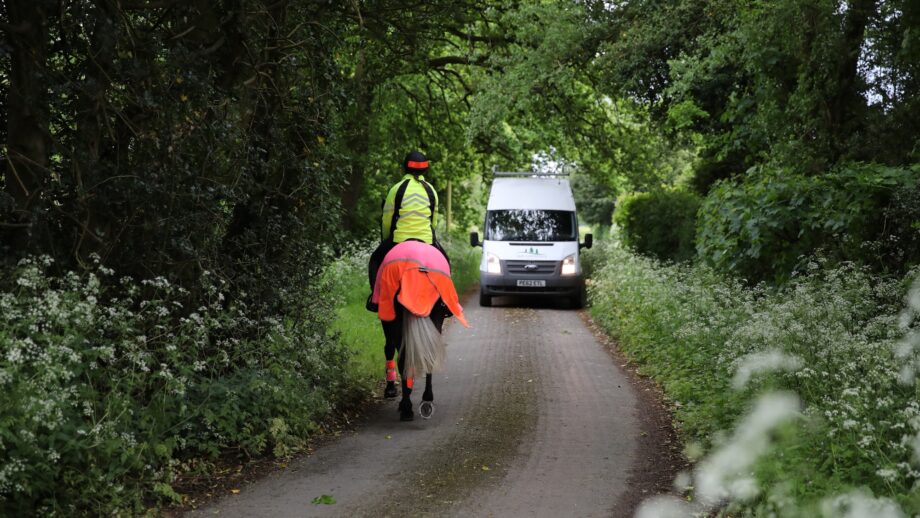
After almost 10 years of sustained campaigning, MPs have united in parliament to set out why horses and riders must be better protected on Britain’s roads – and the Government says it is listening.
On 14 January 2026, almost a decade after the British Horse Society (BHS) launched its Dead Slow campaign, Newbury MP Lee Dillon led a debate calling for stricter requirements on horse and rider road safety. Mr Dillon has been working for change since young racehorse Knockalla was killed on the road in his constituency in 2024.
“I’m pleased to have secured this debate and grateful for the opportunity to raise an issue that has, for far too long, not received the attention it deserves,” Mr Dillon said. “It is a timely debate, because last week the Government published its new road safety strategy, stating that ‘every individual deserves to feel safe and supported’ on our roads’.
“Unfortunately, for many horse riders across the country, that aspiration does not reflect their lived reality. While the Government’s strategy does reference horse riders in some places, alongside other vulnerable road users, this is not consistent, and there is no specific mention of their safety.
“The issue goes far wider than a single document. Building a stronger foundation of road safety education, with clearer rules and guidance, is essential to ensure that all road users understand how to behave safely and responsibly when encountering horses on the road.”
Mr Dillon shared the most recent BHS statistics, showing that 3,118 incidents were reported to the BHS in 2024, including 58 horse fatalities and 80 human and 97 equine injuries. A total of 33 MPs spoke, supporting Mr Dillon’s efforts and raising a wide range of related issues.
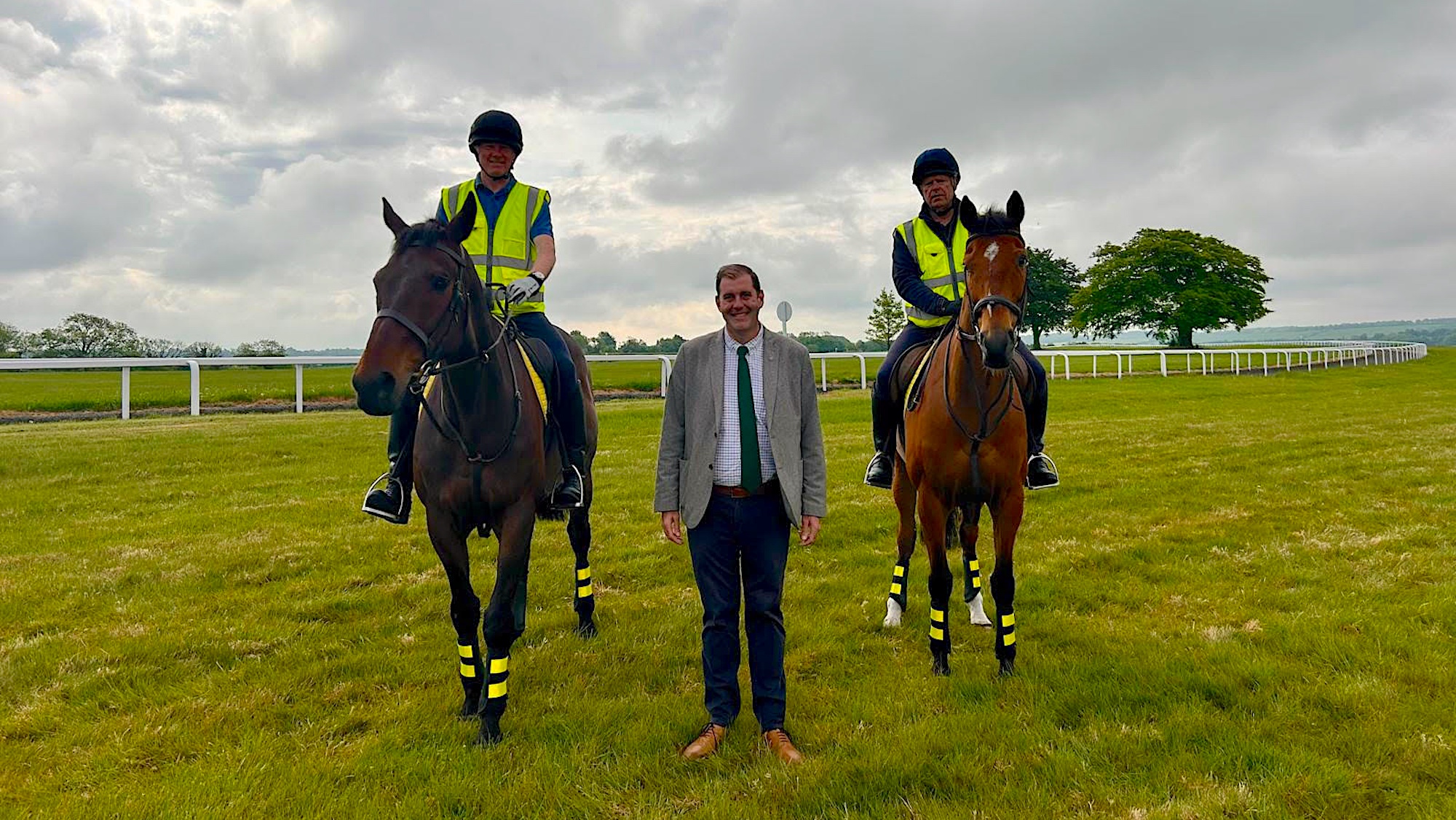
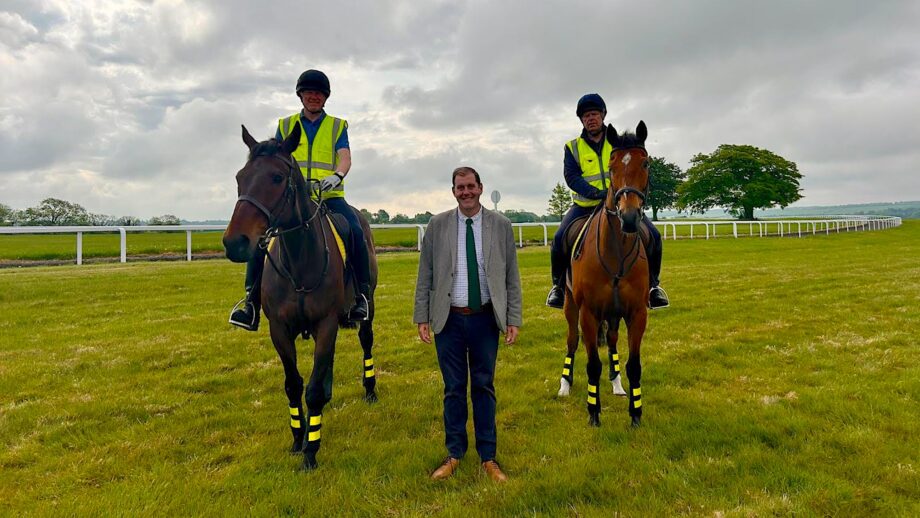
MP Lee Dillon supported last year’s awareness ride
“It’s important to emphasise how significant this debate is,” said Winchester MP and equine vet Danny Chambers. “It is not a niche issue. During my career as a horse vet, I have stitched up and euthanised more horses that have been hit by cars than I can remember – they get broken legs and their owners are injured. This is a very regular occurrence for vets.
“Just this morning in Winchester, a horse was hit by a car and had to be euthanised. This is not a niche problem, nor is it an unusual occurrence, so I fully support the action that my hon friend has taken in securing this debate.”
Mid Cheshire MP Andrew Cooper and Melksham and Devizes’ Brian Mathew said passing horses safely should be included in driver training, with which Mr Dillon agreed.
“The hierarchy of vulnerability introduced in 2022 is important in establishing who are the most vulnerable on our roads, but the Highway Code could go further and say ‘must’ go at 10 mph rather than ‘should’,” he said.
“Last September, I introduced the Road Traffic (Horse and Rider Safety) Bill. Through that presentation bill, I called on the Government to strengthen the Highway Code guidance for passing horses and improve driver education so motorists better understand horses’ behaviour and the potentially devastating consequences of their actions. Those changes would raise awareness among all road users and provide greater safety and reassurance when horses are ridden or pulling vehicles or carriages.”
Mr Dillon said the Government’s road safety strategy “missed some relatively straightforward opportunities to better protect horses and riders”.
“The strategy announced that the Ministry of Justice will consult on a new victims’ code,” he said. “I welcome that, but it raises an important issue. Under current law, horses are classed as personal property, which means that when one is killed or fatally injured in a road traffic collision, compensation is largely limited to financial loss.
“I have recently been contacted by Cathryn from Leeds, a long-standing horse rider and solicitor who supports people who have suffered serious injuries from horse accidents. She highlights the psychological trauma experienced by injured riders as a recurring theme, which is often compounded by guilt, grief and gratitude that the horse took the main impact and saved the rider from even greater harm. The current legal framework significantly restricts recognition of that emotional distress. I urge the Government to use the consultation on the new victims’ code to consider how horse riders and owners who lose horses can be properly recognised in that framework.”
Bridleways
St Ives MP Andrew George asked the Government to review bridleway capacity, so riders can avoid roads more, and Mr Dillon agreed, citing lack of council funding to spend on off-road access. The issue of Forestry England’s charging for equestrian access to publicly owned woodlands was also raised; Mr Dillon said “the Forestry Commission should work with all relevant groups to make open access as easy as possible”.
“The road safety strategy also announces the establishment of a new road safety board,” he added. “Given that horses and riders are among the most vulnerable of road users, will the Minister commit to ensuring that an equestrian representative organisation, such as the BHS, is included on that board?”
The Government was urged to make horse and rider road safety training mandatory for companies that operate large vehicles, and to consider national use of initiatives such as Leicestershire Fire and Rescue Services’ “Virtual Insanity Experience”, which invites drivers who have passed horses unsafely to experience the effects of this in a virtual reality setting.
Mansfield MP Steve Yemm highlighted the dangers of out-of-control dogs on the roads, giving the example of a ridden horse in his constituency who fractured all four legs when he was chased onto a road. South West Devon MP Rebecca Smith highlighted the number of ponies killed on Dartmoor roads, and asked whether councils could be “incentivised to think about roads used by riders when they set speed limits and road policies”. The fact off-road riding is “often overlooked” in planning decisions was also made.
MPs asked the Government how much has been done to ensure drivers are aware of the Highway Code changes and cited the need for councils to have funding to improve safety.
MP Jack Rankin spoke of an incident in his Windsor constituency last year when a mare was killed by a car travelling at 80mph.
The horse-human bond
“So often, the horse comes off worse, suffering the full force of a collision and often saving their rider in the process,” he said. “It is clear to anyone who hears [the rider] and many others talk about their beloved horses that we are dealing with a truly unique connection between human and sentient animal. That connection should be reflected in how horses are treated on our roads, in culture, in law and in practice. They are not inanimate objects; they are our friends.”
In response, roads minister Lilian Greenwood said it is clear more awareness is needed of the Highway code changes, adding: “As set out in the [road safety] strategy, we are considering options to improve the safety of both riders and their horses. We will work with stakeholders such as the BHS as we undertake that work. We will also continue to encourage safer road user behaviours in order to improve safety for all vulnerable road users, including horse riders.”
She added that she noted the point of equestrian representation on the national road safety board and “will consider what further work we can do” on driver training, and take account of the question of speed limit guidance, which is being updated.
“A number of matters raised today fall outside my remit,” she said. “I will ensure my Defra colleagues are alerted to the concerns raised regarding the provision and management of bridleways, and uncontrolled dogs.”
Cross-party support
BHS director of safety Alan Hiscox, who has been leading the Dead Slow campaign for almost 10 years, told H&H he was delighted by the cross-party support for the issue.
“There was an atmosphere in the room, not only of interest but of tangible support, from MPs across the political spectrum,” he said. “I was very pleased with the response, and this shows we are an effective lobbying group.
“I was pleased how many MPs were there who I’d been to see previously; some for the wrong reasons, when a horse has been killed or seriously injured in their constituencies, some who have invited me as constituents had asked them to contact the BHS. If you’ve got an issue and want us to help, we can; we can open doors people think are closed. This shows what we’re doing is worthwhile and is having an impact.”
Mr Hiscox said “the proof will be what happens next”, but he spoke to Ms Greenwood and hopes he will be on the national road safety board, as a “voice for riders and carriage drivers”.
He added: “We’re 10 years in; it’s been slow progress and sometimes tortuous but to get this – it is moving forward, in bite-sized pieces. It’s beginning to have an impact on the safety of horses and riders on the roads.
“And the whole catalyst for this was the report made about Knockalla. I went to see Gemma, the rider, we planned the awareness ride to Windsor, invited Lee Dillon, and he then submitted motions and secured this debate. If Gemma hadn’t let us know about Knockalla, this might have passed us by. An awful thing to happen but in memory of Kockalla, of Blaze killed in Windsor, of Angel in Essex – this is for them.”
Real-life experiences
Mr Dillon told H&H he wanted to thank all those riders who contacted their MPs ahead of the debate; many mentioned the numbers in their speeches.
“The volume of engagement, and the powerful real-life examples shared by riders and carriage drivers, played a vital role in ensuring that horse and rider road safety was taken seriously in Parliament,” he said. “I’m grateful for such an engaged, thoughtful, and constructive debate.
“The personal case studies raised during the debate brought home the very real risks people face on our roads every day, and the strong cross-party support gives us a solid foundation to push for better awareness, clearer guidance and safer infrastructure for horses and riders.”
Mr Dillon’s equestrian road safety bill was due to have its second reading on 16 January but as the house was not sitting, it has been adjourned until 27 February.
- To stay up to date with all the breaking news from major shows throughout 2026, subscribe to the Horse & Hound website
You may also be interested in:
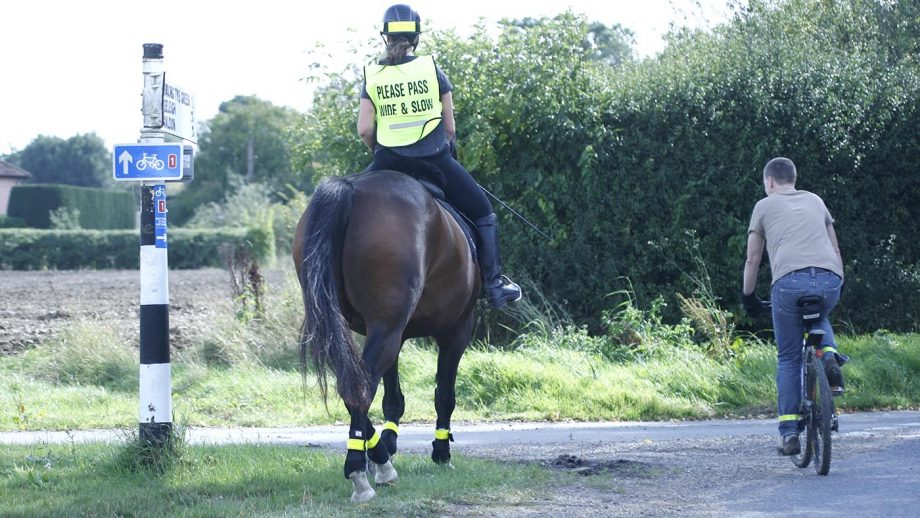
Concern as horses and riders ‘largely overlooked’ in new national road safety strategy
Owners of horse killed on hack campaign in her memory – as riders not mentioned in new national road safety strategy
‘Don’t underestimate your impact’: riders urged to act as MPs set to debate equestrian road safety
‘British equestrians deserve better’: MP takes horse road safety campaign to parliament

‘This is for all the horses’: group rides from Lambourn to Royal Windsor to raise awareness as too many horses still die on our roads
Subscribe to Horse & Hound magazine today – and enjoy unlimited website access all year round