Preparing a mare for breeding starts months before she sets foot on the stud. Breeding a horse is expensive, time-consuming and full of variables you can’t control, but getting the preparation right can make the difference between a smooth season and a costly one.
One commercial breeding operation estimates that the cost of breeding a horse and keeping it to three years old sits at around £15,000 – before backing and production costs are added.
Breeding soundness examinations
Whether you’re sending your mare to stud for natural covering, taking her to an AI (artificial insemination) centre, or having your vet inseminate her with chilled semen in her own stable, the pre-breeding checks she needs are essentially the same. The mare doesn’t have to travel for the disease risks to apply – semen and equipment do – and a vet performing AI at your yard will want to see the same negative swabs and certificates that a stallion stud would ask for.
Before any mare is bred, she needs what vets call a breeding soundness examination – essentially a full pre-breeding MOT. It’s a catch-all term for the checks your vet runs to confirm she’s healthy, free from infection, and physically capable of conceiving and carrying a foal.
It says nothing about her quality as a riding horse or her temperament; it’s purely a check on her reproductive health. Done properly and in good time, it protects your mare, any other horses she may come into contact with, and your investment.
Why swabbing matters when preparing a mare for breeding
Venereal bacteria – those passed between horses at covering, or carried on semen and equipment during AI – are the single biggest infectious risk to a breeding operation. They can quietly reduce fertility, are awkward to treat, and one of them, the organism that causes contagious equine metritis (CEM), is notifiable in the UK, meaning vets are legally required to report it.
A confirmed case can shut down movement on and off a stud entirely.
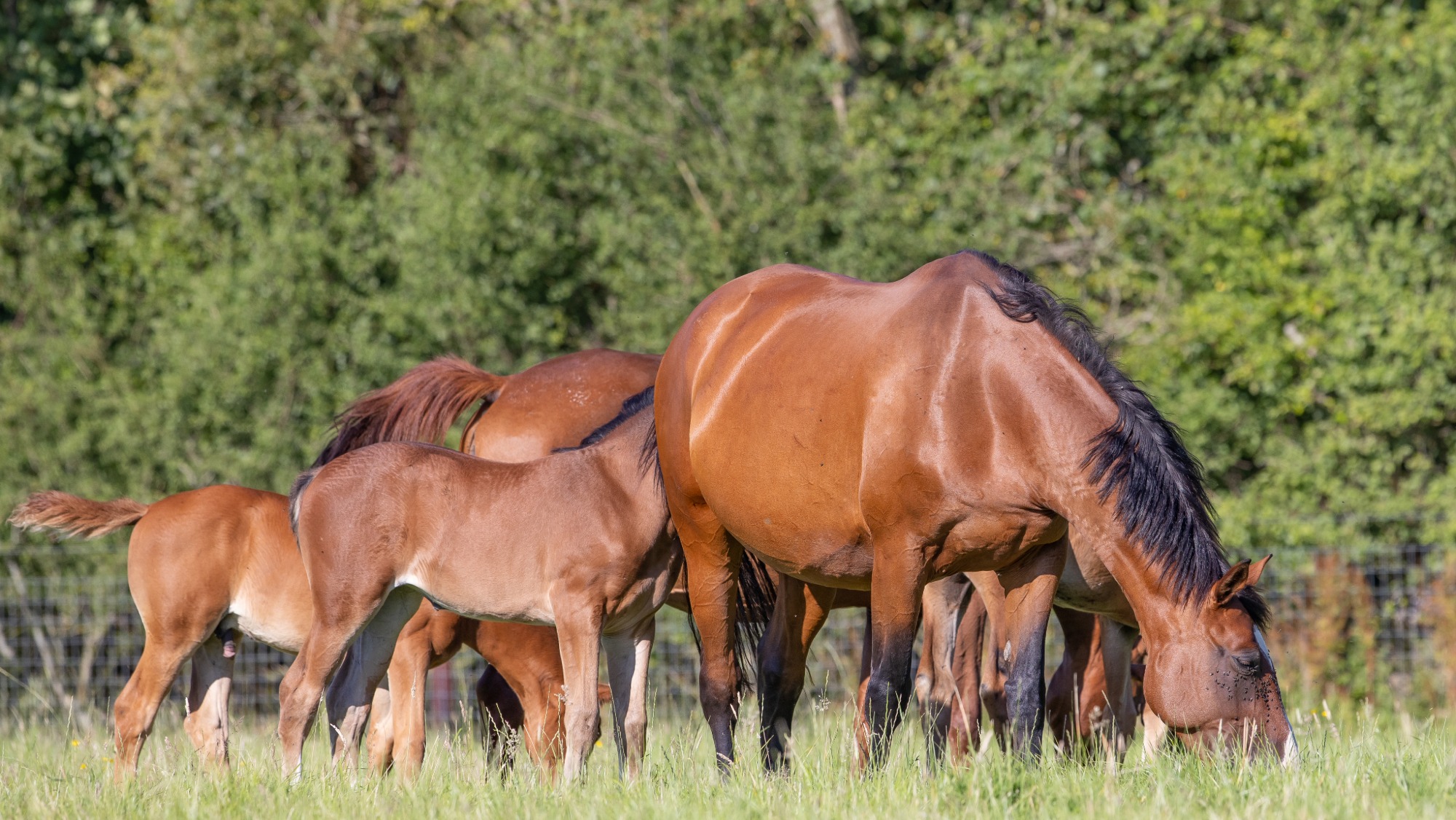
AI is now the standard route for most non-Thoroughbred breeders – but the pre-breeding checks don’t relax just because the mare stays at home. Credit: Elli Birch
Three bacteria are of particular concern: the CEM organism itself, and two others called Klebsiella and Pseudomonas. All three are covered by the Horserace Betting Levy Board (HBLB) annually updated Codes of Practice – voluntary guidelines that apply to all breeds of horse and pony, not just thoroughbreds, and the standard reference that most reputable studs and AI vets will expect mares to have been tested against.
Mares and stallions can carry any of them with no outward signs at all, which is exactly why swabbing isn’t optional.
Swabs are taken by your vet from the clitoral area (and, separately, from the lining of the uterus when the mare is in season). They’re then tested at an HBLB-approved laboratory by bacterial culture, PCR (polymerase chain reaction), or both. PCR, which detects bacterial DNA directly rather than waiting for a culture to grow, is now widely used alongside traditional culture.
A few practical points worth knowing:
- Swabs must be taken after 1 January of the breeding season in which the mare will be covered or inseminated. A negative result from the previous year doesn’t carry over.
- Clitoral swabs can be taken at any time and from pregnant mares, including before foaling.
- Endometrial (uterine) swabs must be taken when the mare is in season, because the cervix needs to be open.
- Allow at least seven days for results. If something positive turns up, you’ll need time to treat the mare and re-swab before breeding goes ahead.
- Get the testing done in good time. If your mare is travelling, that means before she leaves home; if she’s being inseminated at the yard, it means before the semen arrives. Either way, no certificate means no breeding.
Once everything comes back clear, the mare is issued with a laboratory certificate confirming her status for the current season – the BEVA mare certificate is the standard document. No reputable stallion stud will cover a mare without seeing it, and no reputable vet will inseminate one either.
EVA and the wider disease picture
Equine viral arteritis (EVA) is the other infection every breeder needs to think about. Mares should be blood-tested for EVA after 1 January and within 28 days of covering, and stallions must also be EVA-free – a point that matters just as much when you’re using imported semen as when you’re sending your mare to a UK stud.
The 2019 UK outbreaks were a reminder that the virus doesn’t only affect Thoroughbreds, and recent disruption to vaccine supply has made surveillance and biosecurity even more important. Talk to your vet about current testing recommendations for both your mare and the stallion you’re using.
Equine herpesvirus, strangles and other infectious diseases are also covered in the HBLB Codes, and any responsible stud or vet will expect mares to be up to date on flu and tetanus vaccinations as a minimum.
For some breeds, there’s an additional layer of pre-breeding screening to think about. As Rebecca Hamilton-Fletcher MRCVS of Endell Equine Hospital previously told H&H, “further tests [may be needed] if there’s a risk she’s a carrier of a breed-specific inheritable condition, such as hoof wall separation disease in Connemaras.” Your vet or breed society will know what applies.
The physical examination when preparing a mare for breeding
Swabs are only half the picture when preparing a mare for breeding. Your vet should also give the mare a thorough physical check before breeding goes ahead.
Externally, the focus is on the vulva, which provides the first line of defence against infection ascending into the uterus. If the vulval lips don’t form a good seal – common in older mares, those in poor condition, or mares with poor conformation – air, dirt and bacteria can be drawn in.
A short procedure called a Caslick’s operation can fix it: the vet stitches the upper part of the vulva closed under local anaesthetic, leaving a small opening at the bottom for normal urination. It’s a routine job that prevents a lot of larger problems.
Internally, the vet examines the ovaries, uterus and cervix by rectal palpation, almost always combined with ultrasound. The vagina and cervix are also examined visually using a speculum. Hamilton-Fletcher recommends “a full gynaecological examination of the external genitalia and the cervix for conformation and health, and an ultrasound examination of the uterus and ovaries to look for cysts, tumours and other abnormalities that might suggest breeding complications”.
Cervical damage – usually tearing or scarring from a previous difficult foaling – is one of the things they’re looking for, because it directly affects the mare’s ability to conceive and carry.
Ultrasound will also pick up uterine cysts and free fluid. Cysts can interfere with conception and embryo monitoring; fluid in the uterus needs to be cleared before breeding.
For mares being inseminated at home or at an AI centre, ultrasound has a second job: tracking the mare’s cycle so that insemination is timed as close to ovulation as possible. Chilled and frozen semen both have a short window of effectiveness, so the scanning becomes part of the routine, not an optional extra.
In some cases – particularly with older mares, mares with a history of pregnancy loss, or mares whose history is unknown – your vet may recommend a uterine biopsy. A small sample of the uterine lining is examined under the microscope, and the degree of scarring (fibrosis) it shows is one of the best predictors we have of whether the mare is likely to carry a foal to term. For a heavily fibrotic uterus, the honest answer may be that breeding isn’t worth pursuing.
Hygiene and the human factor
It’s easy to focus on the mare and forget that bacteria travel on hands, equipment and clothing too. Disposable gloves, changed between every horse, separate sterile equipment for each animal, and clean water are basic requirements wherever breeding work is happening. Reputable studs run tight protocols; ask about them if you’re new to a yard.
Plan early, save money later
The single most useful thing an owner can do when preparing a mare for breeding is start the conversation with their vet in good time – ideally in late autumn or early winter for a spring covering. That gives you room to swab, blood-test, address any conformational or uterine issues, get the Caslick’s done if needed, and have certificates in hand before the stud or AI vet asks for them.
Breeding will always involve a degree of luck. The preparation is where you give yourself the best possible chance.
- For unlimited access to advice on how best to care for your horse, subscribe to the Horse & Hound website
You may also be interested in:
How much does it cost to breed a horse? H&H crunches the numbers

Getting ready for your mare to foal: useful advice for first-time breeders

Insurance for broodmares and foals – how can breeders protect themselves?
Is ICSI in sport horse breeding a miracle tool or a misunderstood risk? H&H investigates

Embryo transfer in horses: how it works and what it costs

Subscribe to Horse & Hound magazine today – and enjoy unlimited website access all year round