On the eve of the Cheltenham Festival and 40 years on from her Gold Cup win, we remember the magical Dawn Run, the only horse ever to win both the Champion Hurdle and Gold Cup. “Ferocious” in the stable, this Irish mare’s prowess on the racecourse was never in doubt, says Julian Muscat
There are several strands to Dawn Run’s status as a legend of the Turf. She merits that description for the fact that 40 years ago, in 1986, she was the best steeplechaser over all distances from two miles to 3¼ miles. It would be warranted, too, for her unique achievement in 1984, when she won the Irish, British and French Champion Hurdles.
Yet her greatest claim to fame is that she remains the only horse in history to win both the Champion Hurdle and the Gold Cup at the Cheltenham Festival.
That prestigious double has eluded all others because of the diverse qualities required to win both races. The Champion Hurdle, with its emphasis on speed and quicksilver jumping, is the polar opposite of the Gold Cup, in which stamina and resilience are at a premium. But it all came alike to Dawn Run. There was nothing she despised more than the spectre of defeat.
And of course, she was a mare. A common perception in racing is that mares are inclined to wilt when confronted by male opponents. It largely holds true; hence the 5lb weight allowance mares receive from males on the racecourse. Conversely, however, a tough, hardy mare will put males to shame.
Not for nothing was Dawn Run described by Maureen Mullins, wife of her trainer Paddy Mullins, as the “most ferocious” among thousands of horses to pass through their stable. She was her own soul and woe betide anybody who challenged her authority, in or out of the saddle. Her box was her own private domain.
“She was quite a savage in that way,” says Tony Mullins, who rode Dawn Run to 15 of her 21 victories. “If a stranger went into her stable, she’d let him have it.”
When it came to racing, however, all was sweetness and light. Dawn Run would quickly become Ireland’s pride and joy.
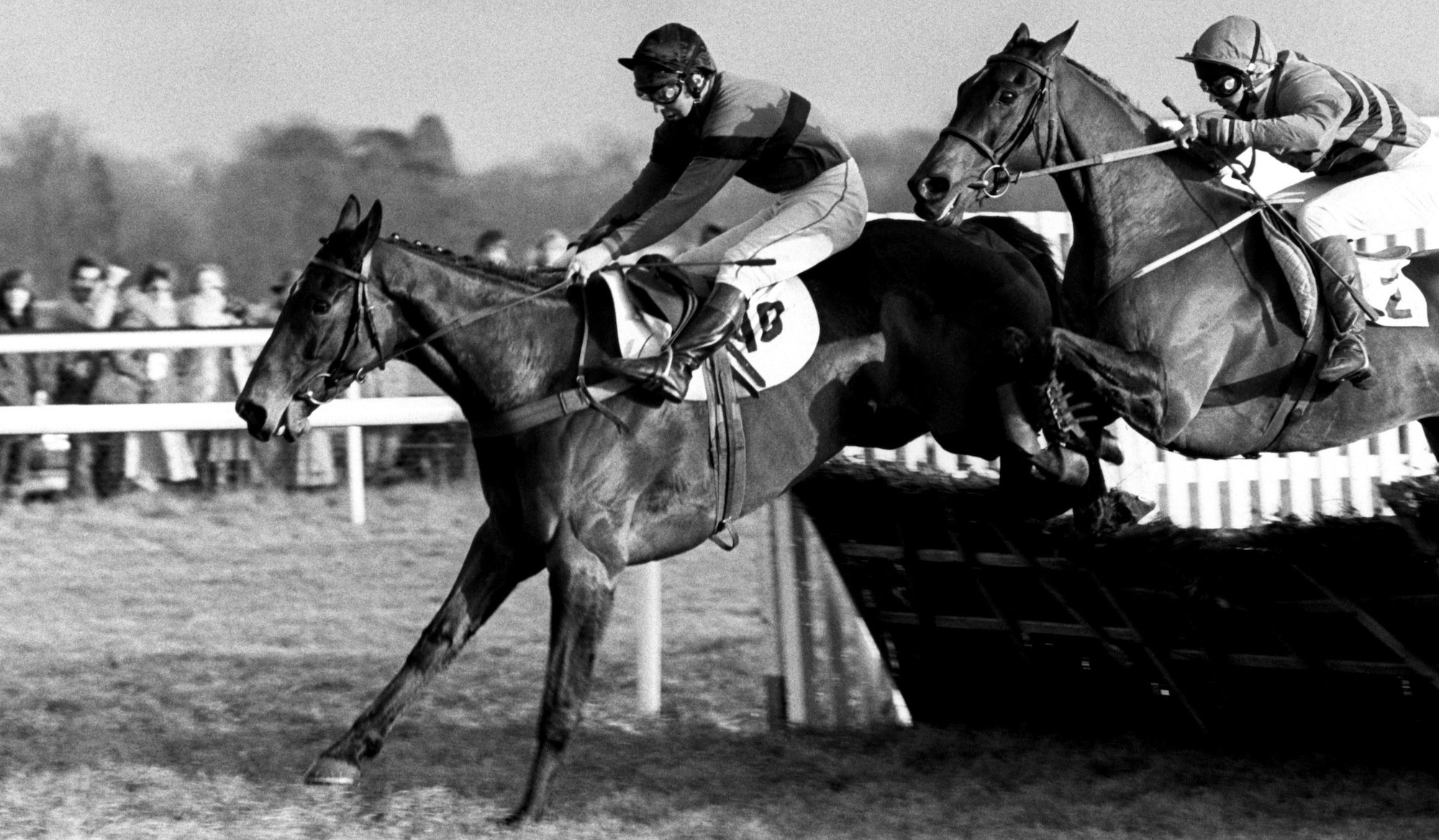
Dawn Run was equally adept at both hurdling and chasing, winning both codes’ premier races. Credit: Alamy
Dawn Run and the ‘galloping granny’
Dawn Run had for an owner an equally redoubtable woman in Charmian Hill, who gave 5,800gns for the filly as an unbroken three-year-old at public auction. Charmian also rode the mare on her first three starts in “bumper” races on the Flat for young, inexperienced horses. Dawn Run won the third of them at Tralee in 1982, but not before she tried to bite a horse with the temerity to challenge her for the lead.
Just days later, the Irish authorities refused to extend Charmian’s riding licence on the grounds of her advancing years. She was 62. Very much of the old school, she was brought up around horses on the family’s Monksgrange Stud in Wexford. She’d started riding as an amateur in her 40s and vented full spleen at the Irish stewards’ decision to stand her down.
Known to all as the “galloping granny”, Charmian was pivotal to the Dawn Run story. She frequently rode the mare in morning exercise on the Mullins’ circular, 2f, all-weather gallop, where she was rarely in control of her headstrong partner. Having broken her leg in a fall one morning, Charmian resumed the partnership some months later with increased enthusiasm.
She was also brash in her convictions. On each of Dawn Run’s three visits to the Cheltenham Festival hill, she displaced Tony Mullins, Paddy’s son and the mare’s regular rider, in favour of a more established jockey. It was Jonjo O’Neill who rode Dawn Run to her Champion Hurdle and Gold Cup triumphs, in the process bringing tinges of sadness to what would otherwise have been an unforgettable family affair.
Now a trainer like his much-decorated brother Willie Mullins, Tony remembers every facet of Dawn Run’s career. He vividly recalls the moment when Charmian almost casually dropped a bombshell after his victory aboard the mare at Down Royal in late 1983.
“I won quite well,” he recalls, “but when I came in, Mrs Hill told me that since Dawn Run looked like a Champion Hurdle mare, I wouldn’t be riding her for the rest of the season.”
Just like that. Even when he was again “jocked off” ahead of Dawn Run’s 1986 Gold Cup triumph, Tony Mullins offered great assistance to Jonjo during a crucial schooling session at Punchestown one week before the big race. It probably made the difference. Jonjo recognised as much when he hoisted him atop his shoulders and carried him to the presentation dais at Cheltenham to pick up his winner’s trophy.
“It was difficult even though the place was really buzzing,” Jonjo reflects of that famous day. “It was Tony who’d done everything with Dawn Run, not me. I was just lucky enough to get on her. All Tony had done was help me.”
On that highly charged occasion, with Irish hordes still intoxicated by the excitement of a dramatic conclusion to the Gold Cup, Paddy Mullins was nowhere to be seen. Wounded by the absence of his son from the saddle, he’d sent his wife to receive his trophy from The Queen Mother and made his way instead to the sanctuary of the racecourse stables.
It would emerge over time that Paddy Mullins, who died in 2010, could never bring himself to watch a replay of Dawn Run’s Gold Cup triumph. Nor did he and his son ever sit down and talk about the contrasting emotions intertwined with the mare’s triumph.
Tony Mullins, for his part, was always magnanimous in public. On Gold Cup day, he was taken aback to be asked how he felt about missing the winning ride.
“My family had just won the Gold Cup,” he recalls. “The excitement of it far outweighed losing the ride myself.
“The disappointment of not riding her came much later on. It was a very hurtful thing the way it happened. It ran deep.”
‘This one is out of the ordinary’
Even though Dawn Run showed abundant promise in her early races, it was impossible to envisage her progression to the highest peaks. Tony Mullins admits he never saw it coming, although his father, who would win 10 champion trainer titles in Ireland, had more than an early inkling.
“When she was young, she was a masculine-looking filly who never did anything spectacular at home,” Tony says. “Before she ran, nobody ever said: ‘By God, this is the one.’
“But after my brother [Tom] had won a bumper on her, Dad said to me: ‘This one is out of the ordinary.’ I was quite surprised. I knew by the way he said it that he thought she was something else.”
The jumping fraternity would get a glimpse of Paddy Mullins’ intuition when Dawn Run paid her first visit to the Cheltenham Festival in 1983. Charmian stood Tony down in favour of Ron Barry, who rode the mare into a commendable second place behind Sabin Du Loir in the SunAlliance Novices’ Hurdle (now the Ballymore).
Sabin Du Loir looked like winning easily, but Dawn Run made him pull out all the stops. It was Barry’s first time aboard the mare and a consensus held that he may even have won had he set a stronger pace aboard Dawn Run. Barry was not to know of the mare’s remarkable ability to maintain a punishing, end-to-end gallop. She could contrive a racing rhythm that would have seen most horses throw in the towel long before the finish.
With Barry sidelined by a fall, Tony was back aboard when Dawn Run ventured to Aintree three weeks later, where they waltzed to victory.
“Then came the first portent of the heights the strapping mare would one day scale. Saddled up again just 24 hours later, Dawn Run made Gaye Brief – winner of the Champion Hurdle three weeks earlier – work hard to suppress her in the Templegate Hurdle. And when Dawn Run won again in a canter at Punchestown two weeks later, the extent of her prowess had become plain.
Dawn Run picked up where she left off the following season until her Down Royal victory, when Charmian told Tony he would be replaced as the mare took aim at the Champion Hurdle. With Jonjo now aboard, Dawn Run won the Christmas Hurdle and Irish Champion Hurdle before descending on Cheltenham for the second time.
Up against her in the Champion Hurdle was another habitual front-runner in Desert Orchid, no less, but Dawn Run led the grey until halfway. Desert Orchid briefly went on but the mare had his measure by the third-last flight, when the field bunched up alongside her. At that point, Jonjo prompted Dawn Run, who shrugged off the persistent Buck House before she resisted Cima’s late thrust to carry the day by three-quarters of a length.
Irish eyes misted up as they cheered Dawn Run every step of the way into the winner’s enclosure. She became just the second mare to win the Champion Hurdle, yet amid scenes of joyous bedlam Charmian remained unmoved. She was already thinking ahead to Dawn Run’s date with destiny in the Gold Cup.
But Charmian had other fish to fry before that. After Dawn Run won the Aintree Hurdle by 15 lengths, she instructed Paddy to send her mare to France, where she won the Prix la Barka and Grand Course de Haies (French Champion Hurdle), each time with great ease under Tony.
Tony was supremely confident Dawn Run would win that day at Auteuil. So much so that he obliged a photographer from The Times, who told him that if he could jump the final flight in the middle of the obstacle (rather than either end), he would get a picture of Dawn Run jumping to victory with the Eiffel Tower in the background.
“I was winning so easily that I was able to do just as the photographer asked,” Mullins recalls. “That day was the best feel I ever got from Dawn Run.”
She closed that season having won eight of her nine starts.
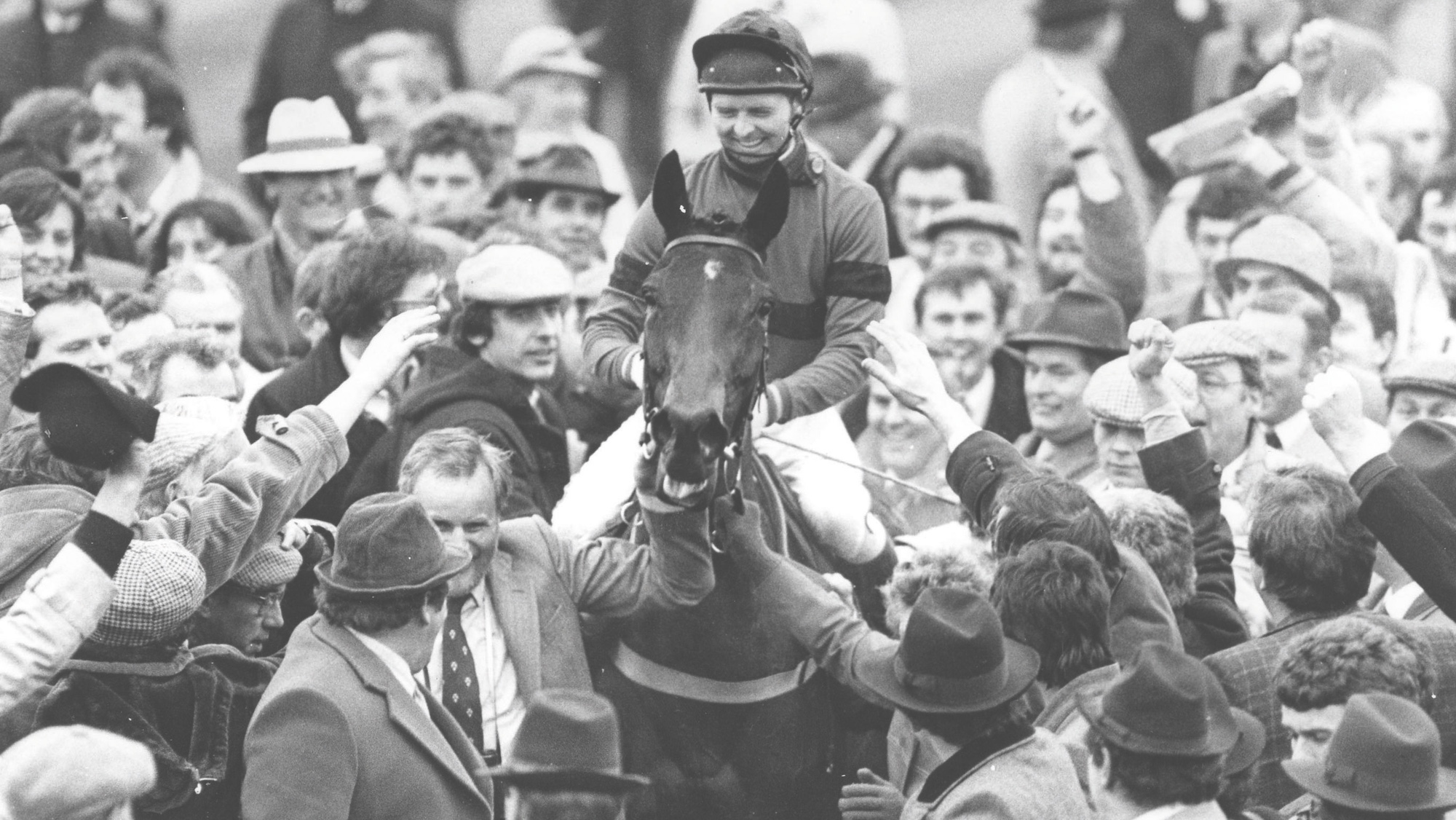
Dawn Run returns to the winner’s enclosure to rapturous applause. Credit: Alamy
Dawn Run: ‘Brilliant – but a bulldozer’
Dawn Run’s 1984–85 campaign, which saw her graduate to fences, was cut short after she sustained a tendon injury in winning on her chasing debut. It was a significant setback that detained her for 13 months, after which she resumed by winning the Durkan Brothers Chase in December 1985. And she showed she was back on the Gold Cup trail when she beat Buck House over 2½ miles at Leopardstown over Christmas.
Then the plot unravelled.
Dawn Run was sent to Cheltenham in January 1986 for a straightforward assignment ahead of the Gold Cup. She was sauntering along in the lead until she crashed into the fifth-last, unseating Tony into the bargain.
“That was just her,” Tony relates. “She was quite ignorant with her jumping. If she met a fence right, she was brilliant; if she met one wrong, she felt she could bulldoze it. She wouldn’t try to put herself right.”
Tony also spoke of seeing his Gold Cup dreams biting the dust in the act of falling off Dawn Run – and his nightmare duly materialised.
“I didn’t like it but after all these years, I’m just about getting over it,” he reflects.
Nevertheless, when Jonjo O’Neill schooled Dawn Run solo at Gowran Park seven weeks before the Gold Cup in 1986, he came away thinking the inexperienced mare should not even be lining up at Cheltenham, never mind as the favourite.
But it was a different story when he rode Dawn Run in another schooling session at Punchestown one week before the Gold Cup.
“That time Tony Mullins schooled alongside me on another horse and it made all the difference,” O’Neill recalls. “Tony was a big help to me. It allowed me to go to Cheltenham thinking I had a fighting chance.”
So, for the third time, Charmian stood Tony down in favour of Jonjo, who rode in the Gold Cup like a man possessed. He needed to, since Dawn Run was making only her fifth start over fences.
“I was worried down at the start because she was a moody so-and-so and I had to get away smartly,” Jomjo relates. “She might have sulked otherwise, but she jumped away and we met the first fence on a good stride.”
As with her Champion Hurdle victory, Dawn Run was harried from the off, this time by Run And Skip. And her task became all the more daunting when she clattered into the fifth-last fence, where she surrendered the advantage. Even though she was back on terms on the turn for home, her goose looked cooked when both Wayward Lad and Forgive ’n Forget swept past her on the run to the final fence. But Dawn Run was far from spent.
“I had ridden Wayward Lad before and never felt that he stayed more than three miles,” Jonjo recalls. “I could see that he was tiring on the run-in, so I kept riding away and sure enough, the mare came alive under me. She’d taken a breather and managed to force herself back in front in the nick of time.”
If Dawn Run’s Champion Hurdle triumph had triggered a communal outpouring of joy, this one saw the winner’s enclosure engulfed by what seemed like half of Ireland. In the deliriously happy chaos, Paddy slipped quietly away, unnoticed. His finest moment as a trainer was compromised by the absence of his son in the saddle.
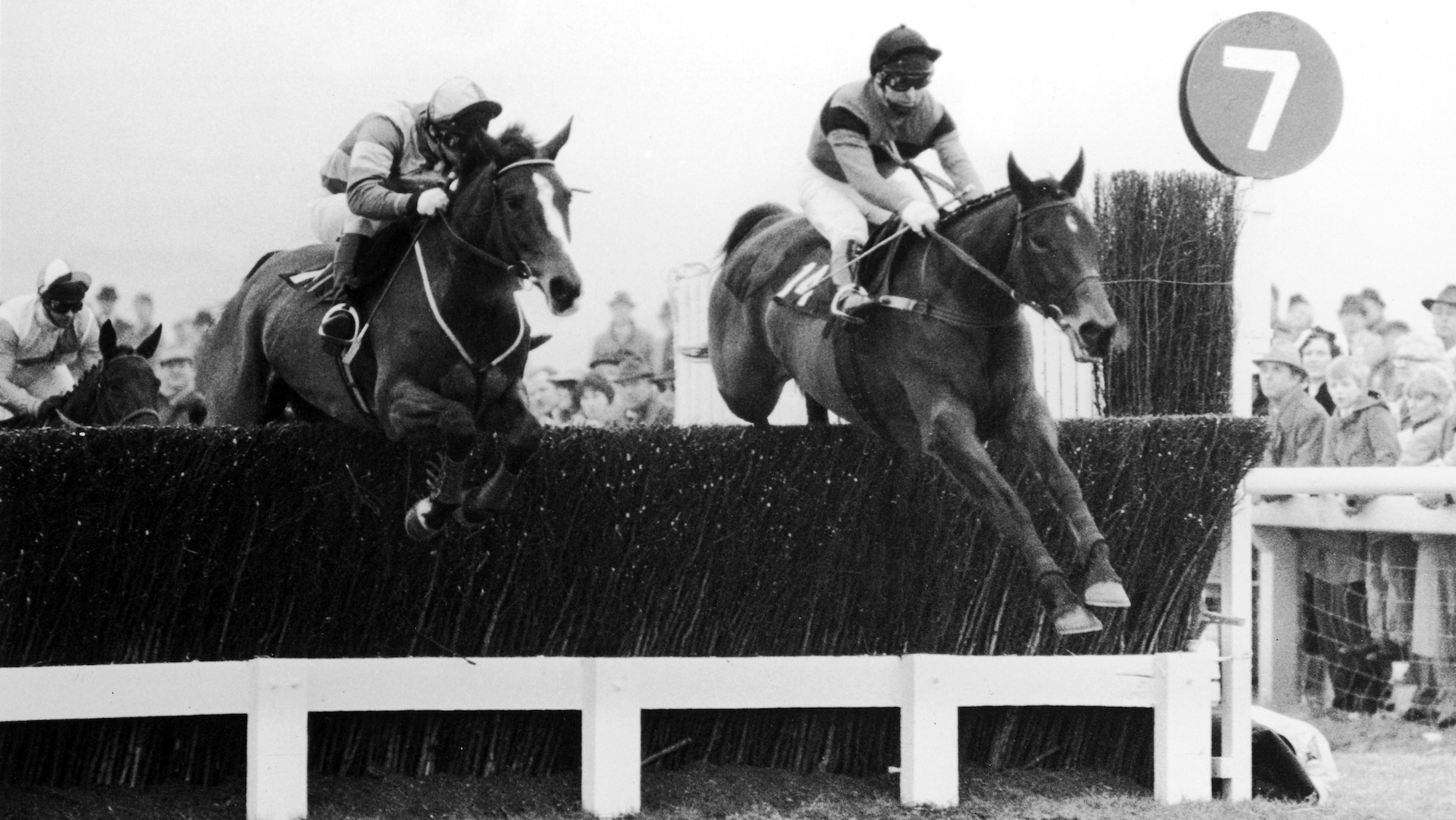
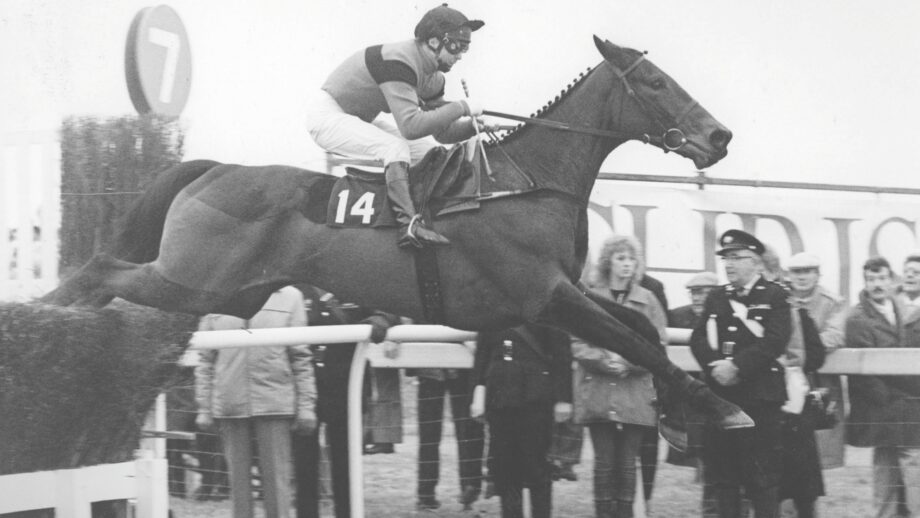
Dawn Run en route to victory in the 1986 Cheltenham Gold Cup
It would be apposite to relate that Dawn Run, then an eight-year-old, had had another chance to win the Gold Cup for a second time the following year. Sadly, it never came to pass.
After Dawn Run had beaten Buck House, who’d just won the two-mile Champion Chase at Cheltenham, in a match race at Punchestown in April, Charmian was adamant she should return to France. Dawn Run would again take in the Prix la Barka as a stepping stone towards the Grand Course de Haies she’d won two years earlier.
Tony was back aboard for the Prix la Barka, after which he maintained Dawn Run would not avenge the beating she’d taken from Le Rheusois in the Grand Course itself. Agitated by what she perceived as Tony’s negativity, Charmian replaced him once more with French jockey Michel Chirol, in whose hands Dawn Run died when she fell heavily and broke her neck at the fifth-last flight.
Her demise hit the Mullins family hard.
“It was a massive shock,” says Tony.
“I went off for a walk on my own; I felt very angry. I felt Dawn Run should never have been there that day and in two seconds she was gone.
“She was only really maturing. She was a huge big mare, almost 17 hands, and only just coming into her prime. She was just superior at every level, all of her life.”
It says everything about Dawn Run that her death was reported on the front page of The Irish Times.
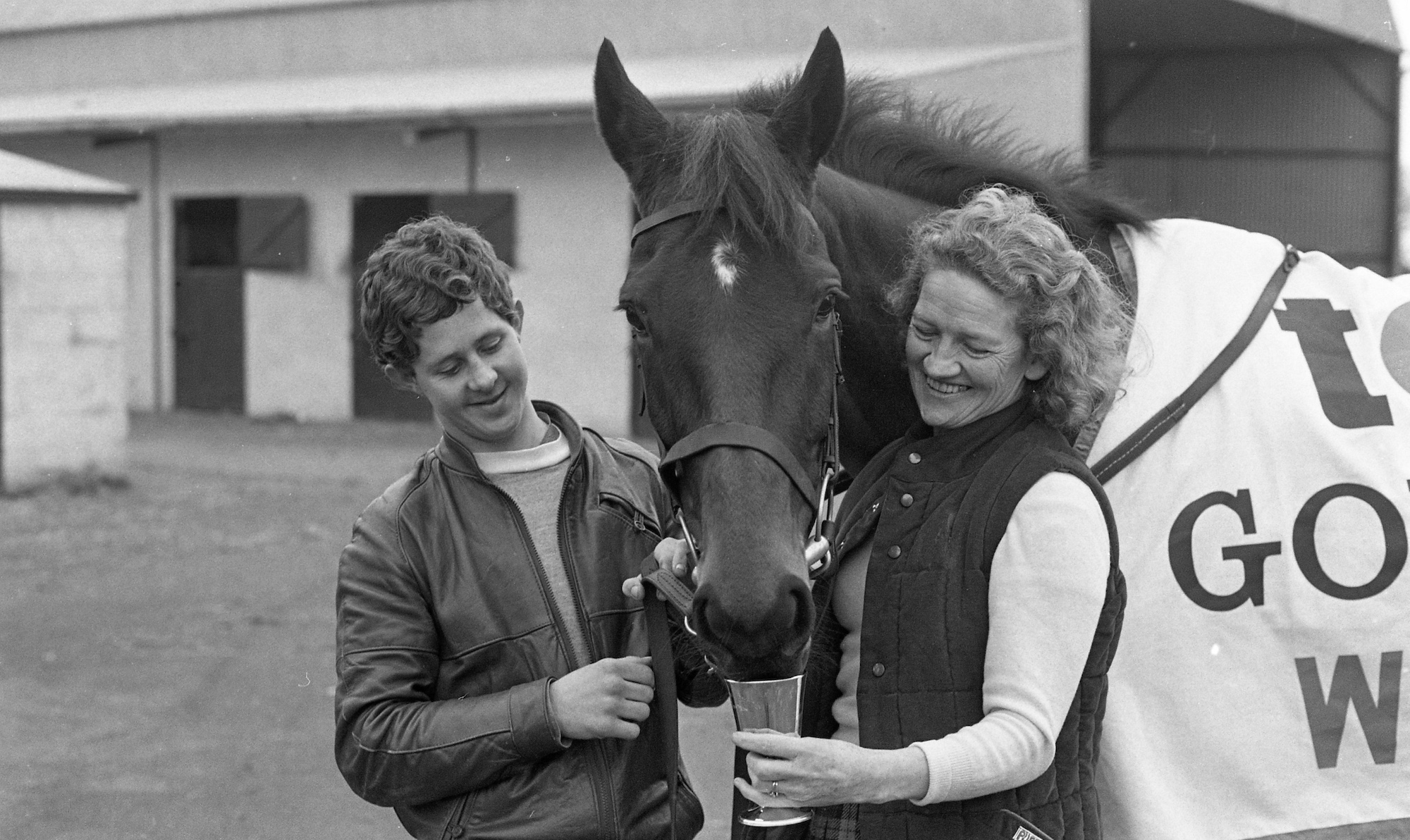
Dawn Run with her groom John Clarke and trainer Paddy Mullins’ wife Maureen. Credit: Independent News and Media/Getty Images
Dawn Run’s origins
- Bay mare, foaled 1978
- By Deep Run out of Twilight Slave, by Arctic Slave
- Owner: Charmian Hill
- Trainer: Paddy Mullins
- Breeder: Joe Riordan
- Jockeys: Tony Mullins, Jonjo O’Neill, Ron Barry
- Unlike many top-class National Hunt horses, Dawn Run boasted a fine jumping pedigree. She was by multiple champion National Hunt sire Deep Run out of the unraced Twilight Slave, whose five other winners over jumps included Even Dawn, himself the winner of 21 races over jumps. Furthermore, Dawn Run’s granddam, the point-to-point winner Early Light, was a full-sister to the Scottish National winner Brasher.
You may also enjoy…
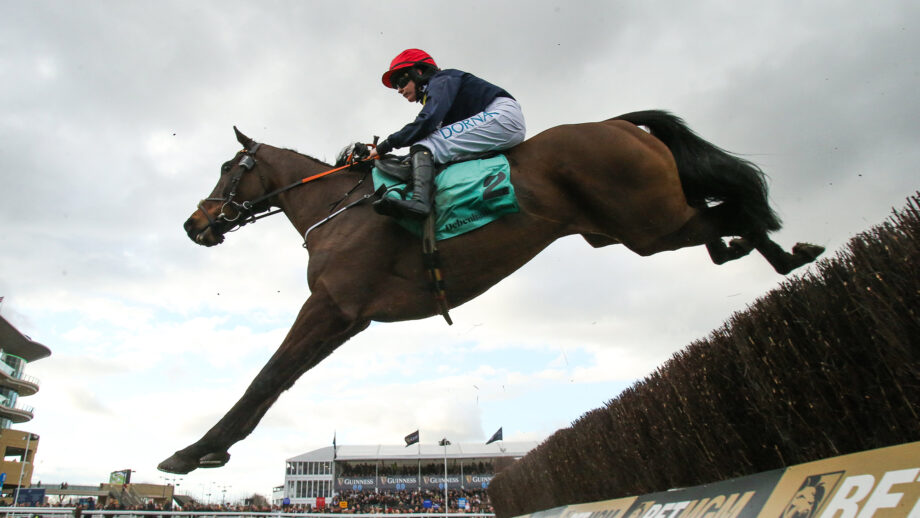
Remaining Cheltenham Festival 2026 ticket options now that Gold Cup Day has sold out
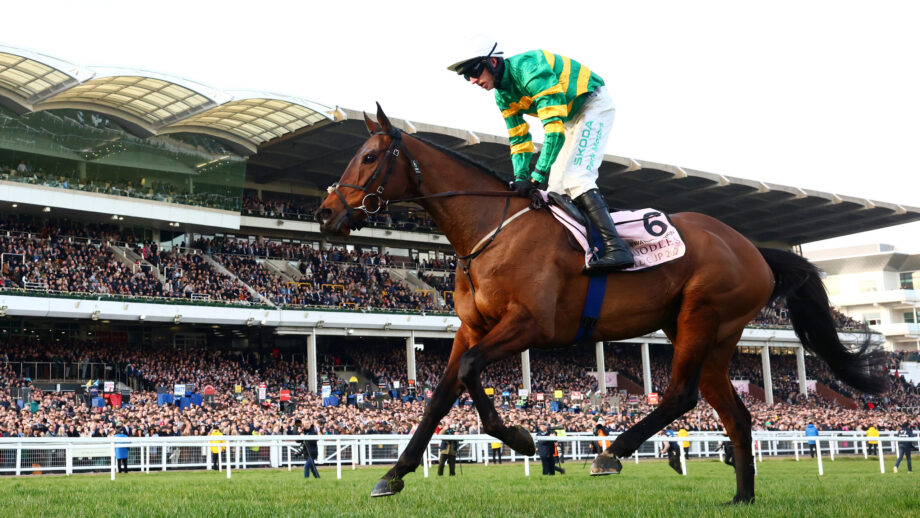
How to watch Cheltenham Festival 2026 live from anywhere in the world on Gold Cup Day
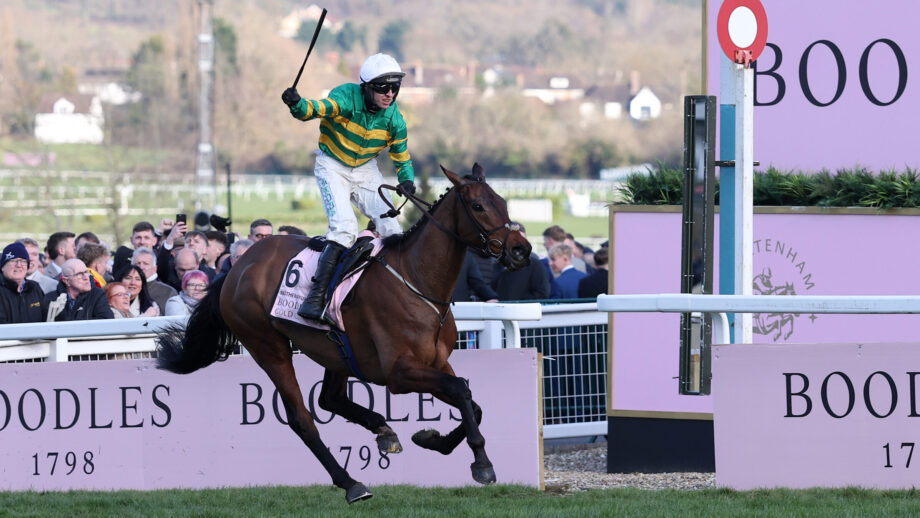
Cheltenham Gold Cup confirmed runners and riders for 2026 after a late withdrawal
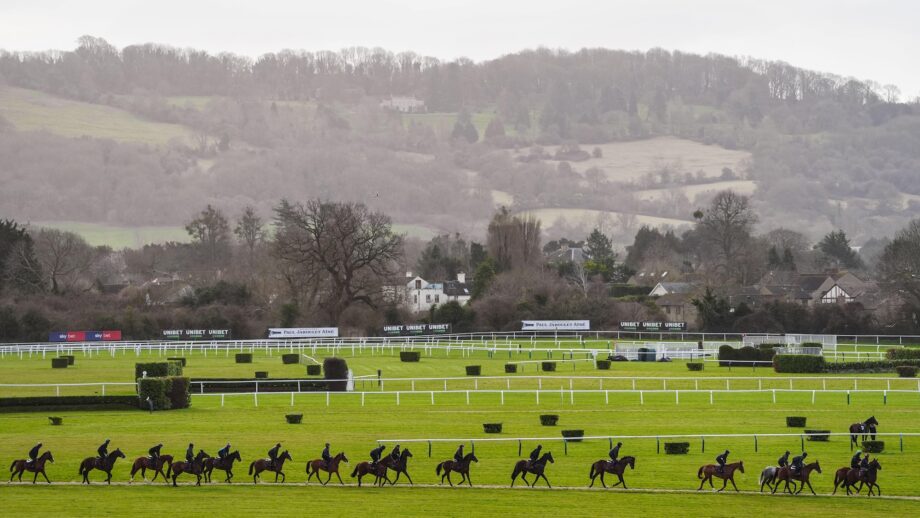
Meet Willie Mullins’ key Cheltenham Festival 2026 contenders: ‘This horse still has the ability to win the Gold Cup’

Horse & Hound’s 140th anniversary legends: Desert Orchid – ‘Everybody thought I’d gone mad when I sent him to the King George’
Subscribe to Horse & Hound magazine today – and enjoy unlimited website access all year round