The first frangible devices used in eventing were frangible pins, which were first introduced in 2002, when they were trialled at nine British Eventing horse trials, including Badminton Horse Trials. Following this successful trial, they were introduced on suitable new cross-country fences at every level of British Eventing competitions ahead of 2006.
The breakable metal pins are inserted between the top rail and the uprights supporting it. The pin is designed to lower the jump’s top element by at least 20cm if the fence is hit from above, which research confirmed happens when a horse somersaults over a fixed fence. This drop is designed to allow the horse to get a leg forward to save itself from rotating over the fence, although it may not prevent the horse from falling. The pins were originally fitted in front of the upright supporting the top rail of the fence, but in 2010 this was changed so the pins were fitted behind the upright instead.
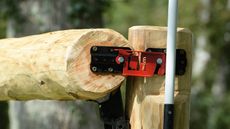
The frangible pin was designed to be used on post-and-rail fences, but Swedish company New Era then developed the MIM safety clip, which can be used on on other obstacles, including tables. The clip’s inventor, Mats Bjornetun, explains: “The clip is different [from the pin] in that it responds to the horizontal impact of a load hitting a fence and the fence can be rebuilt in a matter of seconds.”
A study by Anders Flogård, the designer of the MIM safety clip, found that the forces involved in a rotational fall are initially horizontal, followed by vertical, so reverse frangible technology allows the fence to be driven forwards in the same direction as the horse. This reduces the rotational speed, giving the horse a better chance of recovering and staying on its feet.
The penalties for breaking frangible devices have been a subject of heated debate and have changed over time from elimination through to a number of penalties. Currently riders receive 11 penalties for activating a frangible device during an FEI competition, but riders competing in British Eventing classes do not receive any penalties regardless of how many frangible devices are activated during a cross-country round.
 ‘It shouldn’t be a given that riders will go clear when stepping up to four-star’, says Andrew Nicholson
 Falls, frangibles and concussion in the eventing safety spotlight
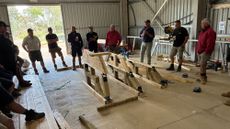 Sharing how to make traditional cross-country fences frangible set to improve eventing safety worldwide
 Riders voice support after cross-country safety innovations used for first time
 Cutting-edge frangible technology given ‘traditional’ make-over as new cross-country fences unveiled in Britain
 Frangibles, tech and ‘€1m for 1000 fences’ – big ideas debated in eventing
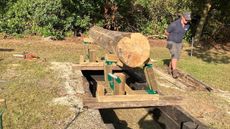 Take a look at a new frangible trakehner to be used at British event for first time
 Calls for change after frangible device costs riders top-10 results at Pau five-star
 Mark Phillips on frangible penalties: ‘Riders hate it – but it’s here to stay’
 Top event riders call for review of penalties given when frangible clips or pins break
 MIMclip inventor: ‘I want to help a sport that I love’ *H&H Plus*
 Boost for eventing safety as $500,000 fundraising target reached
 Mary King: The importance of the ‘coffin canter’
 Collapsible cross-country table trialled in Britain for first time
 Watch how MIM clip table prevents serious cross-country fall
 Major eventing nation backs compulsory frangible fences for cross-country


