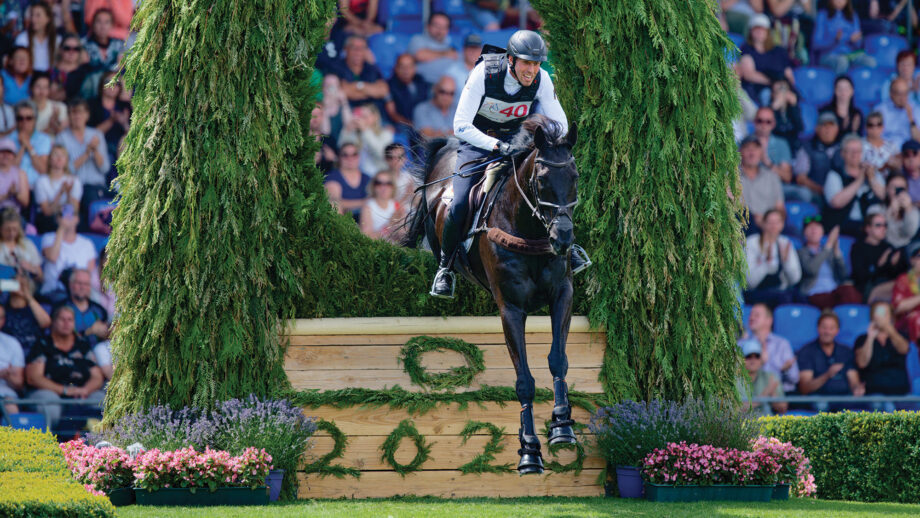
It’s 50 days until riders jump the World Championships cross-country course, on Saturday 15 August. The showground at Aachen will be alive with the bustle of spectators waving flags and in the stables, the nerves will be buzzing.
What can riders expect from the track? And what has it been like putting it together? We caught up with the course-designer, Italy’s Giuseppe della Chiesa, to find out.
The numbers tell a large part of the story in terms of the specific challenges of designing championship track. Those who take every direct route will tackle 42 jumping efforts, but there are 74 fences in the course.
“That tells you something about how many alternatives there are,” says Giuseppe. “When you come to a championship, you have even more variety of expertise and experience than at other events.
“We have minimum eligibility requirements – people call them qualifications, but that is the wrong name for them because if you pass one, you are not qualified. They happen all over the world and some are probably not really the right level, but in the end, we want to have everybody there.
“So you have established five-star horses and riders and pairs that maybe never saw a real four-star in their life. The challenge is to produce a course that allows the best to be sorted out and the others to finish. Not everybody will do so, but I start with the idea that everybody should have a way to come home, if they use their brain.
“Anybody can design for good riders because if you make a mistake, they will solve it. Designing for average riders is more difficult.”
Are there any particular themes or pointers riders must keep in mind on the course?
“If they ride well and they engage their brain, they will be fine – and, as I say, there is a route for everybody,” says Giuseppe. “The rules say the cross-country at the World Championships is four-star with a special distance of 10 minutes. I think 42 efforts over 10 minutes is a good balance, it creates a good competition.
“If you go all the direct routes, you will have jumped a ‘four-star plus’, but you can also find a ‘three-and-a-half-star’ to get around.”
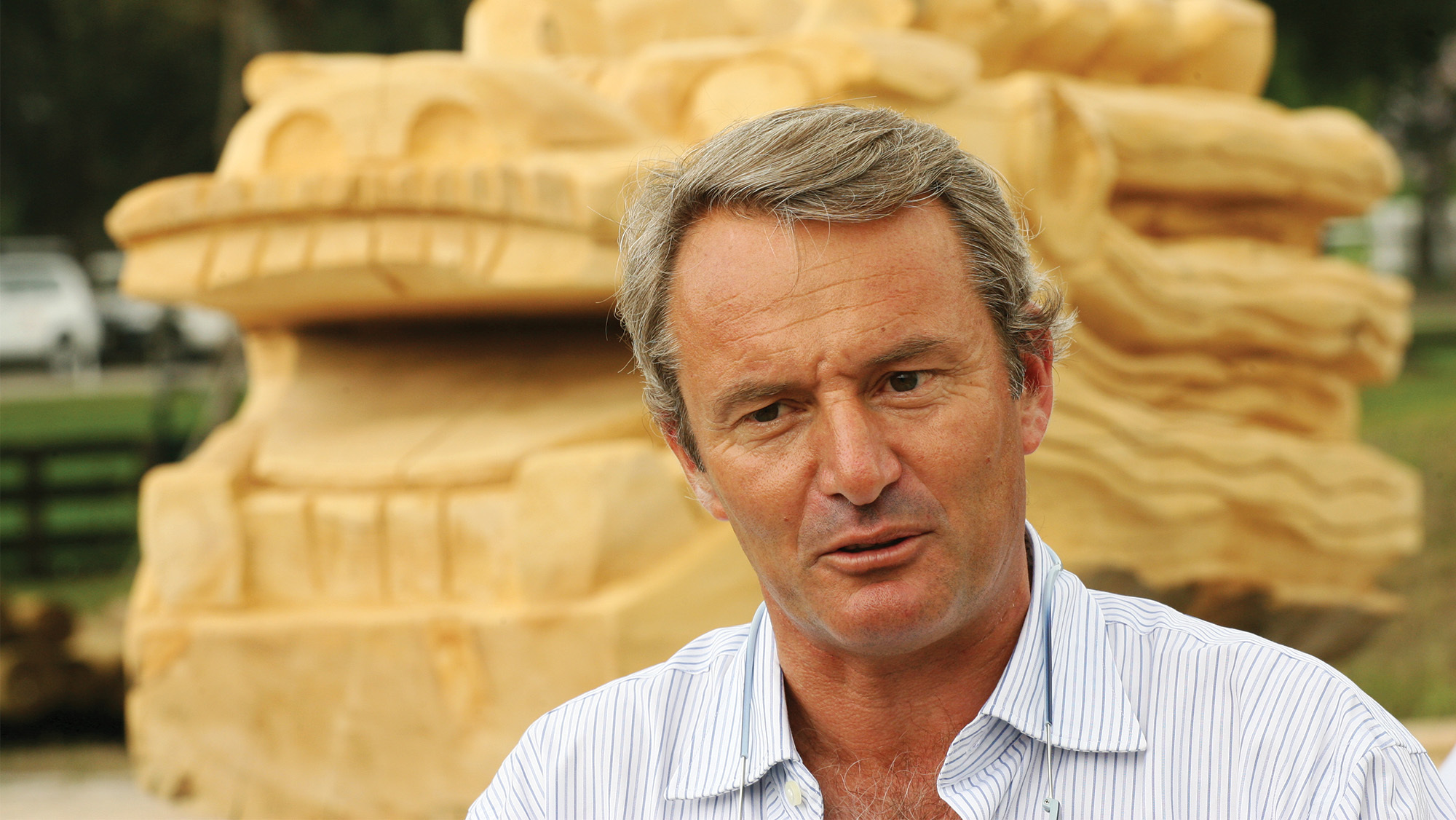
Giuseppe della Chiesa. Credit: Getty Images
That optimum time, of approximately 10 minutes, will be tight, Giuseppe predicts.
“I tried, without stressing them too much, to keep control of the horses’ speed so that we can have some interest with the time,” he says. “And then they need to pay attention because it’s easy to have a glance-off, especially if you’re going for the time.”
World Championships cross-country: Aachen’s history
Giuseppe says a huge plus of working at at Aachen is the “fantastic” organising committee.
“They are completely dedicated, they followed me on anything I asked of them,” he said, citing the fact the site is very flat as something of a challenge compared to Pratoni del Vivaro, where he designed the course for the 2022 World Championships.
Eventing first came to Aachen in 2005, in a test event for the 2006 World Equestrian Games (WEG). Giuseppe explains that there was no intention for eventing to be part of the programme at the venue after that WEG.
“They prepared all the footing for the track, spending a huge amount of money because it’s very difficult to prepare there; because it’s very wet, the soil is not good,” he says.
After WEG, the organisers wanted to keep eventing as part of their showcase summer event every year, but designer Rüdiger Schwarz was left with the challenge of creating a four-star short using parts of the track that had been designed for the WEG.
“He had to be really creative,” says Giuseppe, explaining that in putting together the route for this year’s World Championships cross-country course and going to the expense of preparing new areas of ground, he has also tried to leave a site where it will be easier to produce different types of track in the future.
The alternatives required at a championship also need space and careful thought so that they are not too twisty and don’t require too much turning back.
In some places, Giuseppe has given riders choices that are only two to seven seconds more time-consuming, so they are not true direct and long routes, but genuine alternatives where riders will have to make a decision.
A team effort
Giuseppe says the course-designer should never work alone. Poland’s Marcin Konarski was the technical delegate at the Pratoni worlds and Giuseppe found he worked well with him, so when Rüdiger decided, for health reasons, to step back from Aachen and ask Giuseppe to design the worlds, Giuseppe asked Marcin to be his assistant.
“And I told Rüdiger, ‘I will accept to take over from you, but you mustn’t disappear’, so Marcin, Rüdiger and I have worked as a team, and the course-builder James Willis is part of the team too,” he says, adding that he worked with the Willis brothers as course-designer at Badminton Horse Trials from 2014 to 2016.
The technical delegate, Britain’s Philip Surl, has already visited Aachen too.
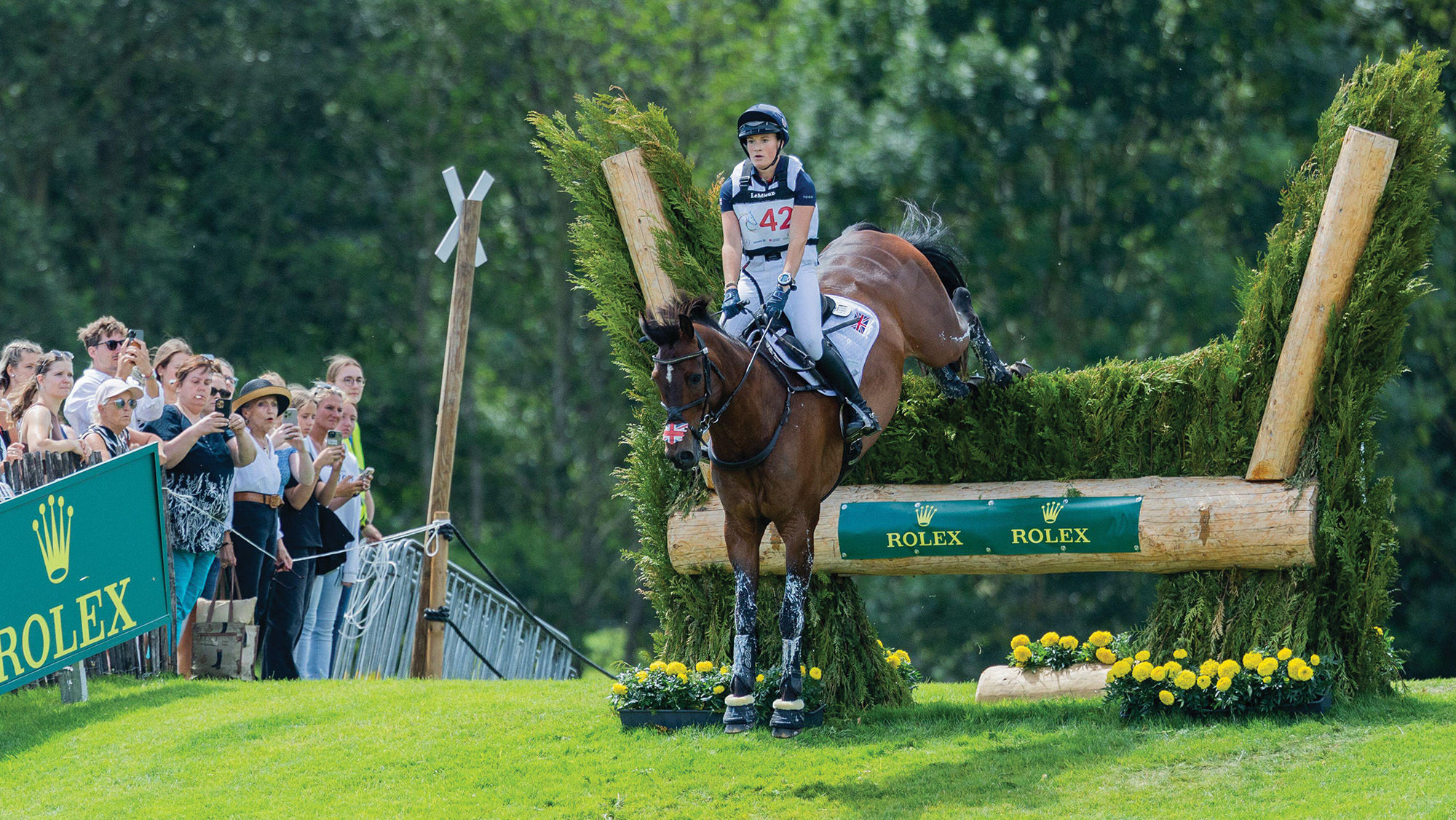
Bubby Upton and Cannavaro at Aachen 2025. Credit: Alamy
And how will Giuseppe know he has done a good job? Giuseppe was pleased that in Pratoni, there were no horse falls, something he aims for again, but knows is partly down to luck. However, he says the acid test is to watch horses jumping, both on screen for an overall view and on the ground at the fences.
“Live gives you more the feeling of what is actually happening in a horse that is moving at 570 meters per minute or more – how they are working on the terrain, the strength they’re putting in, how they understand the fence, how they are turning, how quick things happen. Everything on video is always a bit more slow motion, it all always looks nicer on video than in reality, so you must go and see the real thing,” he says.
“Looking at horses jumping is the most important thing that a course-designer should do because they tell you everything. You must be on your own, not chatting.
“The big satisfaction is when I see that horses jump well, produce a good picture. Maybe sometimes they have a mistake, but the mistake is understandable. Maybe the riding was not so accurate. But when the riding is good they must produce a nice job – if everything is good and they don’t produce a nice picture, there is something that is not working.”
- To stay up to date with all the breaking news from major shows throughout the year, subscribe to the Horse & Hound website
You may also be interested in:
‘Pain is only in your head’: injured Olympian still targeting World Championships
‘What will selectors be willing to forgive?’ H&H’s eventing expert on what Bramham means for World Championship selection – for Britain and beyond
‘I had no control’ and ‘I watched videos of you growing up’ – Ginny Elliot and Ros Canter meet and share Burghley memories
‘How could this fiasco have happened with so many senior officials present?’ asks Mark Phillips
Subscribe to Horse & Hound magazine today – and enjoy unlimited website access all year round