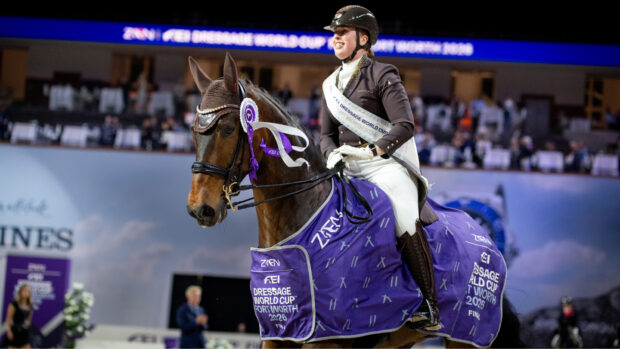
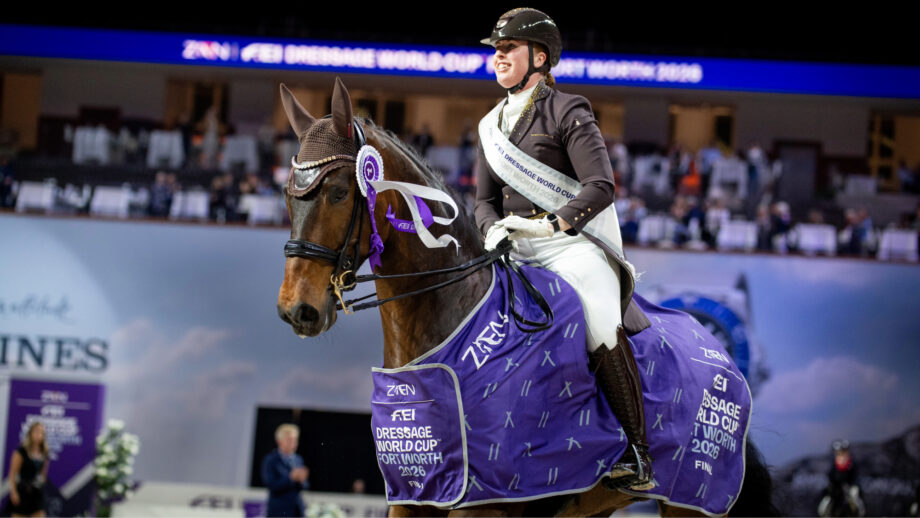
When Becky Moody and Jagerbomb flew home from their FEI Dressage World Cup final win in Fort Worth, Texas, the celebrated gelding looked, by every outward measure, completely fine. He had a week off in the field, a fortnight of gentle hacking, and was – as she told The Horse & Hound Podcast – “bright as a button and happy”. But the data picked up something his demeanour didn’t.
How does monitoring horse sleep work?
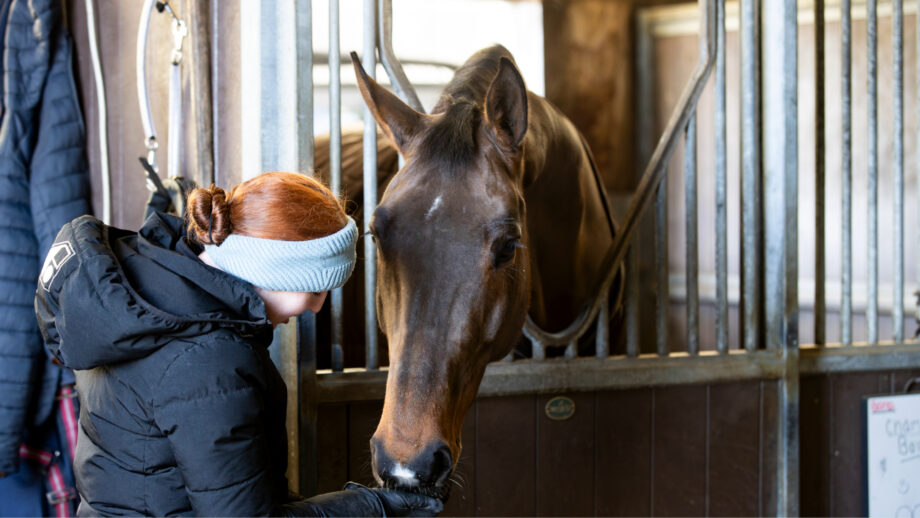
At home, Becky works with EquiConnect, a vet-built AI stable-camera system installed in 12 stables in one of her barns. The cameras monitor sleep patterns – distinguishing between sternal lying, where a horse rests upright, and lateral lying, when they are “flat out and actually getting proper sleep” – as well as how long each horse spends eating and how active they are through the night.
Horses sleep only a few hours a day, most of it standing, thanks to the stay apparatus – a system of tendons and ligaments that lets them doze upright without tiring.
But they can only reach REM (rapid eye-movement) sleep, the deep restorative stage, when lying fully flat in lateral recumbency, because that phase involves a complete loss of muscle tone.
Vets generally cite a need for around 30-60 minutes of lying down a day to get enough REM sleep, and horses that can’t, or won’t, lie down – whether through pain, stress or an unfamiliar environment – can become REM-sleep deprived.
For Jagerbomb, that data proved illuminating. “He only ever sleeps at night – he never lies down during the day,” Becky explains. “So you can’t really know what his sleeping is like unless you’re looking at the camera information.”
And what the information showed, once he was home from the States, was a horse working hard to recover from his travels across the Atlantic.
“It took him about 16 or 17 days to get back to his normal sleeping patterns at home,” Becky says. Across that recovery period, the cameras logged him catching up dramatically: “He was sometimes sleeping five times what he would normally have slept.”
It is the kind of insight that would be invisible to even the most attentive horseperson. Jagerbomb was away for close to two weeks in total – the same long journey out reversed on the way back, with overnight stops at Liège and Dover – and the after-effects on his rest ran far longer than his outward demeanour suggested.
Why over-competing concerns Becky Moody
For Becky, the data underlines something she already felt strongly about: the hidden toll of travel and competition, and the importance of not asking too much of a horse.
“When we talk about horse welfare, this is one of the things that I think is really relevant,” she says.
Even a relatively standard trip carries a significant load. Travelling to an international show such as Rotterdam – where Becky is speaking to us from – can mean a horse spending well over eight hours on the lorry in a single day, she points out, once ferry queues and French customs (“anything between 50 minutes and three hours”) are factored in.
“I can pretty much, even without the data, know that he doesn’t sleep at a show like he sleeps at home,” she says.
Her response has been to build in a more deliberate recovery. After a major effort, Jagerbomb is given an easy couple of weeks: time in the field, or a few days off, followed by gentle hacking.
Becky’s careful to say there is no single rule. Some horses benefit from a fuller calendar, gaining confidence and learning to settle in the competition environment.
But the difference between a local outing and several days of championship-level sport is, she stresses, enormous. “You have to know your horse and what you’re doing and what is best for them,” she says.
It’s a philosophy now backed by hard data – and one she sums up simply: she is “quite a big one for not over-competing”.
- For more insight from top riders and trainers, subscribe to the Horse & Hound website
You may also be interested in…

‘I spent most of the night watching the plane on Flightradar’: Becky Moody on flying Jagerbomb to the World Cup
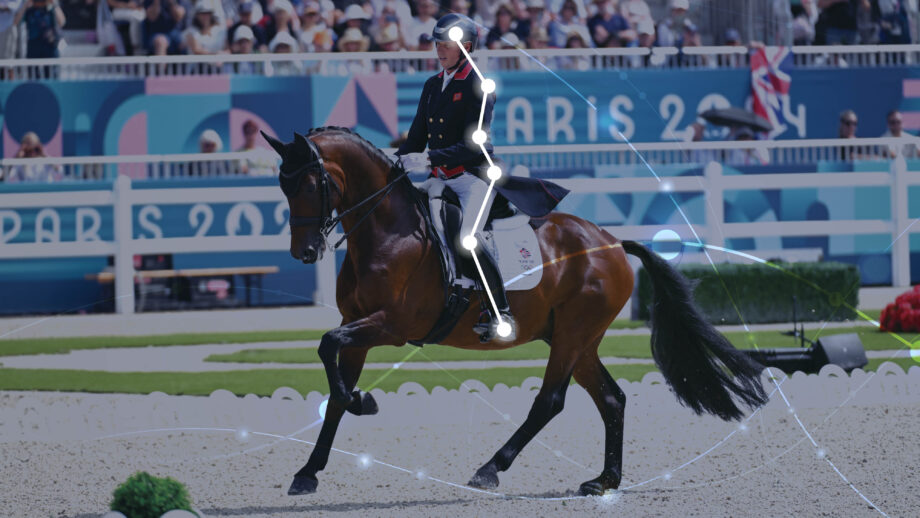
Can AI judge dressage? The technology exists – but is the sport ready for it?
The Horse & Hound Podcast 178 with Becky Moody: ‘I prefer being the underdog’
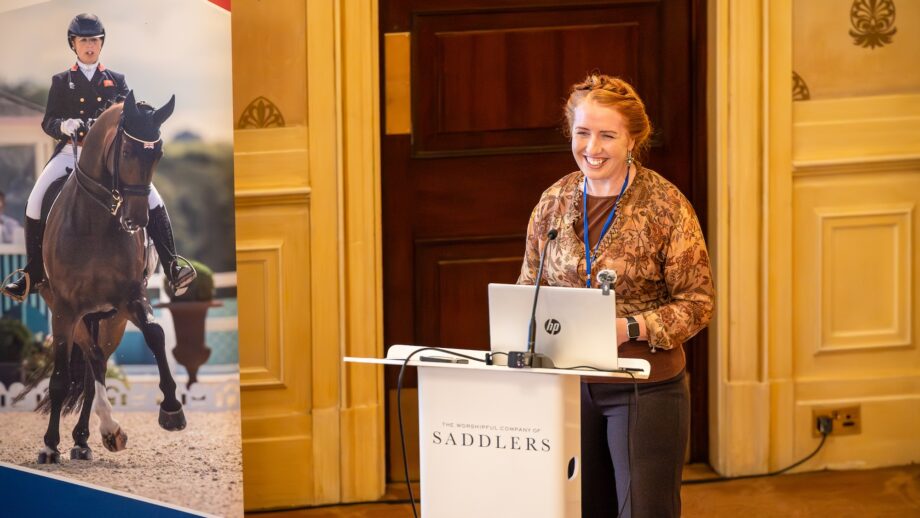
From hurtling round fields on ponies to Olympic glory: Becky Moody shares her incredible journey
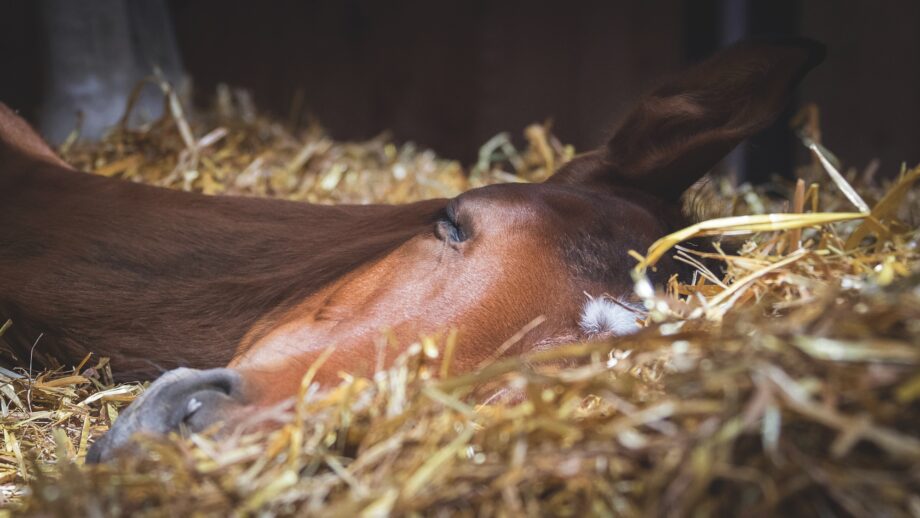
Horses who sleep better learn better, new research finds

Do horses sleep standing up? H&H explains all…

Subscribe to Horse & Hound magazine today – and enjoy unlimited website access all year round