Being able to change your horse’s canter lead while in the air over a jump might seem daunting, but it’s a necessary skill if you want to ensure a smooth jumping round – and be competitive. Plus, horses do flying changes naturally in the field all the time. Use this figure of eight jumping exercise to master lead changes in the air at home so you can save vital seconds when it counts.
Aim
- use a four-fence set-up to practise and improve lead changes over a fence
The setup
You will need: four fences – you can use cavaletti, full jumps with wings, or ground poles – and cones or markers if you have them.
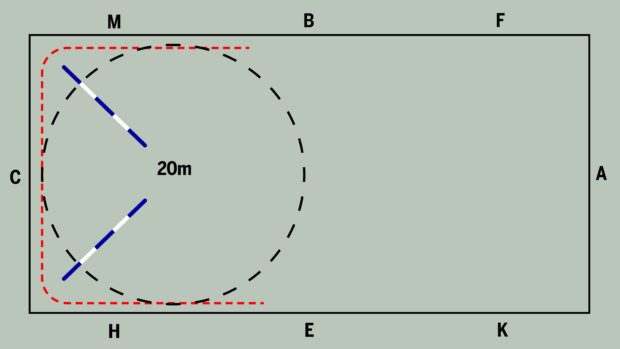
Setup: construct two sets of two fences at right angles with a distance of approx 20m between the points of each set as shown in the diagram. You can set the fence at whatever height is appropriate, or even start with poles on the ground.
If you have cones, place them as a guide about 10m from the point where each set of two fences meet, at each end.
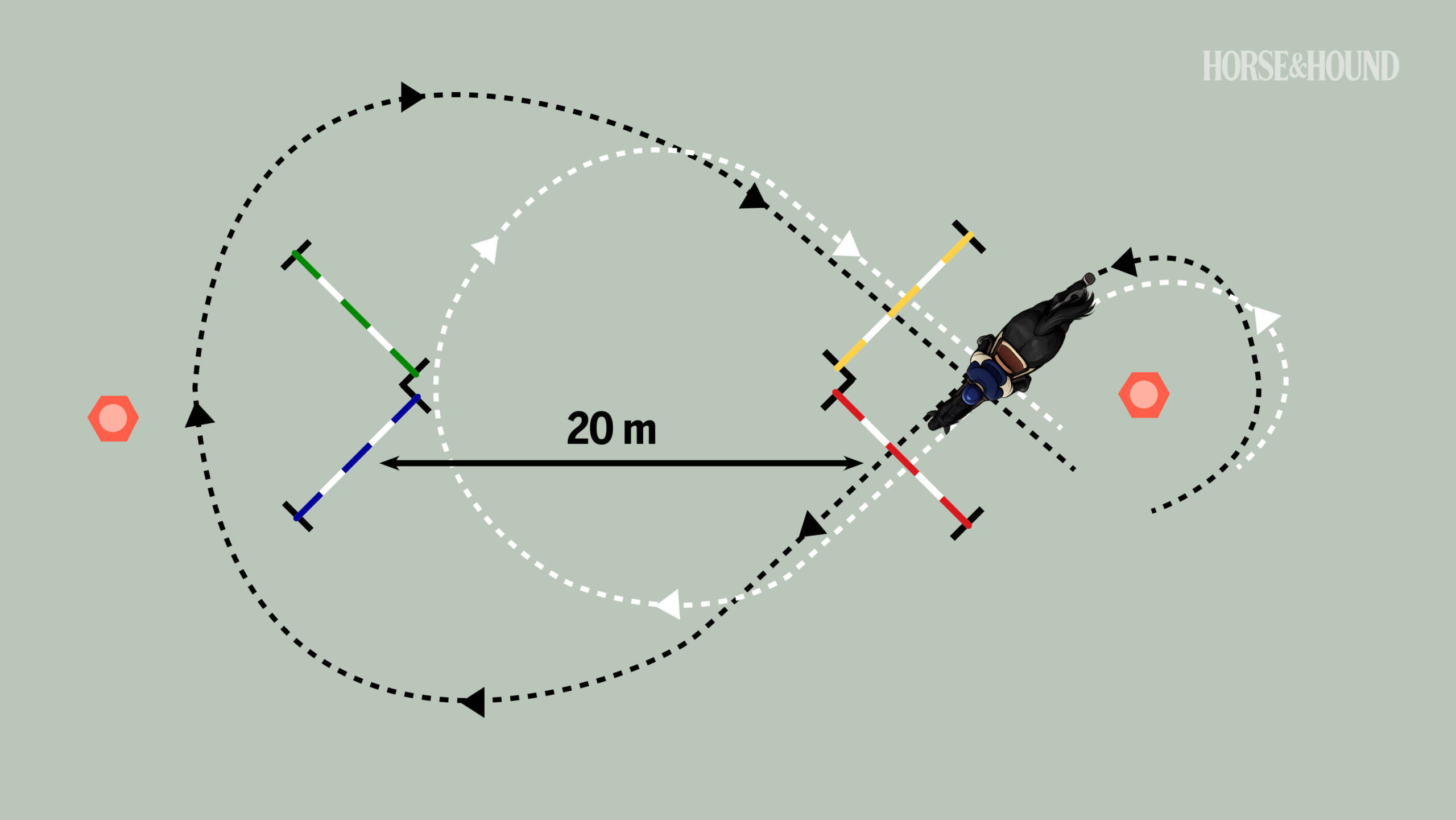
How to ride the exercise
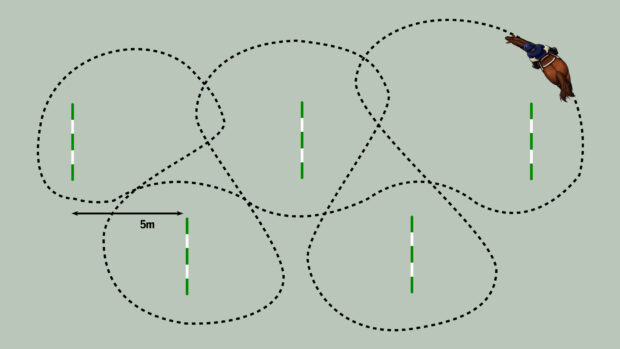
- Once warmed up and ready to jump, in left lead canter ride around the cone to the first fence (red) – follow the black line in the diagram above.
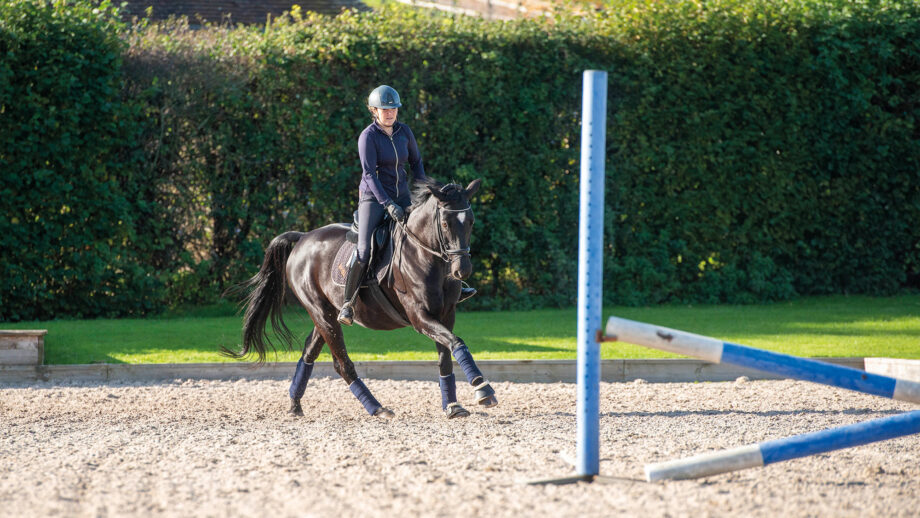
- Change lead in the air. By looking round to the next fence in the sequence (yellow), the natural shift in bodyweight and direction sends the message to the horse to land with the new leading leg. If you and your horse have not yet established changing leads over fences, see “tips and troubleshooting” below.
- Go round the outside of the other set of fences (blue/green) on the right leg.
- Jump the next fence (yellow), changing to the left lead in the air.
- Go round the cone and repeat. After a rest, repeat on the other rein.
For a more testing challenge, you can come inside the second set of fences making a tighter circle (following the white line), increasing the focus on your rhythm and balance.
Do the same over the blue and green fences to mix it up. Just switch the direction of the set-up, starting on the left of the diagram above, so that you jump the blue and green jumps and go around the yellow and red ones.
Tips and troubleshooting
1. My horse won’t change leg
All horses have a favourite leg to land on, so training them to land on a particular lead takes practice, starting by making sure your aids are super clear and consistent.
Do not lean into the new direction as this can throw your horse off balance. Instead, sit straight and balanced, looking ahead in the new direction.
Support your horse with the new outside rein, and put the new inside leg on at the girth while opening your new inside hand in the direction you are turning.
2. Course-building tactics
If you build one set of fences small and the other slightly higher, you can start over the small set and not have to dismount to adjust before jumping the bigger one.
3. Mix it up
With this set-up you can also practise riding dog-leg turns.
4. Keep it smooth
Being able to change legs in the air will save you time and enable you to produce smooth, rhythmic rounds in competition. Keep thinking ahead, preparing for the next fence as you jump each one.
- Enjoyed reading this? For more expert training advice from top riders and coaches, subscribe to the Horse & Hound website
You might also enjoy:

How to improve flying changes with Laura Tomlinson

How to ride a perfect dog leg line while jumping
Here’s some helpful pointers from Irish international showjumper David Simpson on how to ride a perfect dog leg line while

Subscribe to Horse & Hound magazine today – and enjoy unlimited website access all year round