This zig-zag polework exercise is particularly useful for encouraging more lift, cadence and expression within the paces.
Polework exercises are a really effective way to develop a horse’s strength, balance and way of going. The unusual shape created by the zig-zag poles, combined with the spacing between them, encourages the horse to sit more on the hindquarters, lift through the core and open the shoulder. It is an excellent exercise for horses who tend to run onto the forehand or become flat through the body.
Aims
- Improve your ability to keep your horse straight and upright
- Encourage your horse to push more actively from behind
- Develop greater lift, cadence and shoulder freedom within the pace
The setup
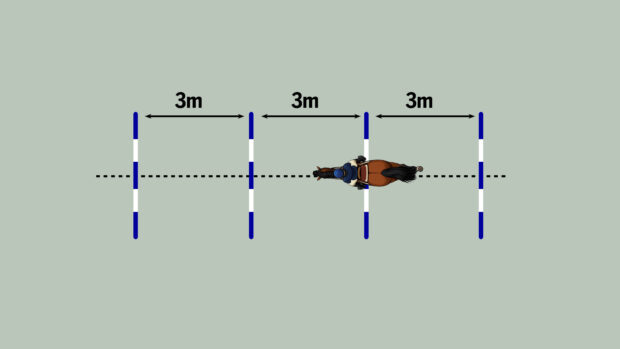
You will need: four standard 3m poles
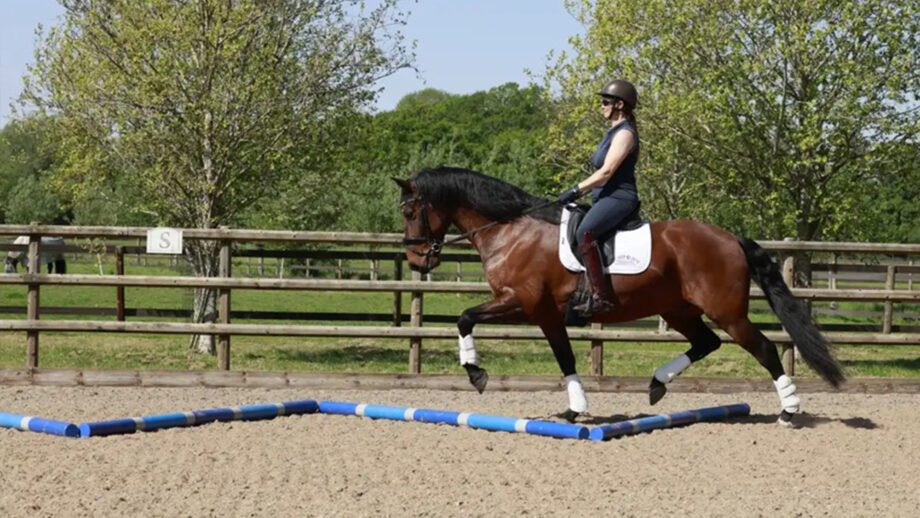
Setup: Set the poles out in a zig-zag formation along the three-quarter line. The gaps between each section should be approximately the length of one pole. A simple way to build this is to create an initial triangle shape, then move the base pole to begin the next section of the zig-zag.
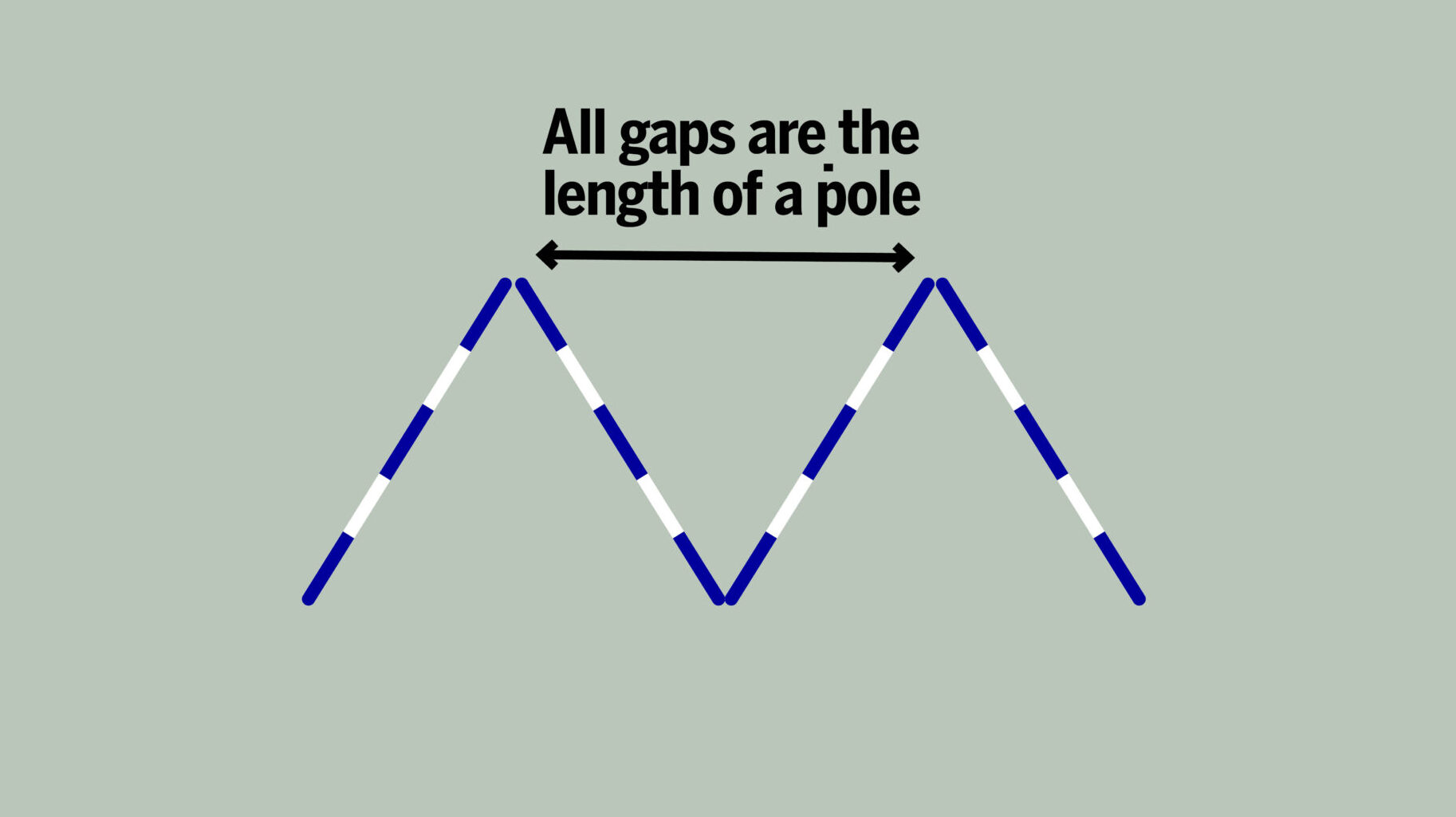
Set out a zig-zag of poles along the three-quarter line
How to ride the exercise
1. After your usual warm up, start by riding walk-trot-walk transitions, focusing on your horse reacting promptly from the leg, stepping forwards into the contact while remaining balanced and waiting for the half-halt.
2. Before introducing the full exercise, ride over a single pole on different lines across the school. This allows the horse to understand that poles are part of the session and helps establish relaxation. You can ride over the single pole in walk, trot or canter.
3. When ready, turn onto a line that takes you directly through the centre of the zig-zag. Make your turn early enough that both you and the horse are completely straight before reaching the first pole. Ride through in an active, forward-thinking trot, maintaining rhythm and balance throughout. Straightness is crucial. If the horse drifts left or right, the distances immediately become uneven and the exercise loses its intended effect.
Pitfalls to avoid
1. Loss of straightness
If the horse drifts off line, the distances between the poles will no longer ride correctly. Practise riding straight lines away from the track before attempting the exercise. When riding through the poles, some horses benefit from the rider carrying the hands slightly lower and wider, with a more supportive upper leg to help maintain straightness and alignment.
2. Spooking or stopping
The unusual pole angles can look visually challenging to some horses. This is partly what makes the exercise effective, as horses do not naturally have strong close-up vision and must learn to assess the question while staying relaxed.
If your horse feels tense or unsure, begin by riding the line in walk to allow them time to process the exercise. You may also choose to remove one or two poles initially until their confidence improves.
3. Rushing or breaking into canter
Horses who find lift and lengthening difficult often try to solve the question by quickening or cantering. Focus on the clarity of your trot aids. Use more half-halts if needed, alongside a quieter, slower seat.
Some horses find the exercise easier with the rider rising; others prefer a sitting trot. Whichever you choose, stay tall through your upper body, avoid tipping forwards and remember the value of the voice. A quiet “steady” or “trot” can often help maintain rhythm and confidence.
- Enjoyed reading this? For more expert training advice from top riders and coaches, subscribe to the Horse & Hound website
You might also enjoy:

Why straightness is the key to effective dressage training
Most horses are born with a preference to one side. Andrea Oakes investigates how you can combat this, and the
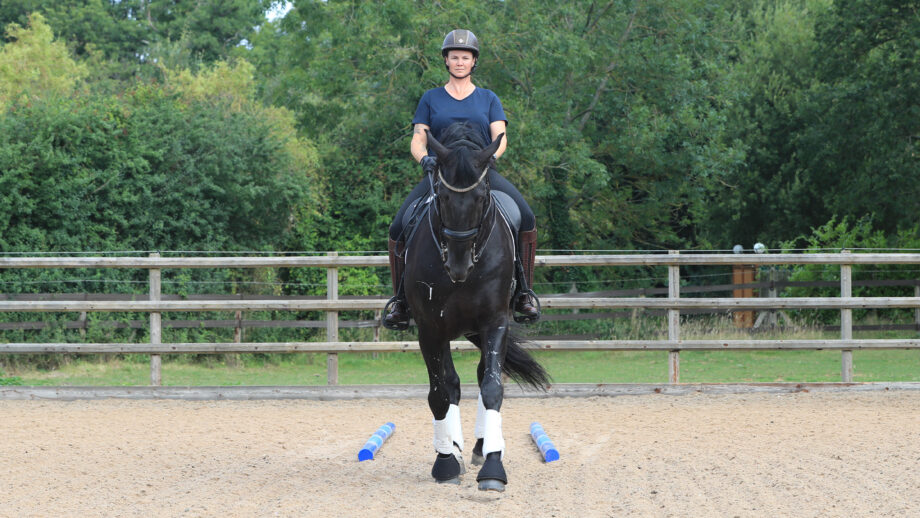
Refine your centre lines using just two poles and two cones

Learn how to strengthen your horse at home using polework

Subscribe to Horse & Hound magazine today – and enjoy unlimited website access all year round