The best way to cool horses is sometimes debated in the equestrian community. Thankfully, there is a straight answer to the constant discussion between horse owners of to scrape or not to scrape – and it’s backed by science.
Heat is a major by-product of energy production and muscle function during exercise, with the amount of heat generated increasing in line with the intensity of a horse’s work. Therefore, cooling after the exertion of competition is extra important. But why?
The best way to cool horses can save lives
During exercise, a horse only uses a small proportion of stored energy to work his muscles. The rest is lost as heat through the metabolism of the stored energy. This causes heat build-up in the body, so controlling that body temperature, i.e. cooling the horse, is essential to avoid heat exhaustion.
A horse’s normal core body temperature at rest should be between 37.5°C and 38.5°C. When this rises to a dangerous level above 41°C to 42°C, you will see side effects and signs of heat exhaustion. These can range from excessively high heart and respiratory rates to dehydration, fatigue and poor recovery from exercise.
If left untreated, heat exhaustion can develop into heatstroke — a condition in which the body is unable to regulate its own temperature. This can ultimately lead to multi-organ dysfunction, including kidney and liver failure, abnormal heart rhythm, loss of coordination and, in severe cases, death.
The power of evaporation
Evaporative cooling — losing heat through the skin by sweating — is the most important way a horse controls his body temperature during and after exercise. Water from sweat evaporates into the air, taking heat energy with it.
Additionally, about 30% of heat loss occurs through the lungs and respiratory tract during normal breathing.
These methods of heat loss are at their most efficient when the difference between the skin temperature and the surrounding air temperature is greatest, such as in cool, dry weather.
Cooling by sweat evaporation is less effective in hot and humid conditions, because the surrounding air is already saturated with water. That means the difference between air and skin temperature is minimal, so evaporation is much less effective.
Sweat starts to drip from the body but removes just 5-10% of the heat that would have been lost through evaporation.
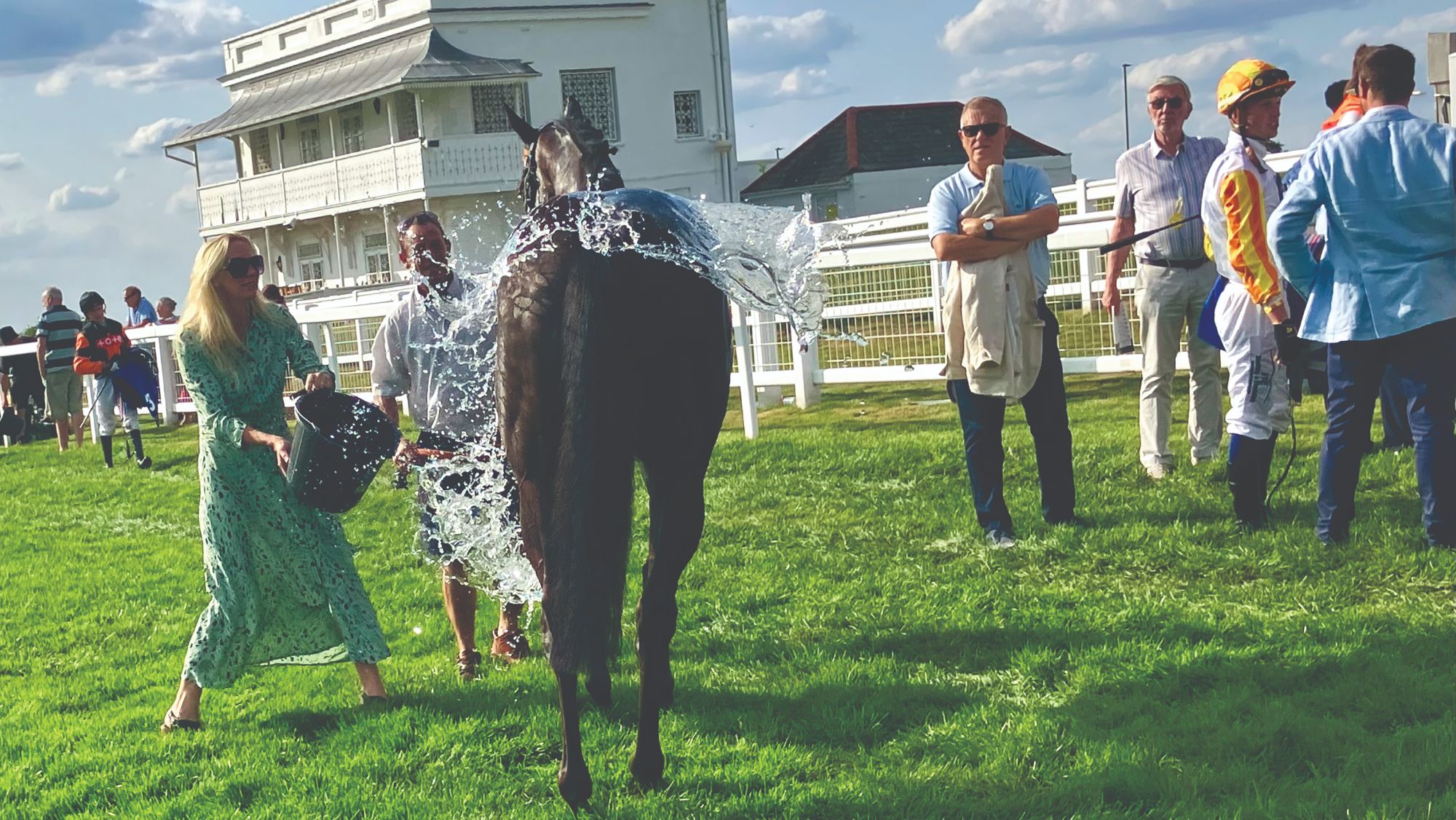
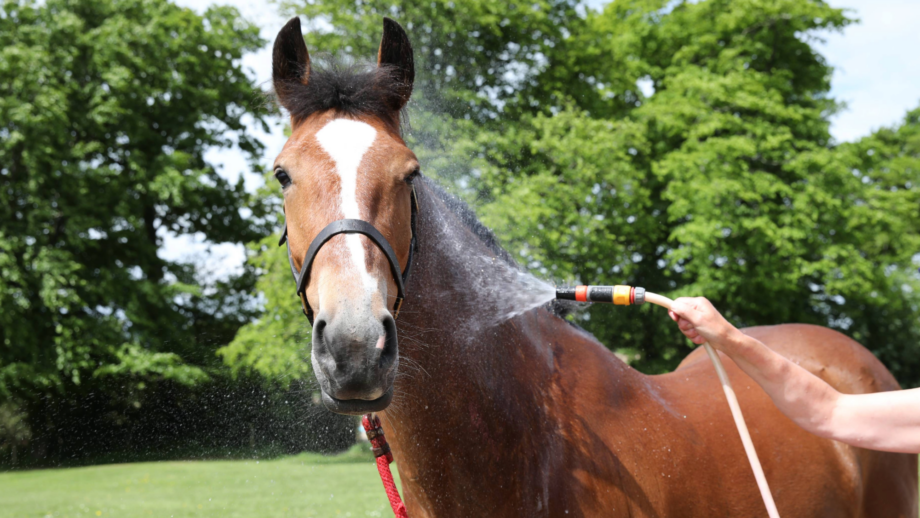
Continuous application of cold water is the best way to cool horses. Photo: Karen Coumbe
Should you scrape a horse off after hosing?
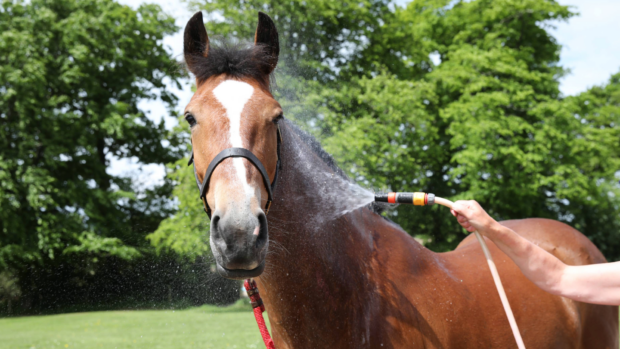
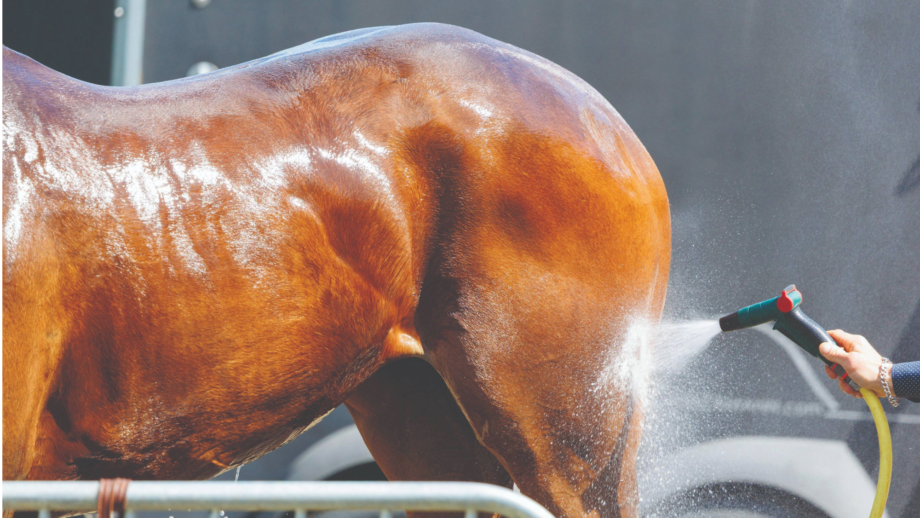
While scraping water off a warm horse will do him no harm, it will slow the cooling process in a dangerously hot horse. Therefore, the best way to cool horses at the end of intense exercise or competition is to apply copious amounts of cold water over his whole body, without scraping it off.
But how does this work?
Research has shown that applying cold water (9°C) to a horse after exercise in hot, humid conditions helps bring core body temperature back down to normal faster than using tepid (31°C) water. Cold water has no negative effect, such as increasing the risk of tying-up.
How to explain the scraping myth? Water is a good conductor of heat, which is why cold water on a hot horse heats up – the horse is losing body heat to the water. Some owners might infer this means that the hot water is insulating the horse, but this isn’t true.
Then, the horse is cooled further as the water evaporates, because evaporation cools the surface the water is sitting on.
Along with a team of researchers, Dr David Marlin undertook extensive study in this area leading up to the 1996 Atlanta Olympic Games.
More recently Dr Marlin has published research that showed, for recreational horses, applying cold water on the limbs following after moderate effort is sufficient to cool the horse down. This showed to be more effective than the repeated application of cool water on upper and lower body parts of the leisure horses in the study who performed at medium- or low-intensity effort.
How to keep competition horses cool
In addition to continuous cooling by applying cold water without scraping, other good ways to keep horses cool include:
- keeping them in shade as much as possible
- using a misting fan – you’ll find these most often at elite events
- ensuring they appropriately fit – fitness and acclimatisation to local weather conditions are additional key factors in avoiding heat stress
- maintaining a healthy weight and body condition score – an overweight horse will struggle more
- helping with electrolytes – electrolyte supplements help to keep your horse hydrated, and a hydrated horse can cool regulate their temperature better
- using ice boots to cool legs – some evidence states cold therapy has a positive effect on tissue metabolism and enzyme activity when skin temperature is reduced to 10°C or when joints are reduced to 30°C. However, ice must be applied thoughtfully and at reasonable intervals to avoid freezer burn
How to tell if a horse has heatstroke
Ambient temperature and humidity levels in the UK rarely reach those of more tropical climates. However, signs of heat exhaustion are not uncommon in horses competing here in the summer — particularly if the weather suddenly becomes hotter.
Signs of heat exhaustion include:
- prolonged and delayed recovery (beyond 10 to 20 minutes after the end of the competition)
- persistently elevated heart and breathing rates
- continued, excessive sweating
- shaking
- weakness
- loss of awareness of surroundings
Ongoing increases in rectal temperature after the end of exercise are a strong indicator of heat stress and the potential to develop heat stroke.
In its most severe form, this can leave a horse unable to sweat, reluctant to drink water or to walk. It can cause staggering, depression and collapse – even death.
Urgent cooling and appropriate veterinary treatment, including intravenous fluids in some cases, is vital.
- For unlimited access to advice on how best to care for your horse, subscribe to the Horse & Hound website
You might also like:
How to keep horses cool in a heatwave with helpful tips for instant results
10 tips for travelling in hot weather with your horse – and when to stay at home

When is it too hot to ride? Your warm weather questions answered…

15 no-rinse washes that will keep your horse cool and refreshed

Help your horse survive the heatwave and grab a discounted portable fan for his stable this Amazon Prime Day

Leaving water on a horse will not make it hotter: expert busts the scraping myth

Subscribe to Horse & Hound magazine today – and enjoy unlimited website access all year round