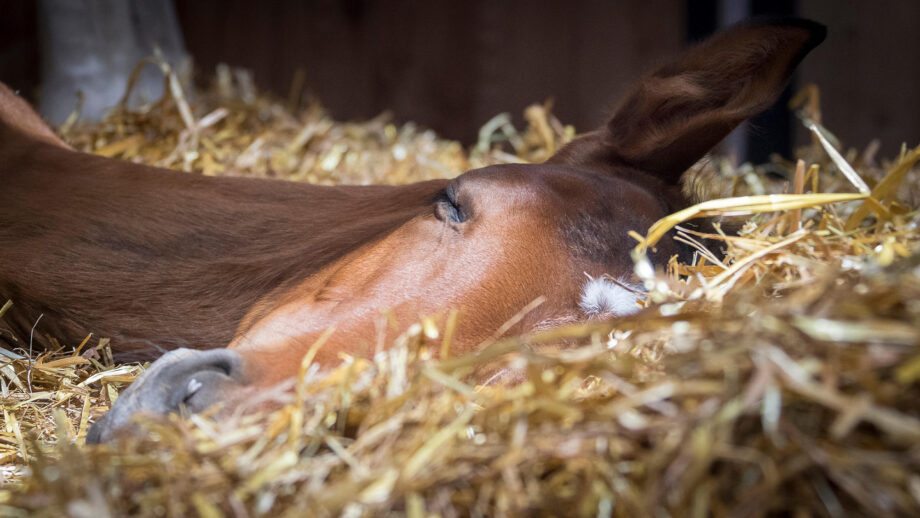
These days, there is a type of bedding to suit every horse. Whether your horse is particularly wet, sensitive to dust or needs a deep bed, there’s an option available that is designed to maximise their comfortable in their stable.
When choosing the best horse bedding to use, not only do you need to think about what will keep your stabled horse happy and healthy, but you also need to consider your needs as an owner. Are you prioritising budget, mucking-out speed, absorbency, low dust levels or sustainability? If you need a bedding that’s free of prohibited substances, look out for the BETA NOPS accredited bedding logo.
If you’re thinking about changing your horse’s bedding material, here are the pros and cons of each type of bedding to help you decide.
Types of horse bedding
- Straw
- Chopped straw
- Straw pellets
- Wood shavings
- Wood pellets
- Shredded wood fibre
- Hemp
- Paper/cardboard
- Rubber matting
1. Straw
This is the most traditional horse bedding available and all equestrians are likely to have mucked out a straw bed in their time.
Advantages:
- Cheap
- Breaks down well
- Easy to get hold of
- Can create a thick, comfortable bed
Disadvantages:
- Bulky and messy to store
- Builds large muck heap
- Horses can eat straw
- Can vary in quality
- Not very absorbent
Types of straw
There are also different types of straw to consider. Wheat straw is readily available and can be used to make a warm, comfortable bed, but it tends to be dustier than other types, so not suitable for horses with respiratory problems.
Barley straw is often cheapest, but can be uncomfortable and may cause skin irritations, so is not always suitable for horses. Oat straw is the most palatable, which is a disadvantage if your horse is prone to eating his bed. It is more absorbent, however, although this makes it heavier to muck out.
2. Chopped straw
Treated straw products sometimes contain other bedding materials, and essential oils can be added to improve odour.
Advantages:
- Dust-extracted
- Treated to be non-palatable
- Wrapped bales are clean, plus easy to handle and store
- Not as bulky as straw, so produces a smaller muck heap
- More consistent quality than conventional straw
Disadvantages:
- More expensive than straw, although cost can be reduced with bulk deliveries
- Sold through selected stockists so you may not have a choice of brands locally
3. Straw pellets
To create straw pellets, fresh straw is dried to high temperature, dust-extracted and then compacted into shape.
Advantages:
- Dust-extracted
- Highly absorbent
- Eco friendly
- Bags are easy to handle and store
Disadvantages:
- You may need to add water when the bedding is put down, which adds time
- Not as absorbent as wood pellets
4. Wood shavings
Purpose-produced shavings are a popular type of bedding, but the quality can vary enormously — particularly in relation to dust content. It is important that you only buy shavings that have been specifically produced as animal bedding.
Advantages:
- Non-palatable
- Widely available
- Wrapped bales are clean, plus easy to handle and store
Disadvantages:
- Can be difficult to dispose of – shavings take much longer to rot down
- Needs constant removal of droppings and care has to be taken to ensure the bed does not become wet, causing a build up of ammonia
- Cheaper brands can contain high dust levels
- Price can fluctuate

Wood pellet bedding before watering
5. Wood pellets
Wood pellet bedding is made from heat-treated and compacted sawdust. You need to add water, which makes them fluff up and increases their absorbency.
Advantages:
- Usually eco-friendly
- High absorbency
- Dust-extracted
- Composts quicker than shavings or straw
- Quick to muck out
- Low waste
- Supplied in bags rather than bales, so may be easier to manoeuvre and transport
- Processing can help to kill moulds, spores and bacteria
Disadvantages:
- Can be slippery while still in pellet form
- Expensive to build initial bed
- Heavy to muck out once absorbed urine
6. Shredded wood fibre
This is made from recycled wood and results in a slightly smaller and denser product that traditional shavings.
Advantages:
- Eco-friendly
- Low dust levels
- Less likely to be displaced
- Consistent quality
- Low waste
- Doesn’t cling to manes and tails
- Can be cheaper than premium wood shavings
Disadvantages:
- Not absorbent, but this means it is free-draining and less bedding is used overall (so an advantage to some)

Hemp bedding
7. Hemp
Whereas straw bedding uses the whole stalk of the plant, hemp bedding is made from the softer centre, which is a by-product of textile and rope manufacturing.
Advantages:
- Highly absorbent
- Dust-extracted
- Non-palatable
- Rapidly breaks down to make good compost
- Wrapped bales are clean and easy to handle and store
Disadvantages:
- Bales are relatively expensive and the initial cost of bedding down are off-putting
- Manufacturers claim that long-term use make it competitively economical
- Bedding is heavy when it has absorbed urine
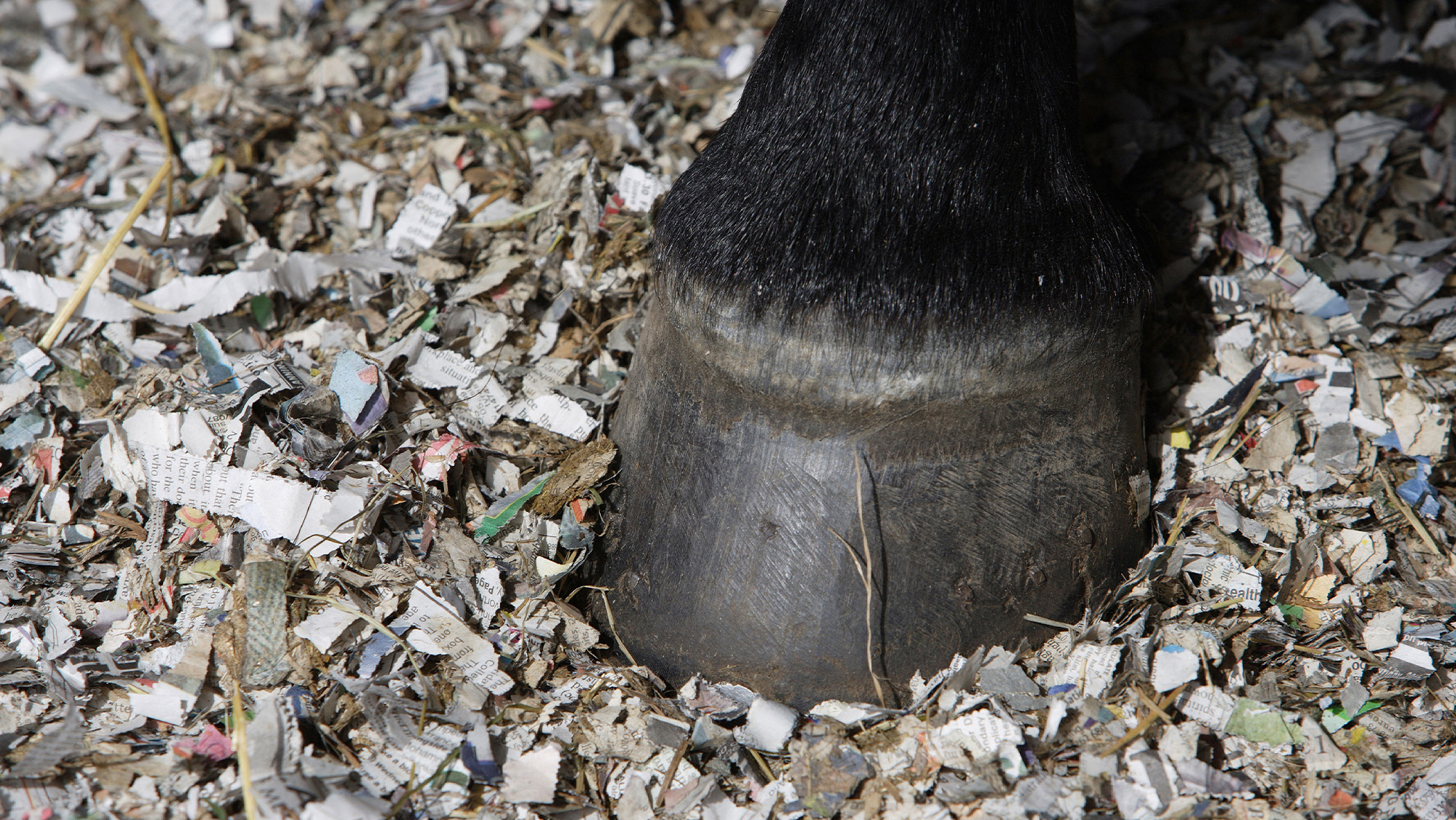
8. Paper/Cardboard
This tends to be a mixture of newspaper, magazine and other unwanted printed matter. It is often considered to be a cheaper option, but a large number of bales may be needed to create a thick bed. It is also worth considering cardboard, which has similar advantages to paper but is heavier and so less likely to blow around the yard.
Advantages:
- Dust-extracted and non-palatable — a good choice for horses with allergies
- Produces a warm bed
- Wrapped bales are clean, plus easy to handle and store
Disadvantages:
- Can be costly
- To start a bed it can take five bales, and then one or two bales a week for a horse that is stabled at night
- Easily blown around, producing an untidy-looking yard
- Disposal can be a problem
- Care has to be taken to ensure bed does not become soggy
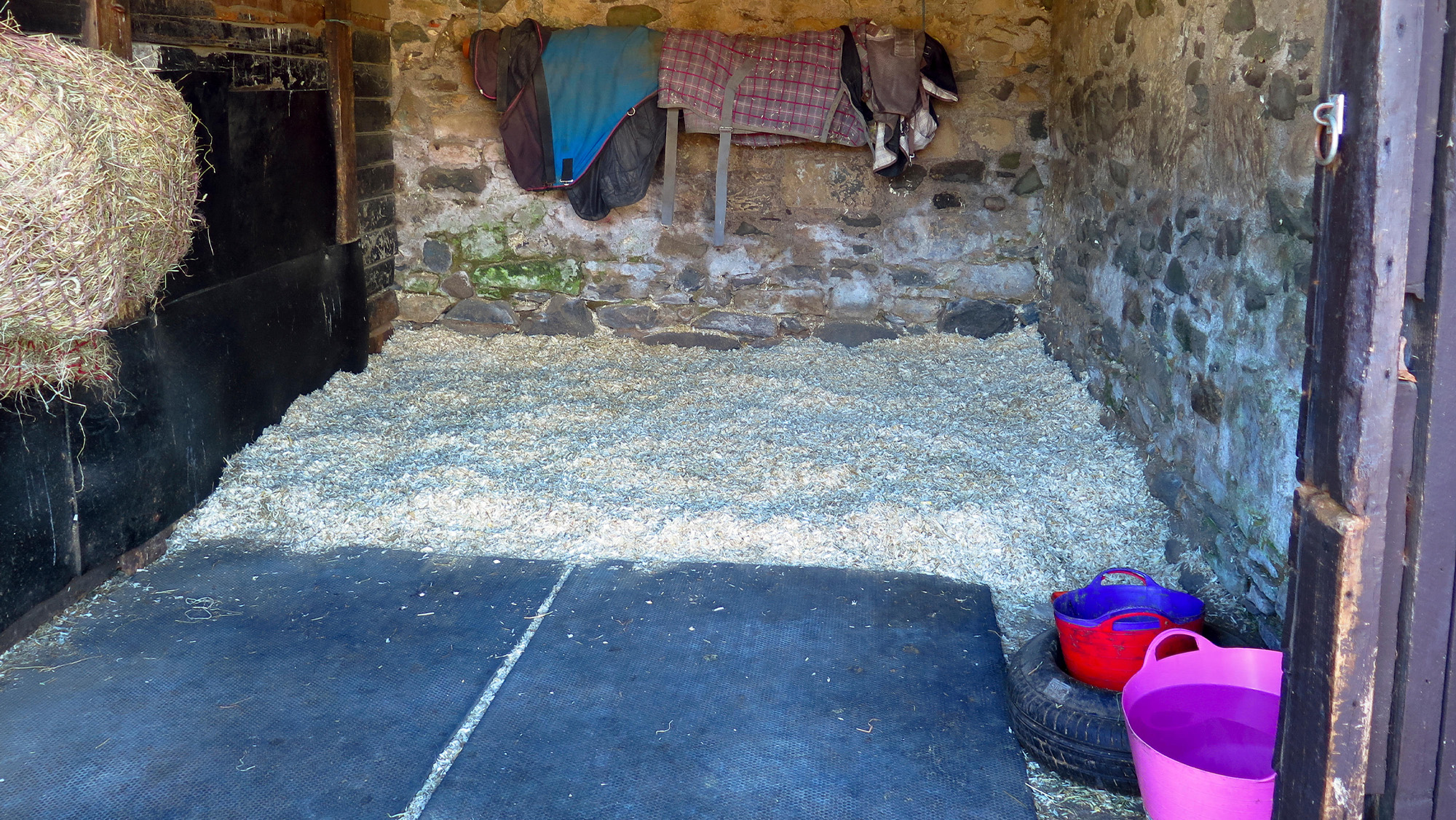
Rubber matting reduces the stable floor space that needs covering with bedding.
9. Rubber matting
While rubber matting is not strictly a bedding, it’s become a common addition to many stables. The initial cost of matting is expensive, but it should be viewed as a long-term investment as it allows owners to use less bedding material overall. This saves on ongoing costs, time on mucking out and reduces the size of the muck heap.
Rubber matting provides better grip and additional support for your horse, and so also helps to minimise the risk of injury, but you should still add a substantial layer of bedding on top of any mats to absorb urine.
To keep mats hygienic, you need to lift them regularly and thoroughly clean underneath to prevent a build up of ammonia and dirty bedding. Ideally, you should be deep cleaning your stable monthly.
- For unlimited access to advice on how best to care for your horse, subscribe to the Horse & Hound website
You may also be interested in…

Deep litter bedding for horses: pros and cons
7 ‘wheelie good’ barrows for horse owners that won’t let you down
Get swept up in our pick of the best yard brooms
What’s the best bedding for you and your horse?

Subscribe to Horse & Hound magazine today – and enjoy unlimited website access all year round