
A new guide on whether to use a whip, and in what way, has been published as part of ongoing attempts to see the world through horses’ eyes – and strengthen our relationship with them.
World Horse Welfare’s guidance, titled “Should I carry or use a whip?” is published today (29 January), the result of years of extensive work.
The aim is to start a conversation on whip use in equestrianism. The message is not that whips are bad; used wrongly, they can cause great harm, but there is a place for them if used correctly, which the guide aims to set out.
Equine vet Janet Douglas, who works with World Horse Welfare, said: “Challenging our own habits and beliefs is never easy but it is important that we start to consider whip use from the horse’s standpoint.
“If we can be brave and open-minded, ask questions of ourselves and others and follow ideas where they lead, the horse-human relationship will almost certainly be better for it.” Read Dr Douglas’s thoughts.
The guide states that the whip is an “optional piece of equipment that, when used correctly, can be an ethically acceptable way to train horses”.
“There may also be times when riders may feel that its use could be helpful in maintaining horse and rider safety,” it states. “However, when used in the wrong way or at the wrong time, a whip can cause a horse to become confused or scared, endangering both horse and rider. And undoubtedly, in uneducated or angry hands, its use can constitute abuse.”
The guide aims to encourage people to talk and think about whether they need to carry or use a whip. It explains equine learning theory, and how whip use can align with this in training.
“We’ve talked to a lot of people, from those who don’t think we should be using whips at all, all the way through to those who believe that actually using a whip with force at times is needed, not least for safety, and everyone in-between,” World Horse Welfare CEO Roly Owers told H&H. “Everyone has a perspective and it was really important to understand that.
“The origin of this was very much to simply ask the question: why do people pick up a whip? Because for so many people, it’s an instinctive thing. You’re going for a ride, you pick up the whip. I include myself; I’d feel almost naked if I didn’t have one. So it was: why do we do that? And the other question was: when we use a whip, does the horse understand?”
The key themes that emerged were ensuring that we understand how horses learn, and training them in a way that puts the horse’s experience at the forefront.
The guide explains operant conditioning, the way horses make associations between their actions and the results of these. It explains positive reinforcement, negative reinforcement (pressure and release) and punishment (see box) and asks riders to consider which approach they are taking and what the effects might be.
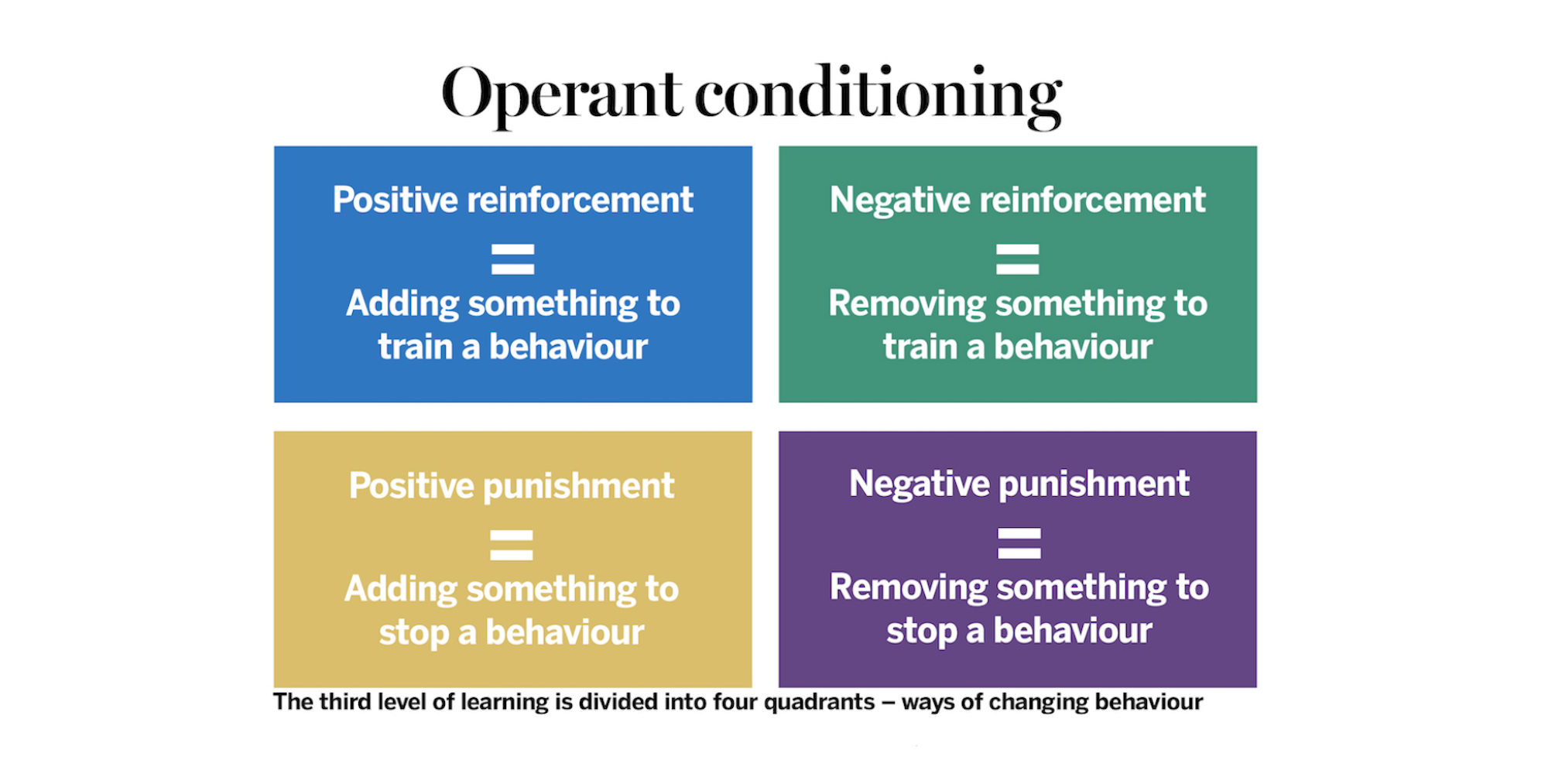 It then sets out how minimally aversive whip use can be used in training, giving examples of using light pressure, removed as soon as the desired behaviour is shown, and includes a series of questions to ask, to determine whether in any given situation whip use is appropriate or not.
“Very much the intention is to ask the questions, to be a conversation starter,” Mr Owers said. “One key challenge, I think, is that a lot of people think they know how horses learn, but when you start to dig under that, general understanding of how horses learn is not as good as it should be.
“Before you have a view on using a whip, or any aid or equipment, I think that’s a really important basis. It’s widely recognised that horses can get confused; they don’t think like us, and if they don’t understand what’s being asked of them, they can get confused, and that can have real negative consequences.
“So if I am to look through the horse’s eyes, I have to start with ‘how do they learn?’ It’s so important that as a first step, people really commit to understanding that better if they need to.”
Changing rules
Different governing bodies have changed whip rules in recent years; British Showjumping, the Pony Club and British Riding Clubs have all banned use of the whip to discipline or punish, reflecting not only a focus on equine welfare but scientific research that has found such use is ineffective in helping horses learn.
Equine vet and Horse Trust director of equine behaviour Gemma Pearson, who was involved in creating this guide, told H&H she was very impressed by how much work has gone into it.
“It’s not a document saying, ‘Don’t use whips in this scenario,’ it’s about how we should use them,” Dr Pearson said. “I think the whip can be a really valuable tool; it can make things easier for horses, it can make things clearer for horses, the problem is that people have traditionally used it very badly.
“I think first of all, you have to have the knowledge, and I don’t think many people have explained to them how we would use whip taps from a negative reinforcement perspective. And after that, the next thing really is changing that mindset, which is hard if you’ve been brought to believe something different.
“If you’ve been used to using a whip in a certain way for decades, someone saying that’s wrong can feel like a threat to your personal identity, to who you are as a person. I think the mindset change is going to take time, but the nice thing about this document is that it’s not telling people what not to do. It’s giving them options and telling them how to use it.”
Feedback
Mr Owers added that the guide’s publication is a first step; feedback will be taken on board and it will evolve as our understanding of equine learning and behaviour increases. There are other areas for it to expand on, such as safety.
“We absolutely recognise the paramount importance of rider and horse safety, but I think we need to be open when we say we’re using the whip for safety. Is that really the case, and is it really having the impact we think it’s having,” he said.
“We’ve just got to be open to challenging: that may be appropriate on occasion, but really, every time we think about using a whip, we’ve just got to challenge ourselves, and I hope that’s where the decision tree is so helpful.”
To all equestrians, Mr Owers added: “Have a read. Keep an open mind. Challenge yourself on how much you know about equine learning and how horses learn and commit to a better understanding. With that knowledge, take the guidance and each time you think about the whip, think about that framework of questions.
“At first it’s quite a laborious process, but like anything, it will become natural. As equestrians, we’re making decisions the whole time, and it’s so important those decisions are as informed as possible. Hopefully this guidance, this discussion and the questions we raise in the guidance, will really help people make better informed decisions about whip use, and improve their relationship with their horses.”
What do you think of this guide? Please write to us at hhletters@futurenet.com, including your name, nearest town and county, for the chance to appear in a forthcoming issue of the magazine.
- To stay up to date with all the breaking news from major shows throughout 2026, subscribe to the Horse & Hound website
You may also be interested in:

Whips may not be used to discipline horses in new showjumping rules with a welfare focus

Ban on using whips after refusals, elimination and ‘out of temper’ in competition
Mark Phillips: ‘Restricted use of the whip is coming – the sooner the Olympic disciplines embrace it, the better’

A ‘massive step’ as new whip and spur rules are making a difference

10 competition legal whips in a variety of styles for every discipline
Subscribe to Horse & Hound magazine today – and enjoy unlimited website access all year round