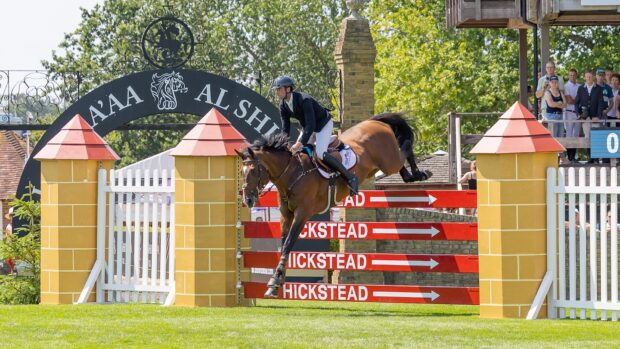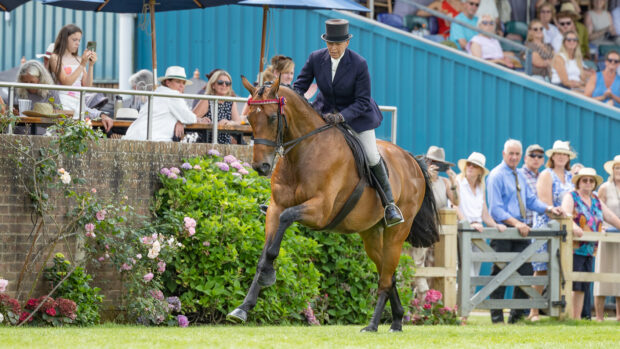
The Hickstead Derby course remains the same year after year, and is much longer than your average showjumping course at 1,195m, with 21 jumping efforts.
Since the master of Hickstead Douglas Bunn held the first Hickstead Derby in 1961, the class has attracted a succession of the world’s leading athletes and horses ready to bravely tackle its notorious fences, from the fiendishly difficult Devil’s Dyke to the world renowned 10ft6in Bank.
Clear rounds are remarkably hard to achieve, so what does it take? Winner of the 2022 Hickstead Derby Shane Breen shares his insight.
“There’s nothing quite like trotting into the International Arena at Hickstead to compete in this special class,” says Shane, who won the Hickstead Derby with the sole clear that year on Can Ya Makan.
“Many of the experienced horses rise to the occasion, but when the crowd applauds it’s natural for them to get a bit anxious – they know it’s show time. From a rider’s point of view, you’re therefore trying to get them settled and relaxed before the bell rings for you to start.”
How to ride the Hickstead Derby course, fence by fence
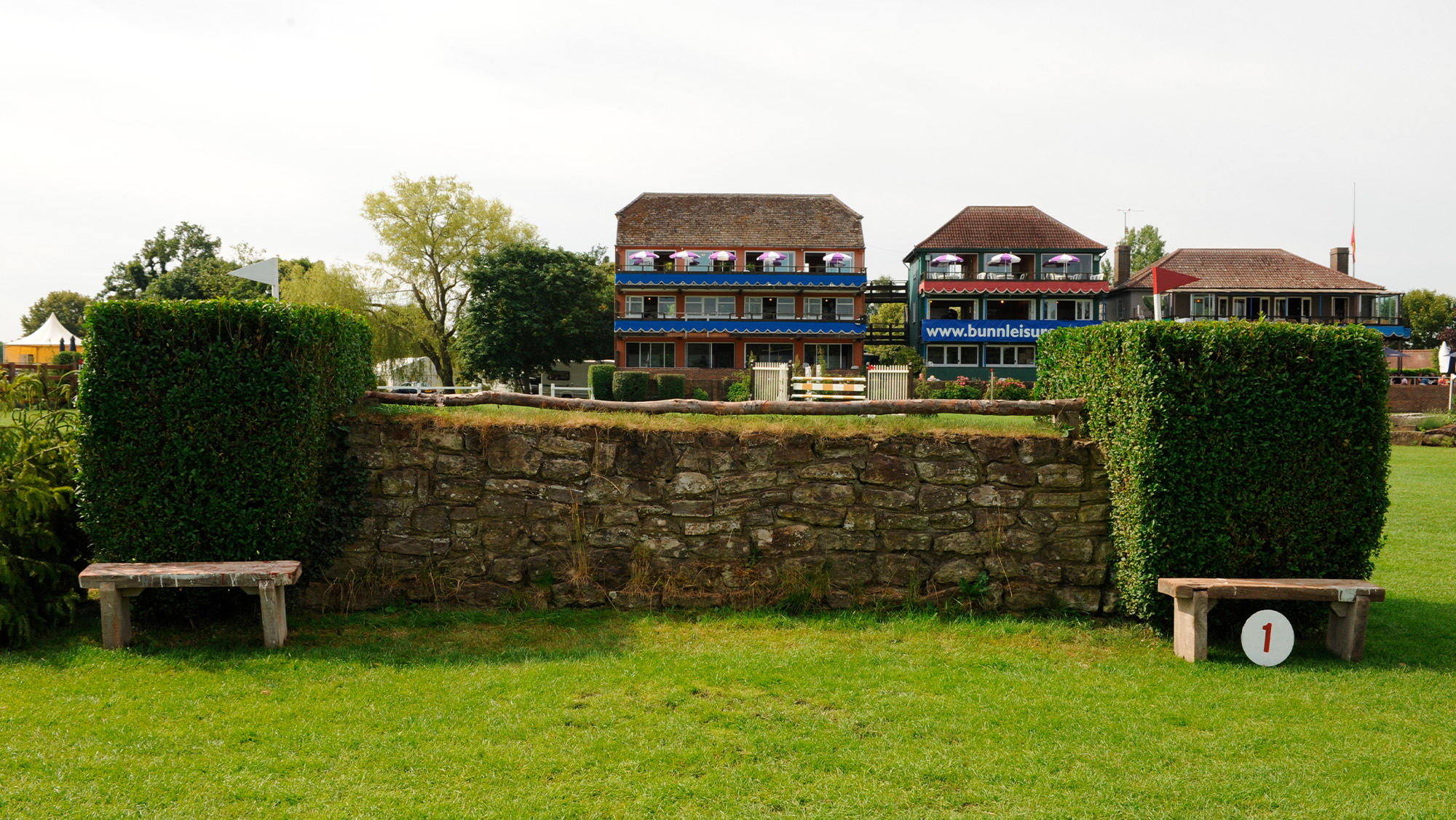
The Cornishman eases riders in, but nothing should be taken for granted. Credit: Trevor Meeks
Fence 1: The Cornishman
Height: 4ft 8in/1.42m
“Horses don’t normally spook at a fence like this; even Hickstead Derby newcomers will have jumped a similar brick wall. Never dismiss it though – one year John Ledingham and Kilbaha did a funny slip coming into it in the jump-off and knocked the rustic pole off the top. You can’t take anything for granted around the Hickstead Derby.”
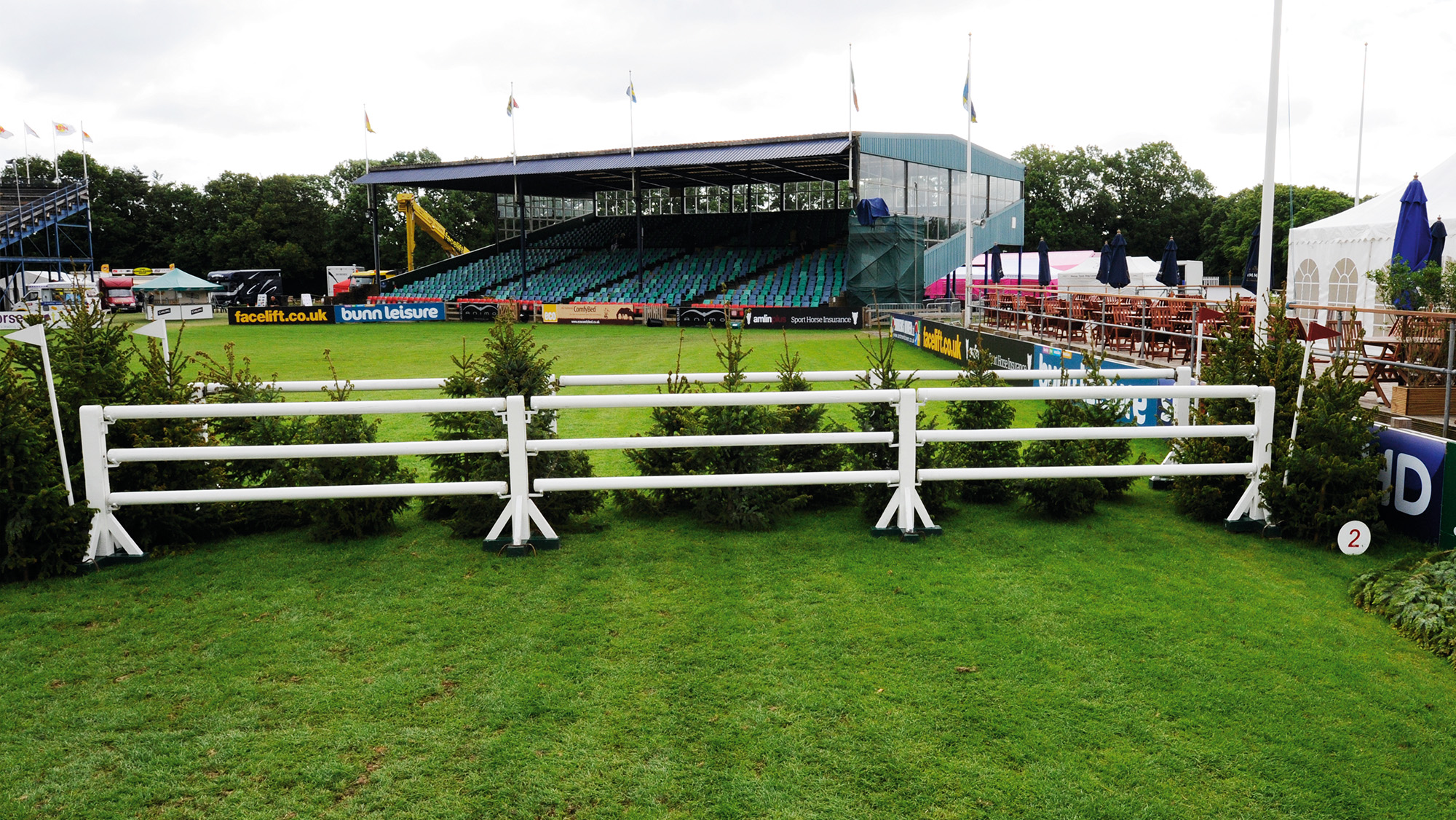
Not particularly high, but very wide, the white oxer will catch out the underpaced. Credit: Trevor Meeks
Fence 2: white oxer
Height: 4ft 3in/1.30m
Width: 6ft 6in/1.98m
“You have to steer around the Irish bank to get to this oxer of white poles, so the horses don’t see it until quite late. It’s not that high but it is very wide, so you can’t just waltz round the corner under-paced and expect them to clear it.
“Some horses can get a bit high over it because they’re not used to seeing Christmas trees in a jump like that, but again it’s Derby day so people have schooled and prepared – the course hasn’t changed for more than 60 years so you can do your homework.”
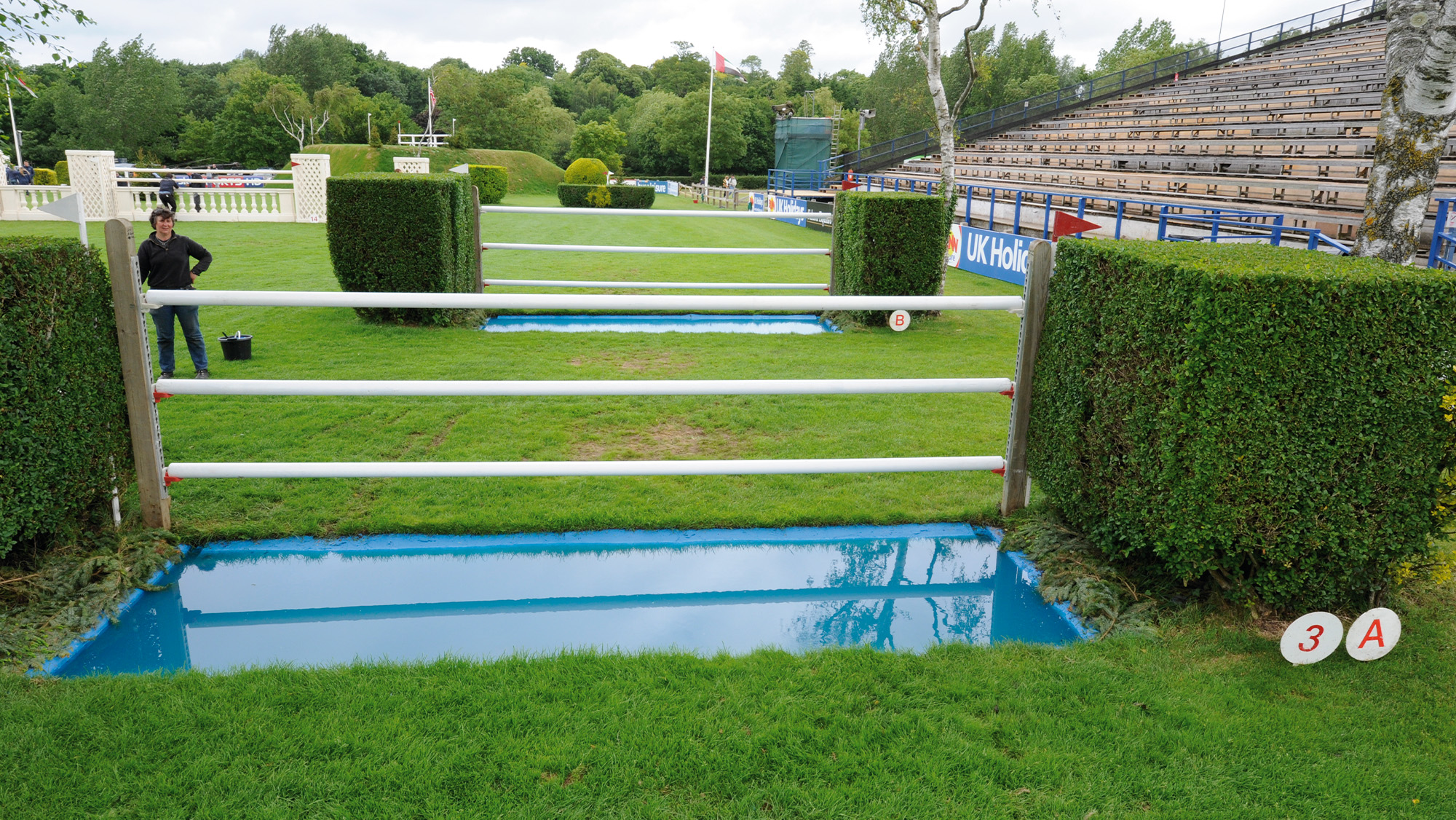
“You need to meet the first fence on a good stride with good pace so the second one comes easy.” Credit: Trevor Meeks
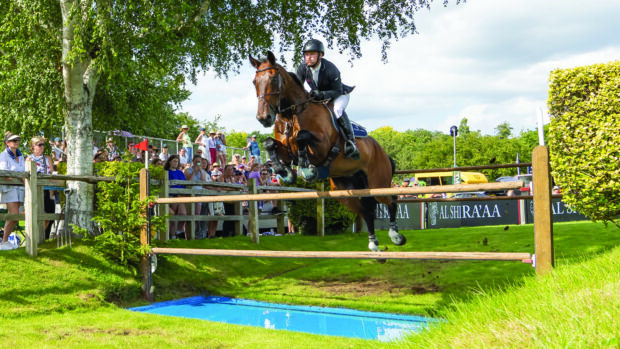
Fence 3a and b: double of water ditches
Height: 5ft/1.52m (3a), 5ft 2in/1.57m (3b)
“These are all about straightness, the approach and good rhythm. The fences are very tall and if it’s a sunny day you can get glare off the water underneath, so with that, the blue of the water and the white rails, you do have to focus to see the poles. The ground is running downhill, so you need to keep your leg on but sit tall.
“You land and you’ve one stride before the second obstacle, which is exactly like the first but even bigger. They’re a bit like jumping two triple bars because from take-off to clearing the top rail is such a stretch. You need to meet the first fence on a good stride with good pace so the second one comes easy – miss it and the second one feels twice as big and wide!”
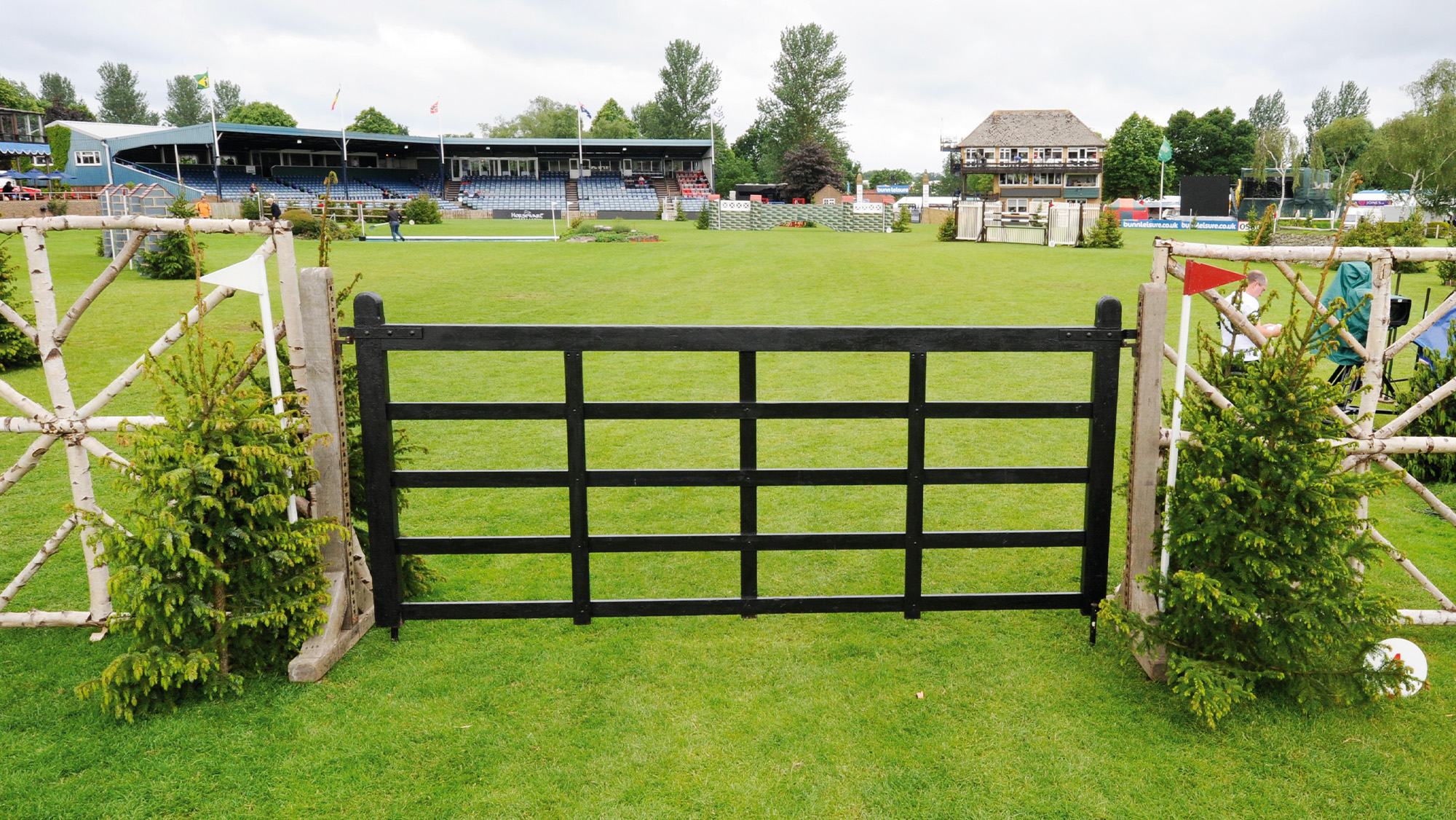
The black gate requires precision. Credit: Trevor Meeks
Fence 4: black gate
Height: 5ft 3in/1.60m
“The Hickstead Derby’s time allowed is generous, but almost everyone turns inside the balustrade to get to the gate because you’re giving yourself a bit of extra time if you need to be patient later on, at the Bank, say. So you swing left, then you keep straight before you do a nice flying change to the right.
“The gate is maximum height and falls easily, so it takes precision, but it’s also placed beside the pond, which doesn’t seem to give the horses any problems but it’s down to the rider to get a nice rhythm, very balanced and a good stride. You rarely see gates in jumping tracks nowadays but it does jump well.”
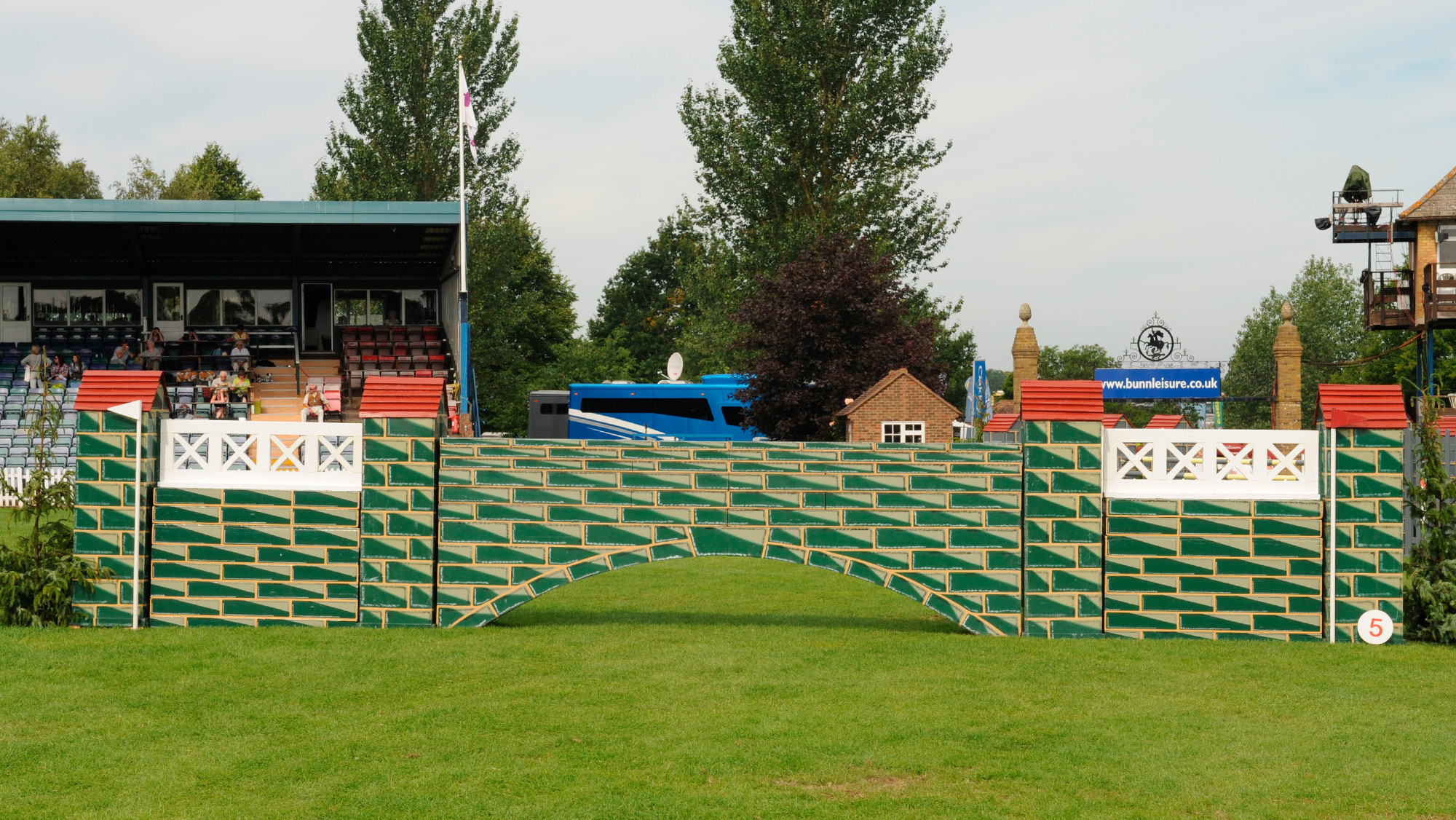
At 1.60m, the wall is one of the tallest fences on the course. Credit:
Fence 5: wall
Height: 5ft 3in/1.60m
“Similarly the wall is one of the tallest on course, with an arch underneath, but very rarely do you see a horse take a brick off. The fence is lighter than years before when it was chunkier and wider.”
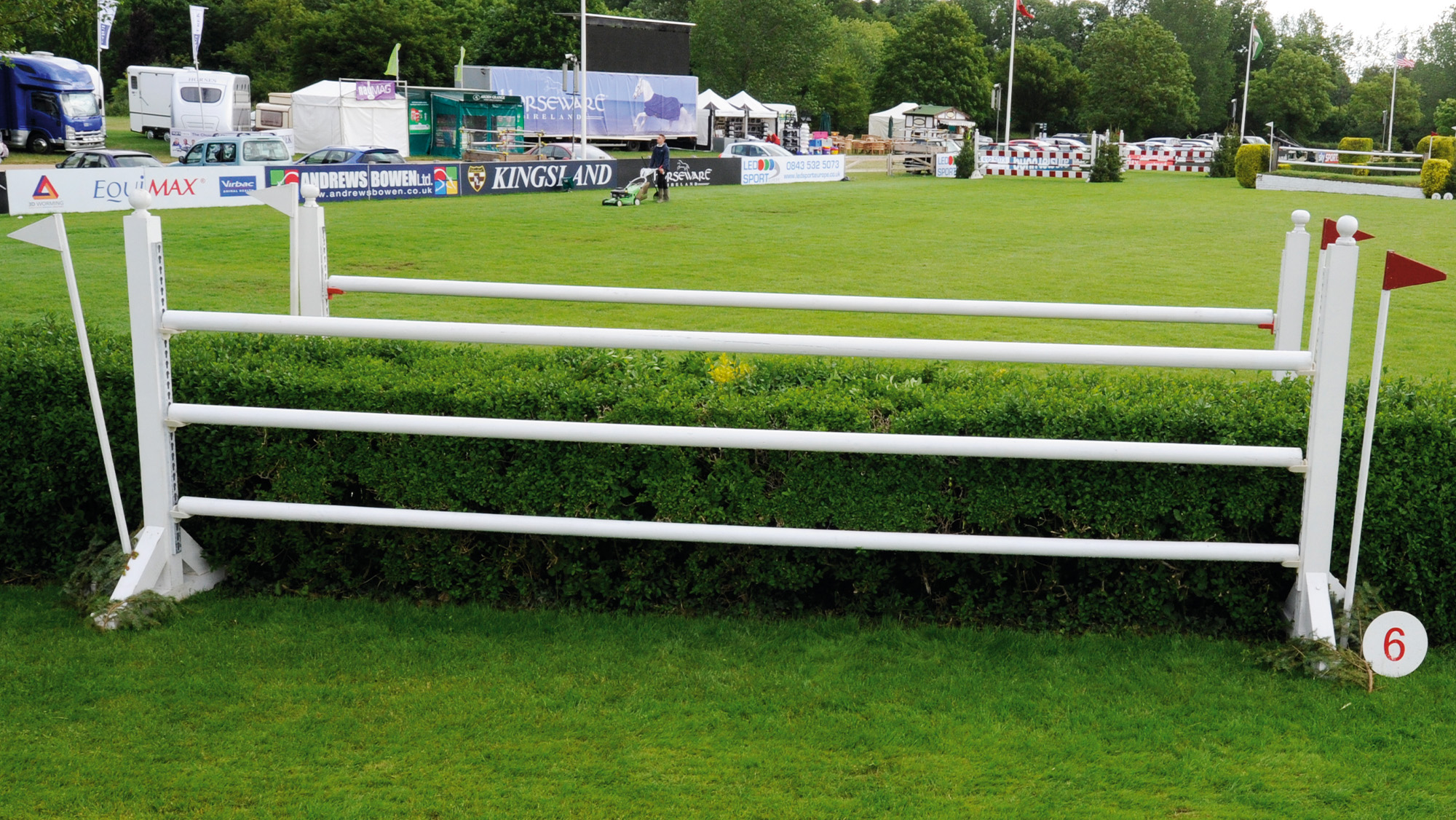
“There’s still a long way to go after fence six.” Credit: Trevor Meeks
Fence 6: privet hedge oxer
Height: 4ft 11in/1.50m
Width: 6ft 6in/1.98m
“It’s wide and those poles are about 16 ft long, which is remarkable. You’re coming away from the in-gate, so again you need to make sure your rhythm is correct and you’re on a good stride to make it easy for the horse to clear it – there’s still a long way to go, so you don’t want them having to overexert themselves at this stage.”
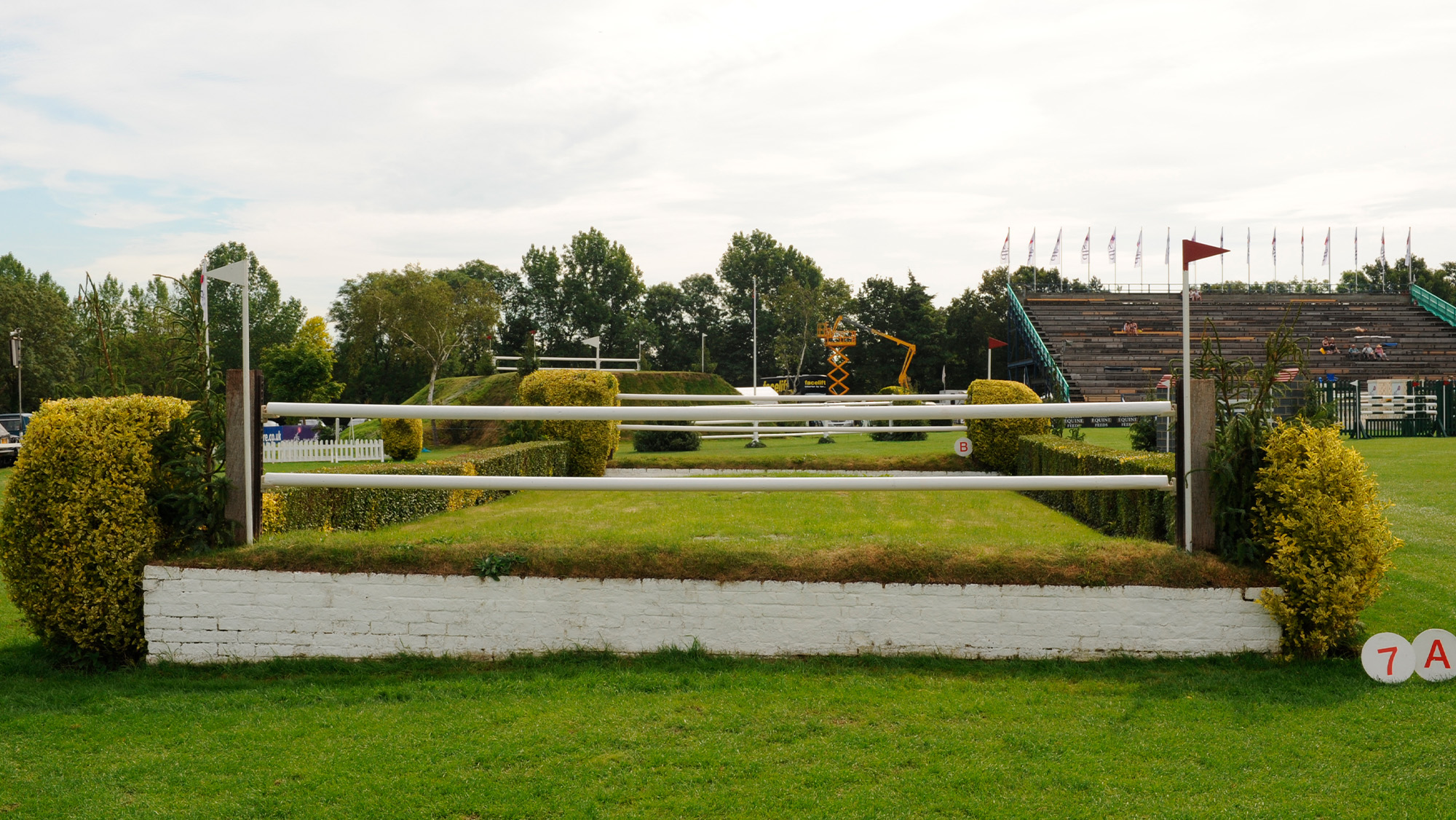
The road fence involves jumping on and off raised ground. Credit: Trevor Meeks
Fence 7a and b: road fence
Height: 5ft/1.52m (7a), 5ft 2in/1.57m (7b)
“You’re drawn here nicely on a line from the hedge and again the poles here are so long that every horse seems to hit it in the middle. You jump onto the higher ground, then there are three strides across the top before you jump out, and you can really feel the drop.”
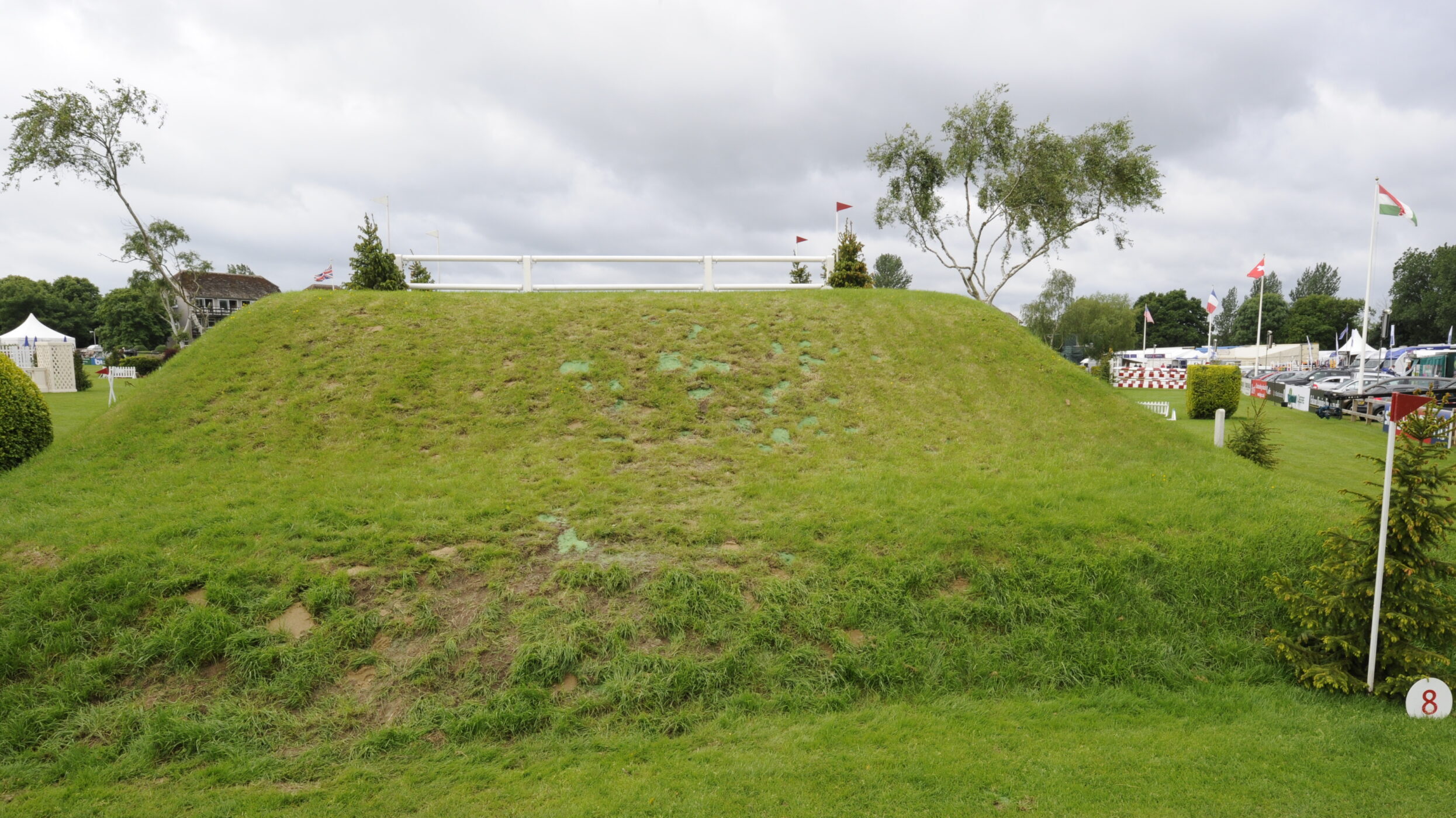
Approaching the Hickstead Derby bank. Credit: Peter Nixon
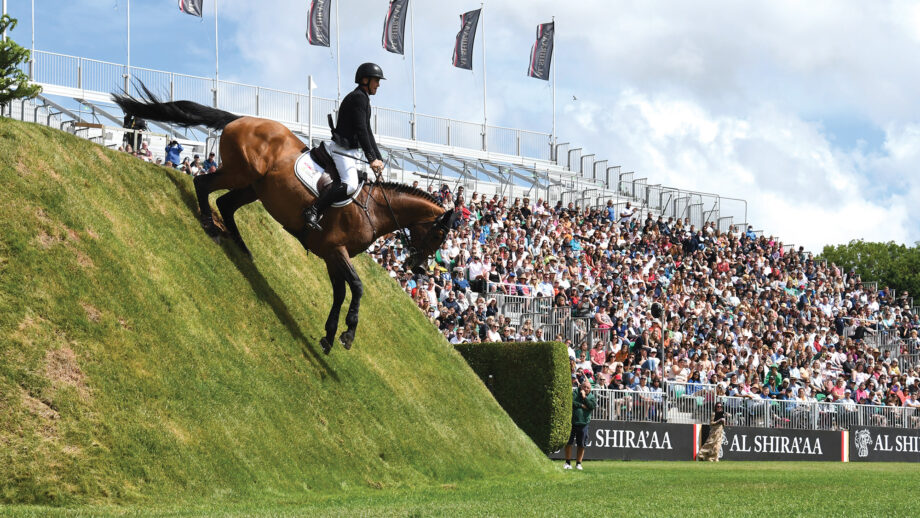
Fence 8: Derby bank
Rail height: 3ft 5in/1.04m
Drop: 10ft 6in/3.20m
“You’ve a bit of time now to fix your hat or give your horse a reassuring pat on the neck. You’re in your own little world, but you can feel the hush of the crowd waiting to see how you’ll execute the Bank. You canter up and ideally you just pop over the fence at the top to give you time to steady up before the drop – the fence is small in comparison with everything else, but it’s still big enough, especially situated up there, to warrant respect.
“Obviously you won’t have schooled over a bank with those kind of dimensions but everybody will have prepared down a bank of some description because you want your horse to be really confident so that when you’ve come to a standstill at the top, there’s no risk of them stepping back, or even putting too much pressure on and going down too quick.
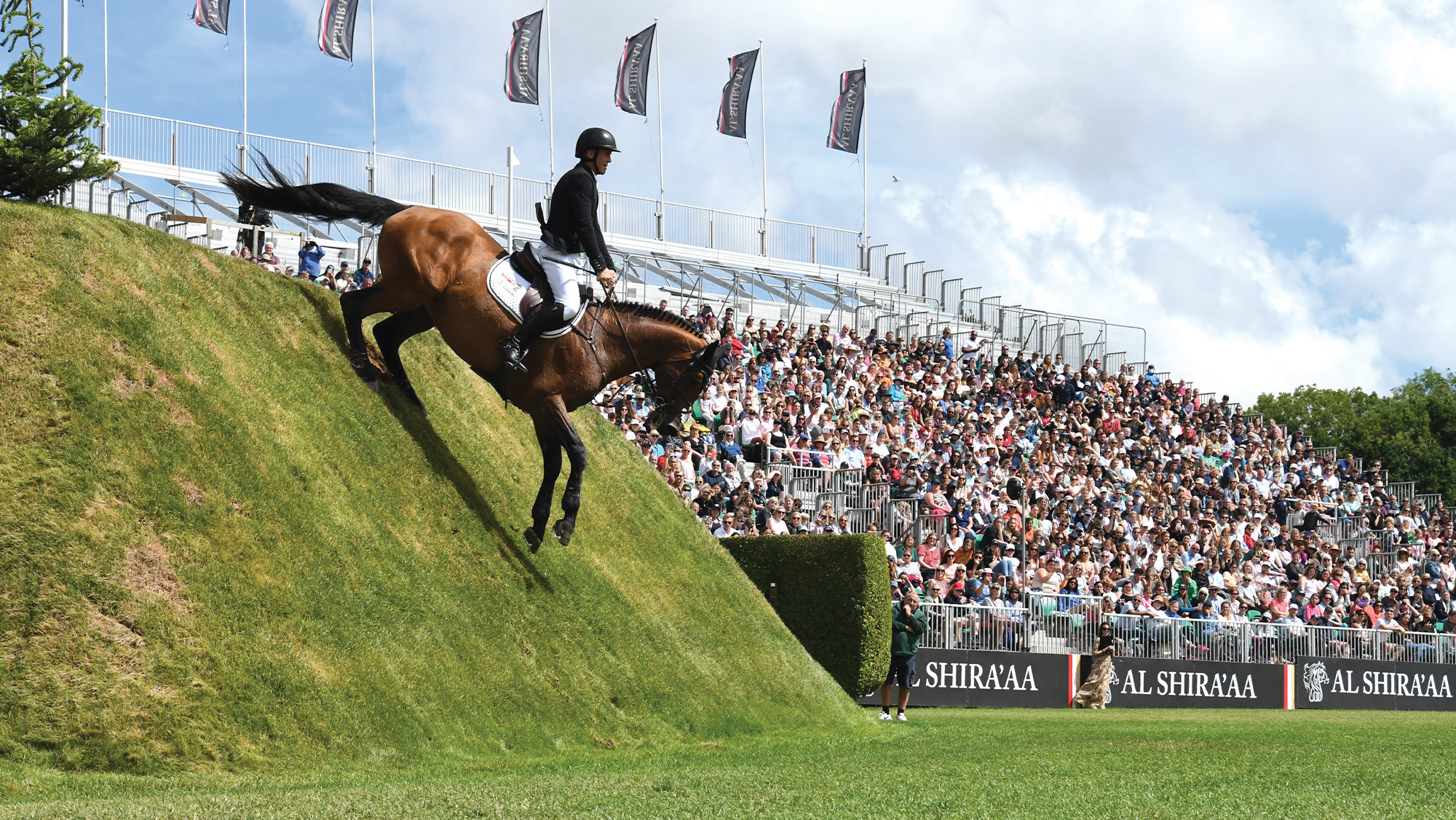
Once you’ve ascended the bank and jumped the rail, it’s time to negotiate the drop. Credit: Peter Nixon
“When he makes the initial descent with his front legs, he should know to gently follow on until halfway down before he pops off the side of it. I’ve ridden it the same way every year – pop the fence, steady up, talk to the horse, let them do their thing.”
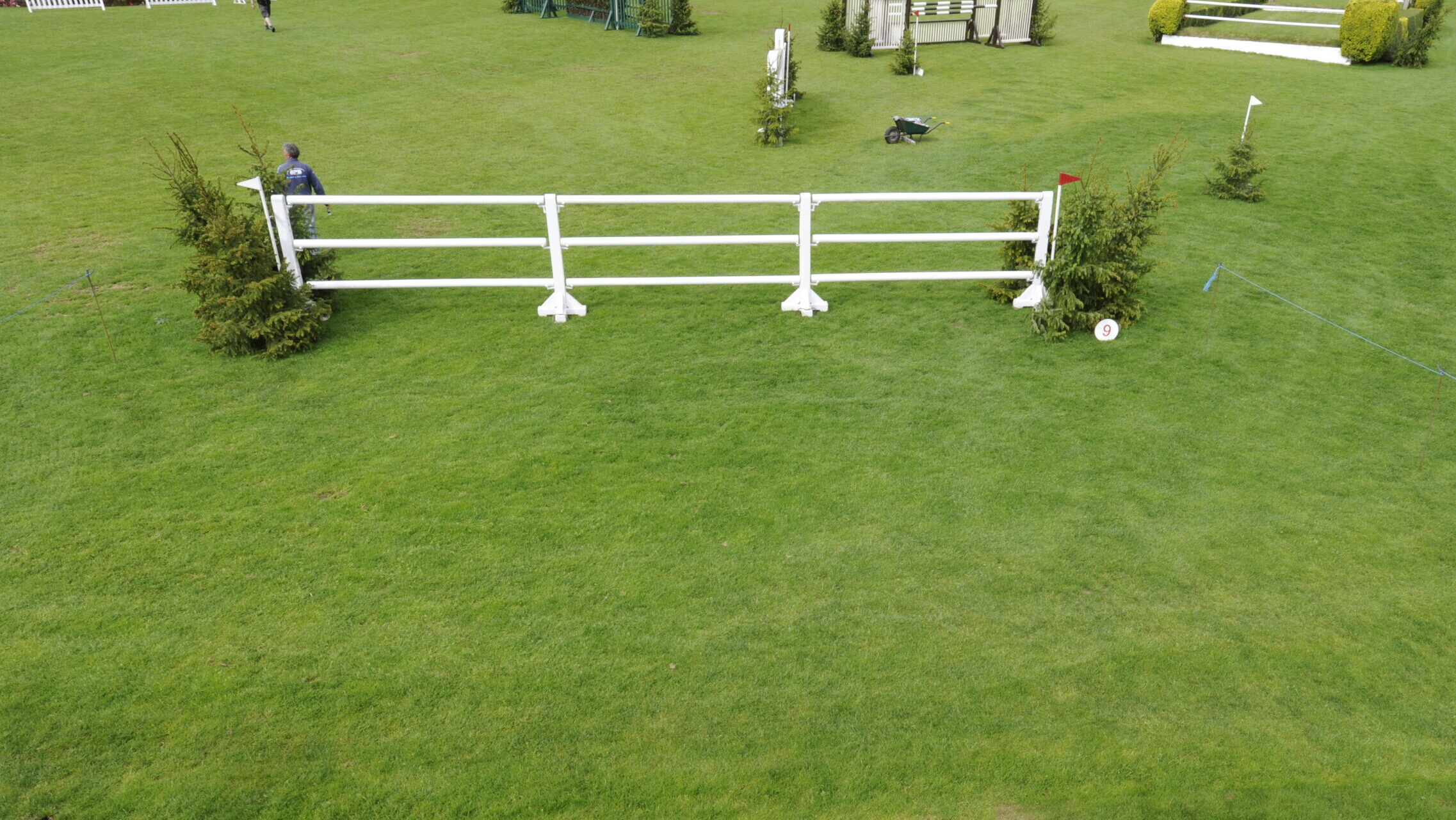
The perfect descent allows you two strides to fence nine. Credit: Peter Nixon
Fence 9: white rails
Height: 5ft 3in/1.60m
“It doesn’t always go smoothly, of course, but the perfect descent allows you two very nice normal strides to the rails, which are tall. If you’re clear over them, it’s a very welcome round of applause! But you have to block that out because this is where you need to steer your route carefully to the Devil’s Dyke.”
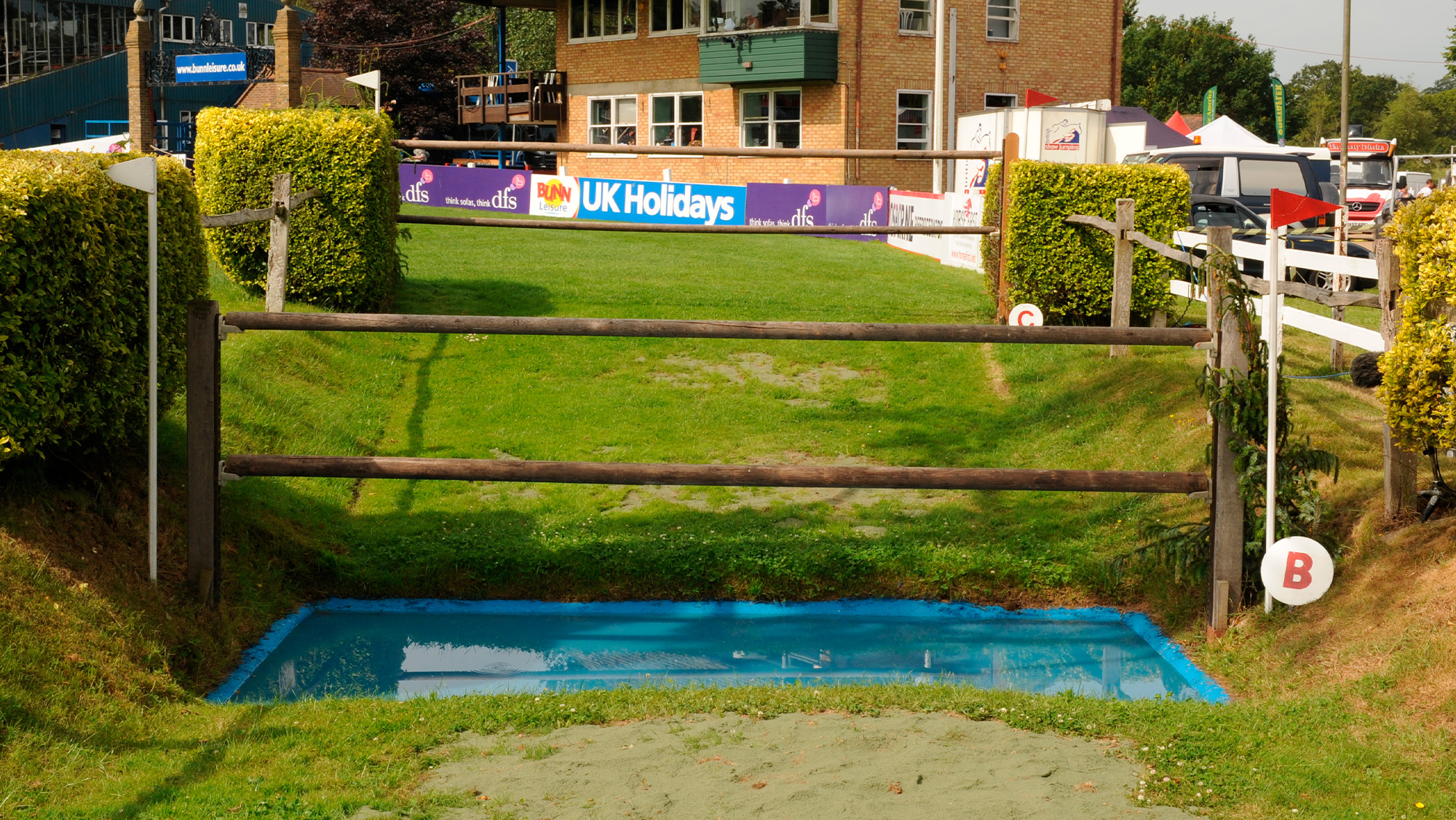
“Horses tend to drift right through the Dyke because of the camber.” Credit: Trevor Meeks
Fence 10a, b and c: Devil’s Dyke
Height: 4ft 9in/1.45m (10a), 4ft 9in/1.45m (10b), 4ft 8in/1.42m (10c)
“Opinion is divided here, some go to the left of the road jump, some go to the right but keep away from the crowds, but in the last few years I’ve come to the right of the road jump and cantered all the way up along the rail. I try to go far enough along that when I come off the fence, I’ve four strides.
“Horses tend to drift right through the Dyke because of the camber, so I jump the opening fence slightly left of centre, so they’ll hit the B part in the middle, hoping they’ll only be slightly right of centre for the C element. It’s also quite a steep drop from take-off to landing over fence A, which catches the horse’s eye, taking their attention away from the pole and that’s when you can have a fault. It really is a combination like no other.”
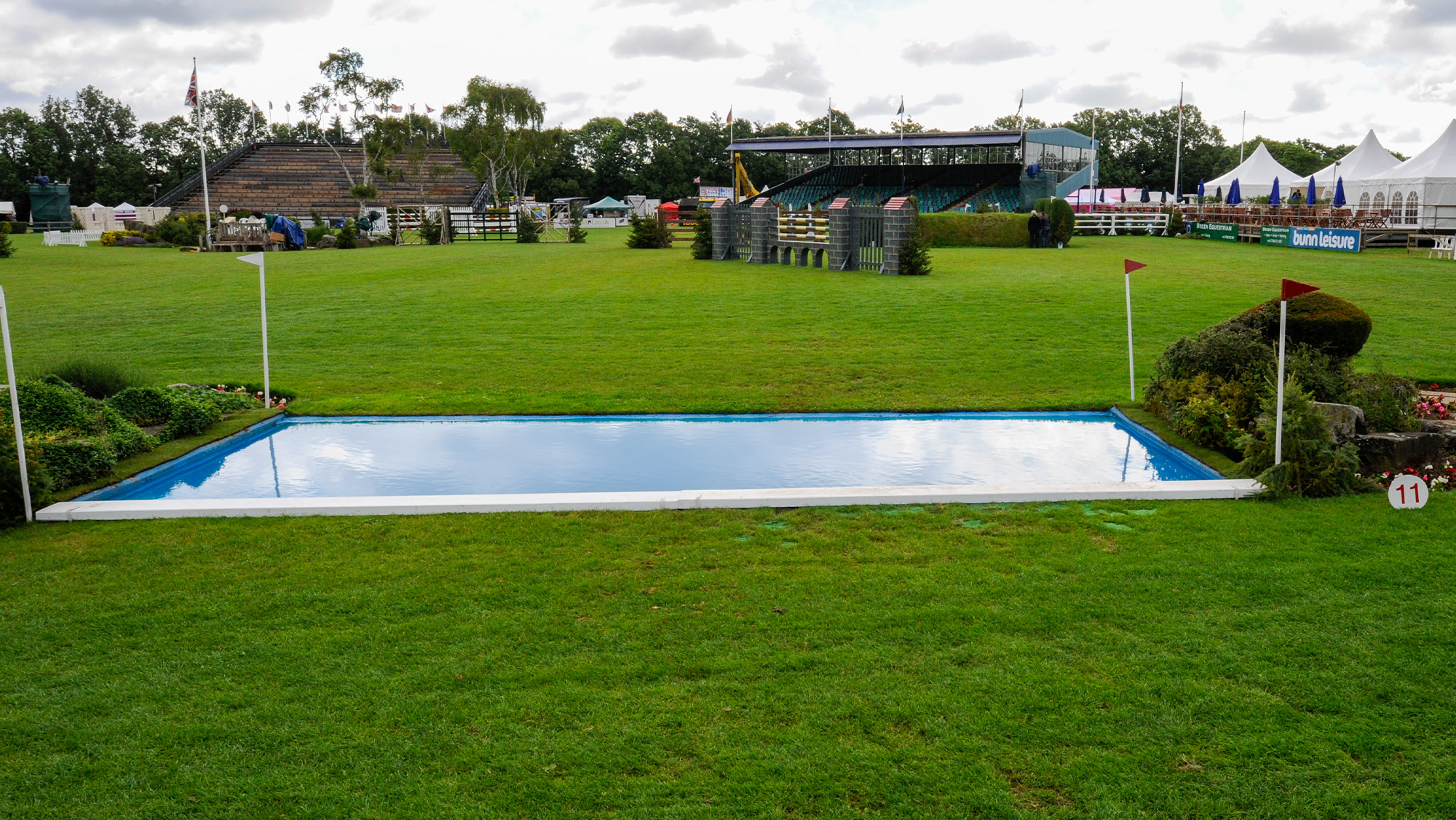
“When you turn for the water, pick up the distance you want and kick on!” Credit: Peter Nixon
Fence 11: open water
Height: 15ft/5.6m wide
“By this point, horses have had two out-of-the-ordinary experiences with the Bank and Devil’s Dyke so it’s time for you both to take a deep breath, especially if you’re still clear. There’s a 3m rise in gradient from the bottom of the arena to the Master’s Box – you’re travelling uphill at this point so you don’t want to set off at the water too early.
“I find you’re better off to get up the hill, then when you turn for the water, pick up the distance you want and kick on! Water jumps can cause horses to spook and wobble in normal jumping classes, but interestingly in the Derby the water doesn’t seem to cause any trouble.”
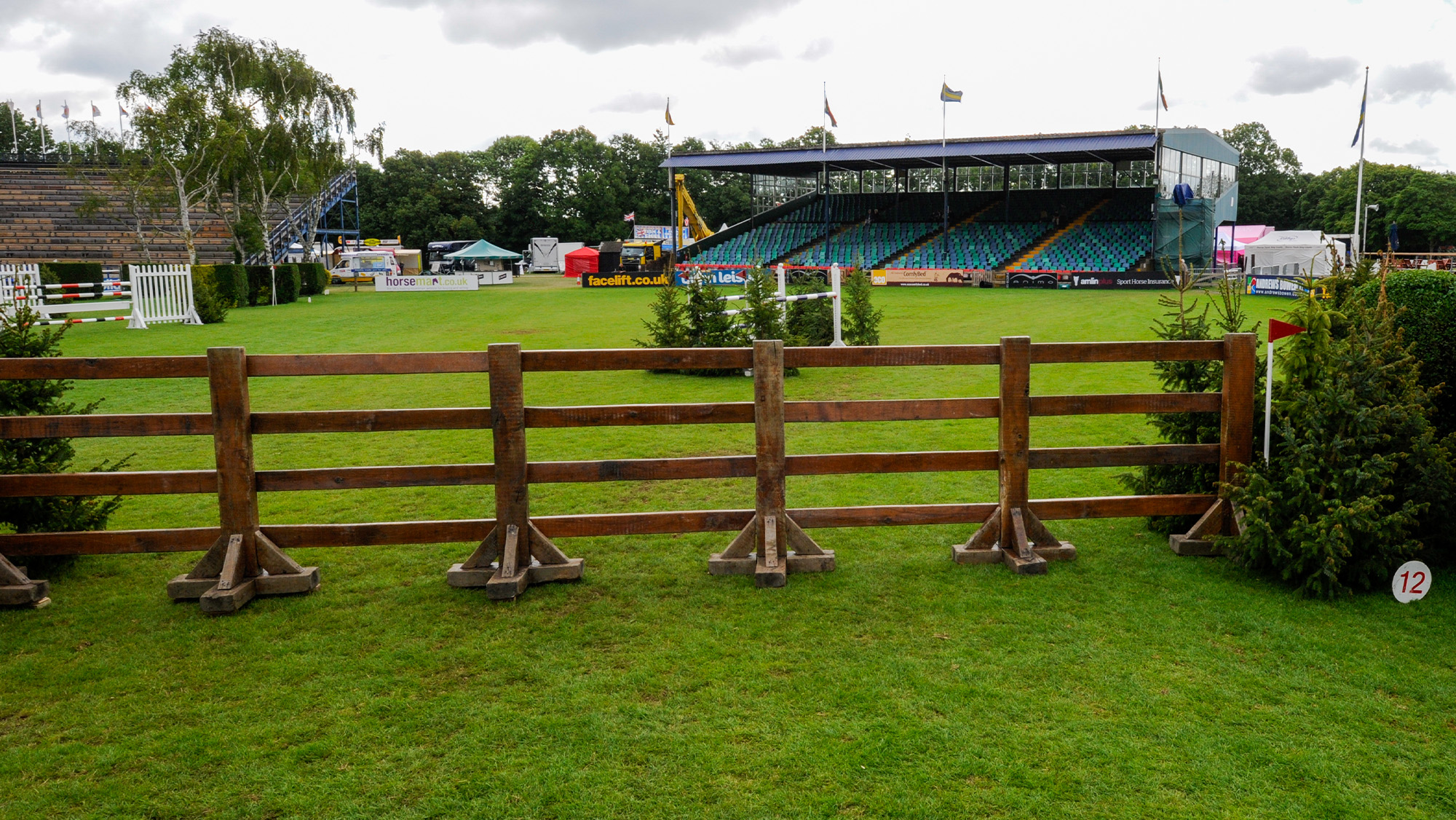
Another maximum height fence at 12. Credit: Peter Nixon
Fence 12: Derby rails
Height: 5ft 3in/1.60m
“After the water you have 10 or 11 strides to the very tall Derby rails – most people seem to jump it on the right hand side of its five sections because it’s then a tight enough turn back to the dry ditch.”
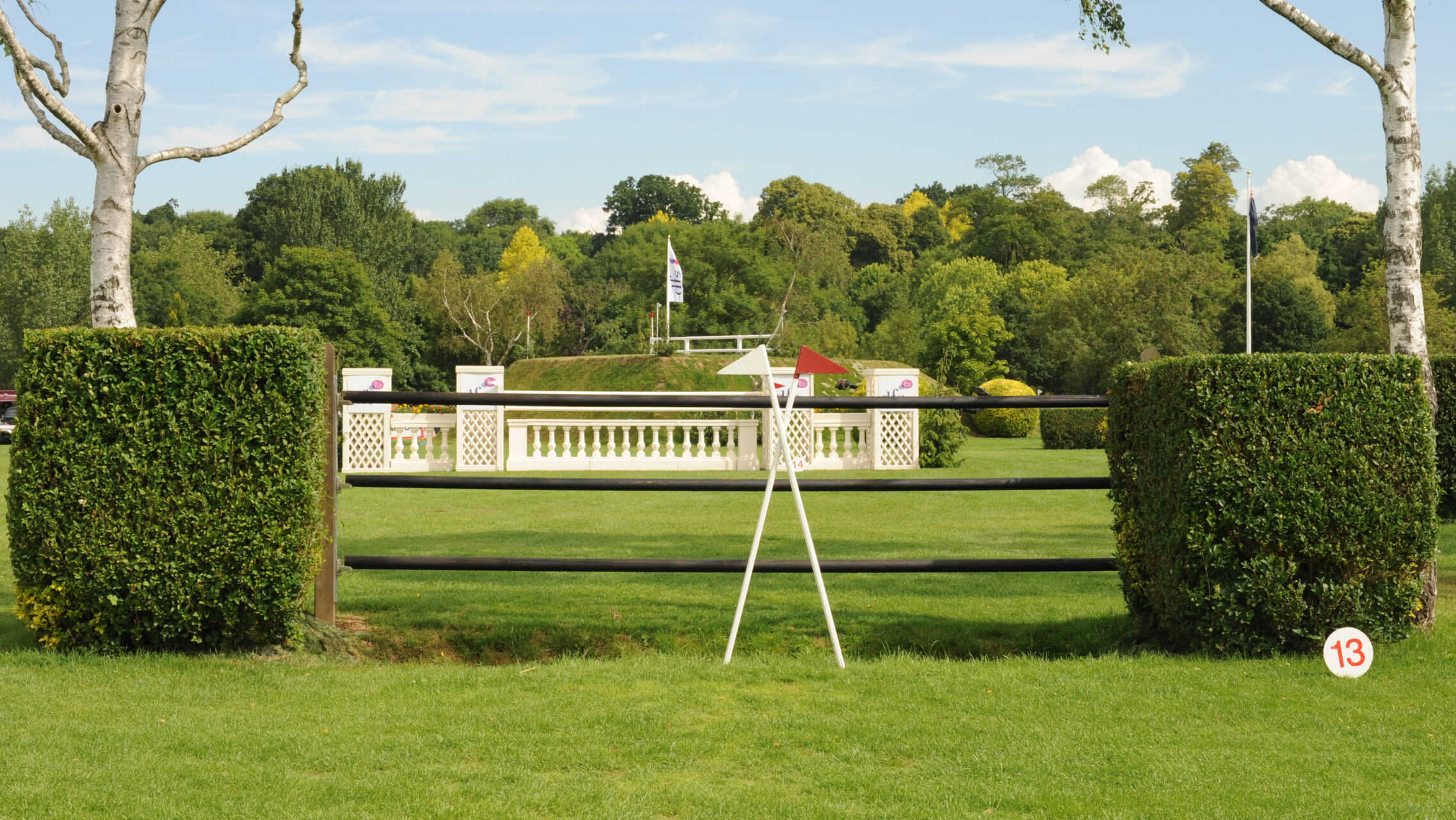
Fence 13 has a 6ft wide ditch. Credit: Trevor Meeks
Fence 13: dry ditch
Height: 5ft 1in/1.55m
Ditch width: 6ft/1.8m
“Dimension-wise, this is quite similar to fence three, the double of water ditches – it’s quite a stretch but if the horses are confident about jumping the dry ditch, they normally clear it well.”
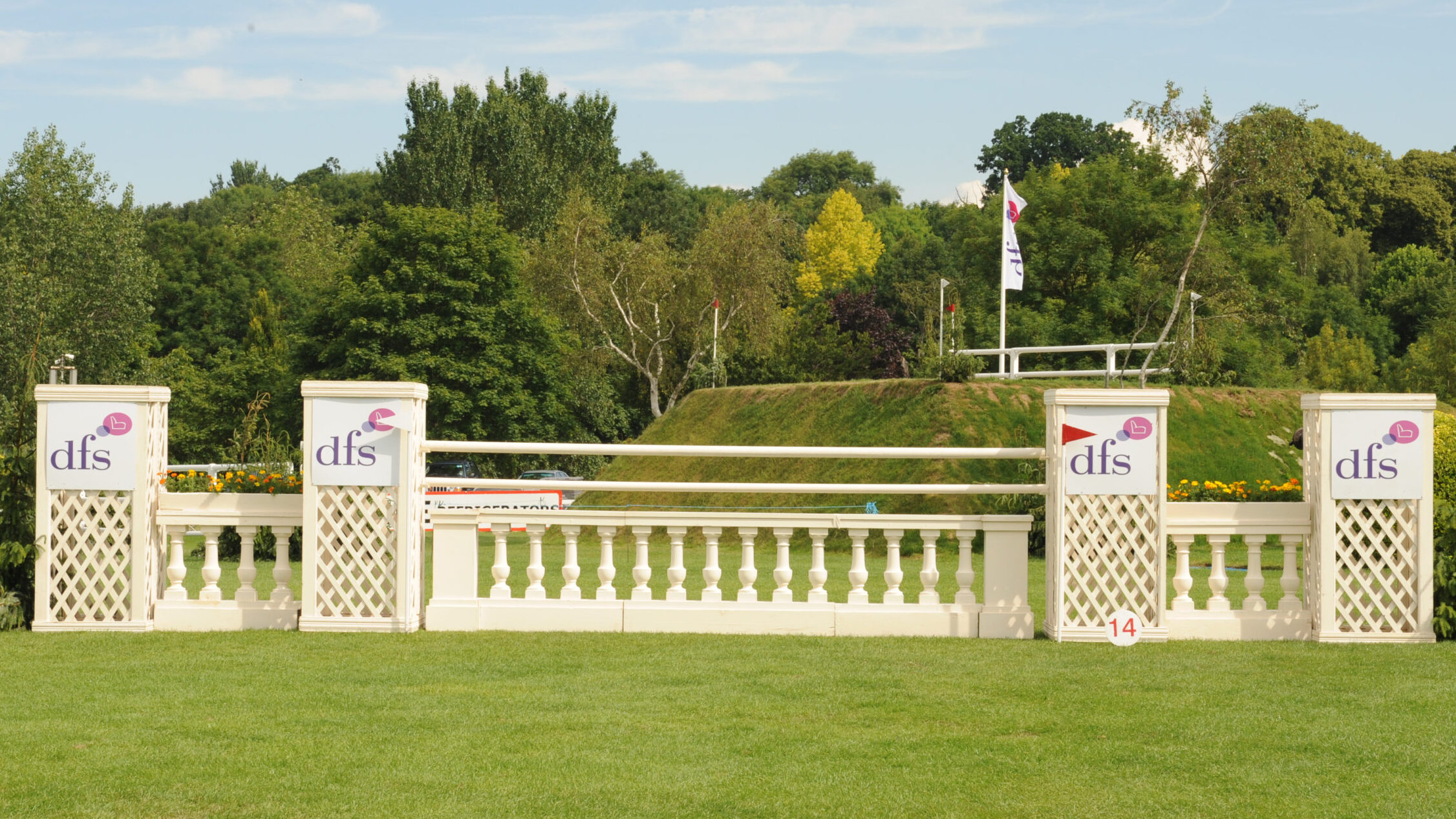
This fence normally jumps well. Credit: Trevor Meeks
Fence 14: balustrades
Height: 5ft 3in/1.60m
“Seven or eight strides later – which is purely down to the rider’s discretion and I’ve done both, but eight strides is my preference as it keeps you more balanced – the balustrades normally jump well. However, you’re travelling downhill again and if the horses are getting a bit tired, they can land over the dry ditch on their forehand.”
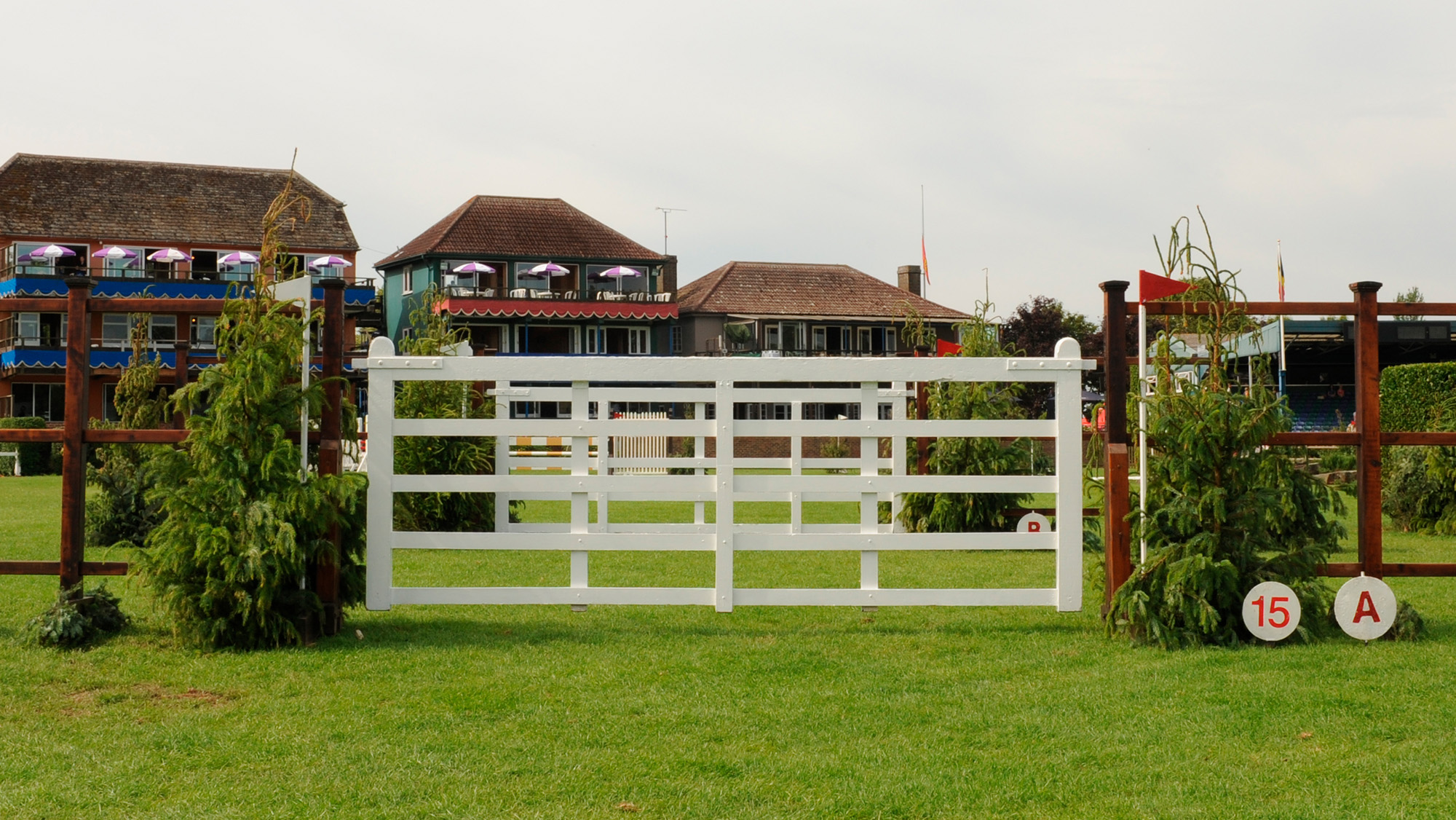
While the first element of fence 15 is an upright, the second is 5ft 6in wide. Credit: Trevor Meeks
Fence 15a and b: double of gates
Height: 4ft 10in/1.47m (15a, 15b)
Width: 5ft 6in/1.68m (15b)
“You’re turning left-handed to go back up the arena, so you want to try to get a tired horse nicely collected, with good power in the hindlegs, to jump the first gate, then it’s one stride and a stretch over the second gate with a pole out the back. It’s wide, and horses tend to back off the gates, so it’s quite an effort for a horse who has made a lot of effort already in the last 85 seconds!”
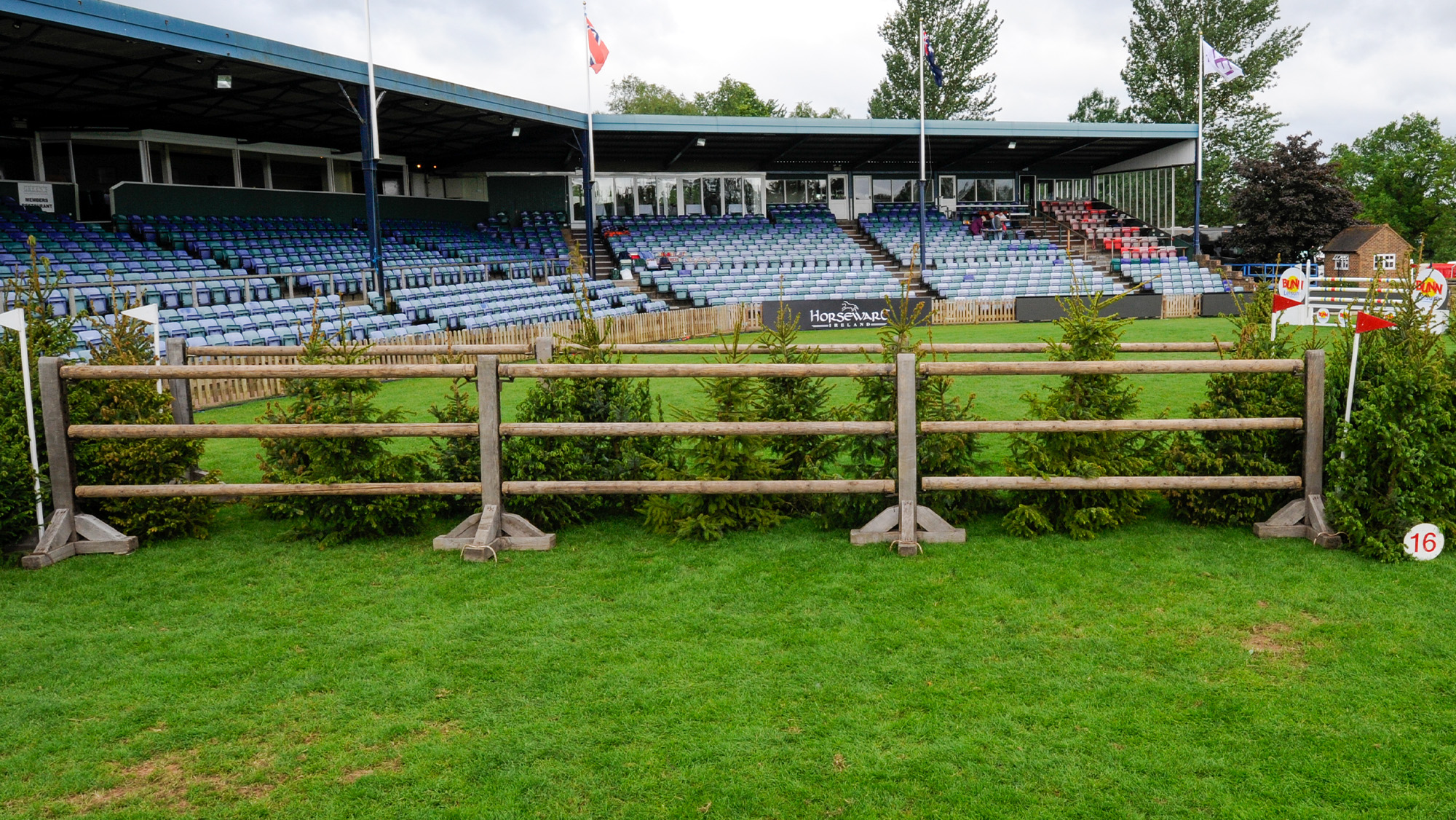
“Keep your cool and ride it like it’s fence two, not like you’re about to win the Derby!” Credit: Peter Nixon
Fence 16: rustic oxer
Height: 4ft 10in/1.47m
Width: 6ft 6in/1.98m wide
“I wouldn’t go looking at the time here, but depending on your horse or whether you’ve had a delay earlier on, you might check it as you reach the home straight. It takes time to get to the final big, brown oxer with Christmas trees in the middle, because you’re coming round the water jump, making it easier to find your line.
“There are four sections and it’s quite long, which is good because it means you can ride at it a bit – but you also have to keep your cool and ride it like it’s fence two, not like you’re about to win the Derby! It ain’t over till the fat lady sings and that big oxer requires your full attention. Your horse has helped you over the previous 15 fences and you’re a partnership so don’t let your guard down here – it’s your turn to support him and help the horse jump it.
“Riders tend to pick one of the uprights to aim at because the poles are flush with the uprights, which encourages a horse to jump a bit higher. If you land and you’re clear, there’s a great cheer from the packed stands – there really is no better feeling.”
- To stay up to date with all the breaking news from major shows throughout the year, subscribe to the Horse & Hound website
You may also be interested in…
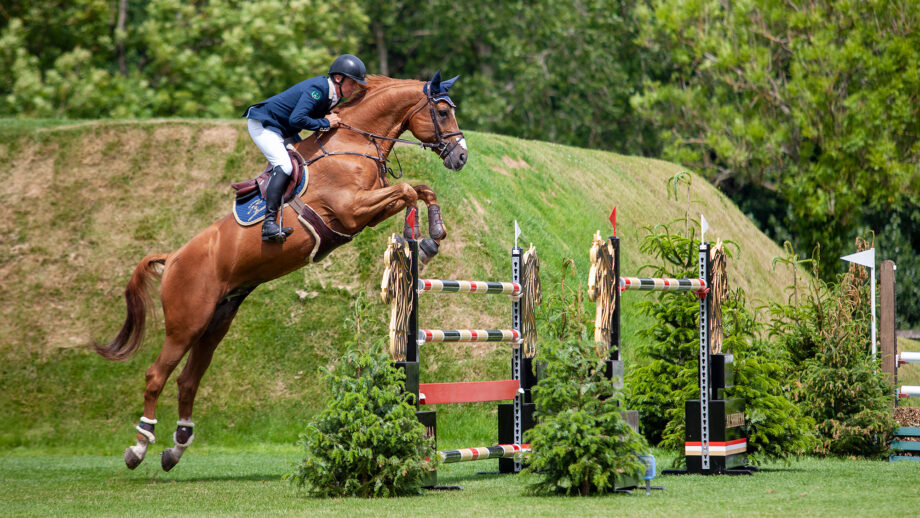
How to watch the Hickstead Derby Meeting 2026 live from anywhere in the world
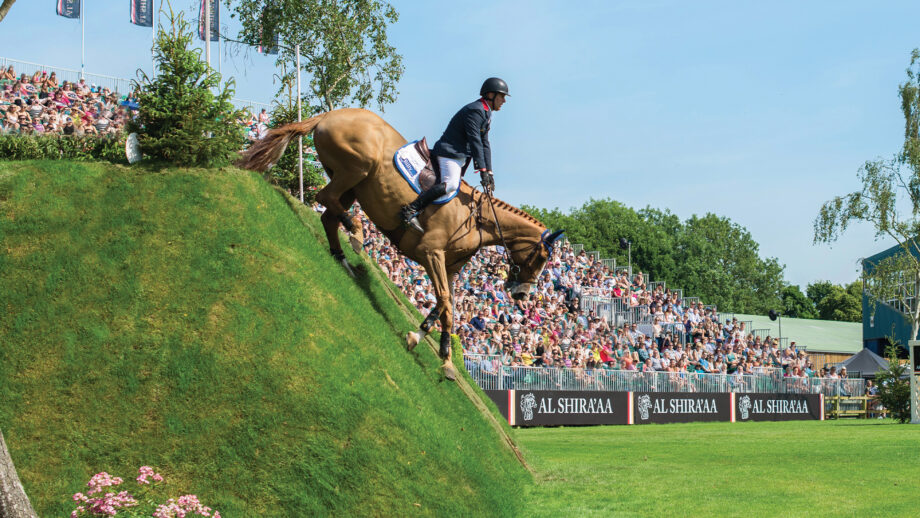
What’s under the Derby bank, three types of grass, invading ducklings and other fascinating facts about Hickstead
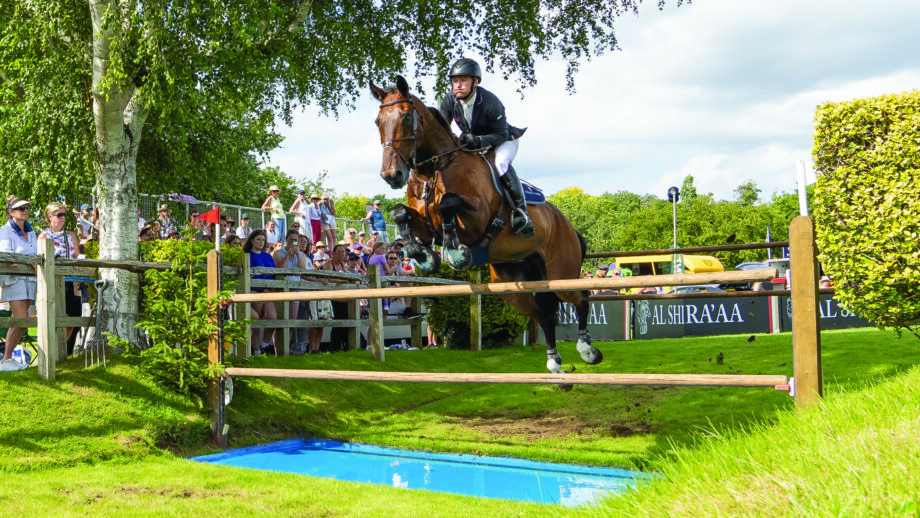
Meet the £1k purchase who won the 2026 Hickstead Derby against the odds: ‘He needs a book about all the ups and downs of his life’
Former winners to triumph, or a surprise result? Find out who’s taking on the 2026 Hickstead Derby

‘We all deserved to win and thankfully it was my day’: Shane Breen takes emotional Hickstead Derby win
Need somewhere to stay near Hickstead? We’ve found plenty of options…
Subscribe to Horse & Hound magazine today – and enjoy unlimited website access all year round