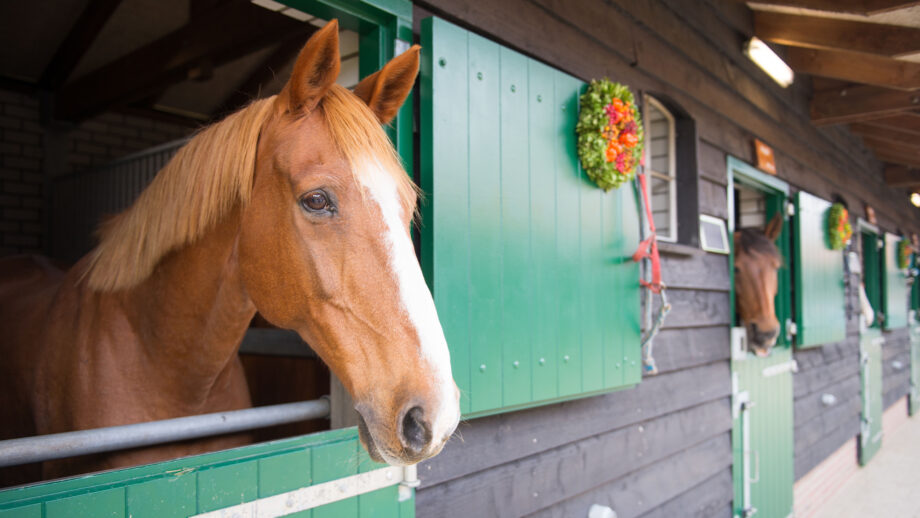
Horses are not designed to live in stables – they have evolved to be free-range herd animals who eat at will – so can suffer ill-effects from being confined to a small space for long periods. While it is inevitable that many horses spend more time indoors over winter, we can greatly improve their lives and keep them happy and healthy with a little thought and a willingness to challenge the preconceived ideas of how they should be kept.
As owners, it is our job to keep asking how we can keep our stabled horses happy and healthy. Considerable research has been devoted to finding ways to mitigate the social, nutritional and health issues caused by stabling – here are some of the findings that we can put into practice, with advice from top equine vet Kieran O’Brien MRCVS.
How to keep stabled horses happy
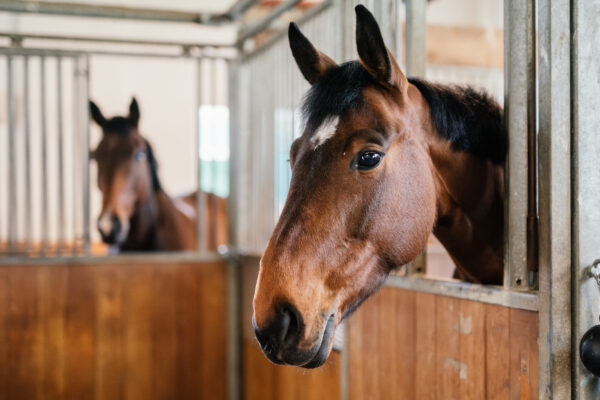
Ensuring horses can interact while stabled is important for their social wellbeing
Stable design
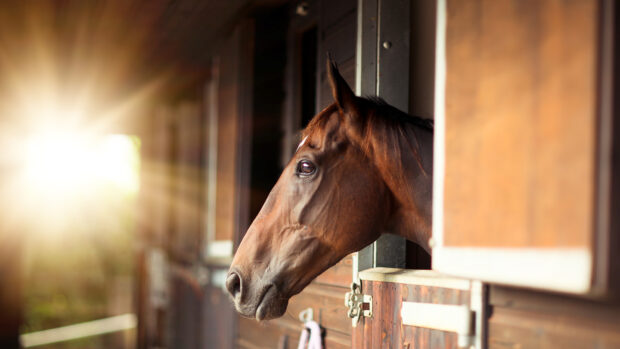
The first social issue is that many ideas about stabling originate from Victorian times. This has lead to stables that prevent continuous visual and tactile contact, where the only opportunity for a horse to see his companions is when they are looking over their respective doors at the same time.
Where horses are kept alone, studies have found a reduction in time spent lying down, more frequent displays of stress behaviours and development of stereotypies, such as weaving or box-walking.
How to improve stable design for wellbeing
“Fitting bars or grills between stables or making a “talk hole” in the partition wall will enable essential social contact, provided that neighbouring horses get on,” suggests Kieran. “A stable mirror made of safety glass can also provide companionship, although social interaction with real horses is preferable.”
A stabled horse also needs space to move, stretch and roll.
“An area of 12x12ft is considered a minimum,” says Kieran, “although horses measuring larger than 16hh will require more room.”
Providing enrichment
Enrichment has been proven to have a positive impact on stabled horses. This includes anything that you might consider a “boredom buster” for horses, such as stable toys, slow feeders or mirrors – they do not have to be edible. In fact, the enrichment proved particularly beneficial outside of meal times.
The results of the study showed that enrichment increased heart rate, foraging and movement, and decreased frustration behaviours, which suggests a positive emotional state.
How to keep stabled horses healthy
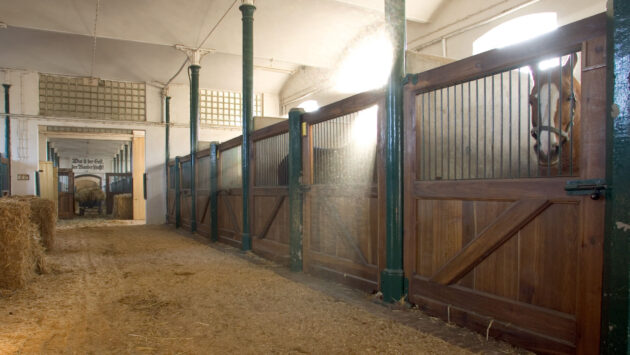
Mucking out causes dust particles to peak
Air quality and stable ventilation
The quality of air in a stable is determined by the rate dust particles, fungal spores and ammonia (produced by urine) from the bedding is released into the air, balanced by the rate at which these are cleared.
Dust particles peak as you muck out and stay elevated for several hours afterwards, so where possible turn your horse out before you start. A second peak occurs when the bed is “pulled down” for the night – but you could eliminate this practice completely by scattering powdered lime on the urine “footprint” while mucking out and preparing the evening bed straightaway, thus turning over the bed only once.
Several studies have shown that most horses bedded on straw — not just those with equine asthma — have a significant number of fungal spores and evidence of inflammation in the lower airways.
These horses may show no external signs of respiratory disease, Kieran warns.
“Their performance may be subtly impaired, however, especially in disciplines with high oxygen demands, such as racing or jumping at speed.”
While the adverse effects of straw bedding can be partially mitigated by good ventilation, the optimum of four complete air changes per hour can never be achieved in a conventional 12x12ft stable with an open half-door and a small window.
It is not usually possible to objectively judge how “dusty” the air in a stable is, but this can be inferred from the type of bedding used. A persistent smell of ammonia from urine will suggest that ventilation is poor.
Ways to improve stable air quality
- Feed haylage or soaked hay
- Opt for dust-free bedding, such as dust-extracted shavings, miscanthus or chopped cardboard
- If you create banks, pull the bedding in from the edges frequently to ensure all areas are fresh
Ways to promote air flow
- Remove glass from windows
- Use a stable guard or stall chain across the doorway when practical
- Leave barn doors open at night unless necessary
- Provide additional air inlets and outlets, as far away from the stable door as possible
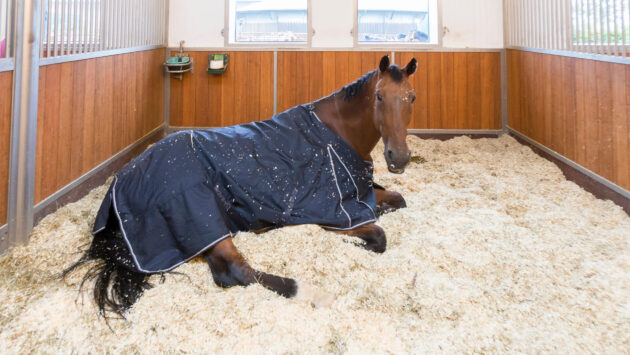
How long a horse spends laying down is affected by their bedding
Ensuring good rest
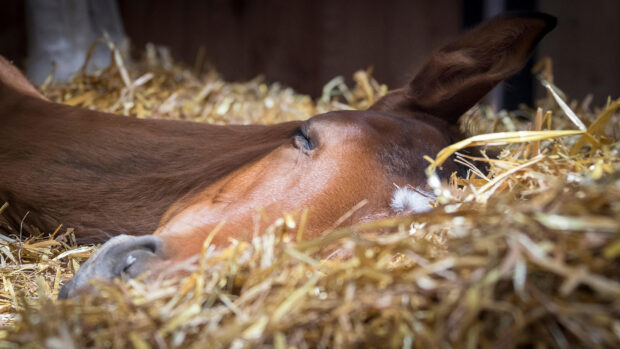
Studies on human athletes have shown that a good night’s sleep is critical for optimum performance – and it would make sense that the same goes for horses. In horses, deep sleep is only possible if they lie down on their side or sits propped against a wall.
Research has shown that the time a horse spends laying down asleep is affected by the type of bedding, its depth and the size of the bedded area. The minimalist approach of a thin bed laid on rubber matting, covering a smaller floor area, may have implications for how much deep sleep a horse obtains.
“This may be a case where the traditional practice of providing a more substantial bed is best,” suggests Kieran.
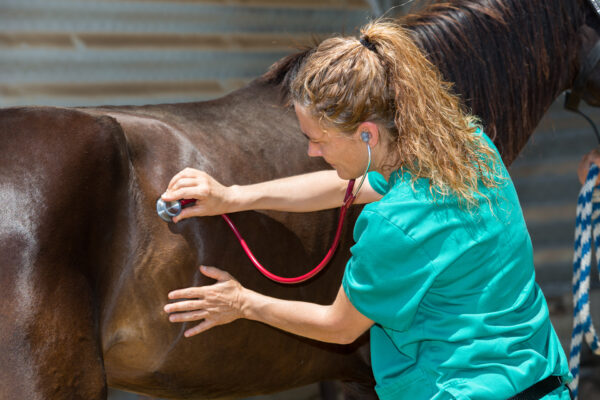
Stabling decreases the frequency of large intestinal contractions
Health risks of stabling
Stabling is a key risk factor for colic and exertional rhabdomyolysis, sometimes known as azoturia or tying up. Studies have shown that if time indoors is increased from zero to six hours to 19 to 24 hours, the risk of impaction colic is seven times greater.
“Confinement decreases the frequency of large intestinal contractions, reducing both fibre digestibility and the water content of droppings,” Kieran explains.
How to reduce the risks of stabling
“Exercise, or at the very least some turnout, every day, is hugely beneficial — both mentally, allowing social interaction with other horses, and physically, ensuring the normal function of the digestive and musculoskeletal systems and providing access to clean air,” says Kieran.
While exercise is generally a good thing, there is evidence that horses given a minimum of two rest days per week have a much lower incidence of gastric ulcers.
“Conventional twice-daily rations of hard feed, especially those containing cereal grains, further increase the chance of colic and also cause large shifts of acidity of the stomach – a known predisposing factor for gastric ulceration.”
When feeding horses prone to ulcers, small, frequent meals are preferable.
“Ideally use feeds high in oil and low in starch. Adding alfalfa chaff (preferably dry) increases salivation, helping to neutralise stomach acid,” Kieran advises.
Reduce reliance on hard feed by providing the highest quality forage you can find.
“Hay or haylage should be soft, green and leafy and fed ad lib, so there is always some left in the morning,” says Kieran, who also recommends providing multiple forage options.
“Provide forage in more than one place in the stable, to satisfy the horse’s strong natural motivation to eat and move, and use a hay bag, or a small-holed haynet to slow his intake,” he adds. “Placing some forage at floor level will vary his neck position and elevate his spine when eating, promoting natural drainage of respiratory secretions and ensuring correct alignment of the cheek teeth when chewing.”
You might also be interested in:

Can a stabled horse truly be happy? Experts discuss the issue
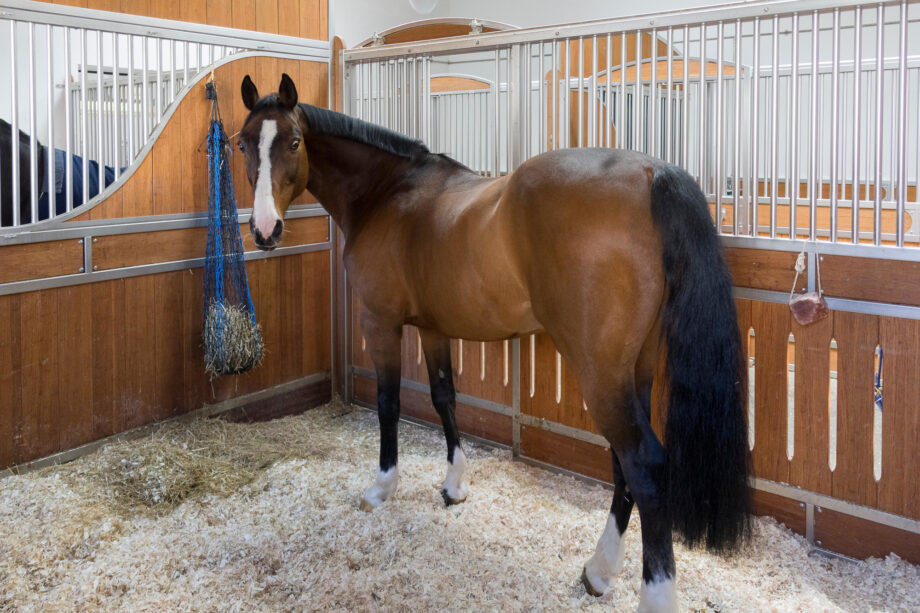
Research confirms enrichment can have a positive impact on stabled horses
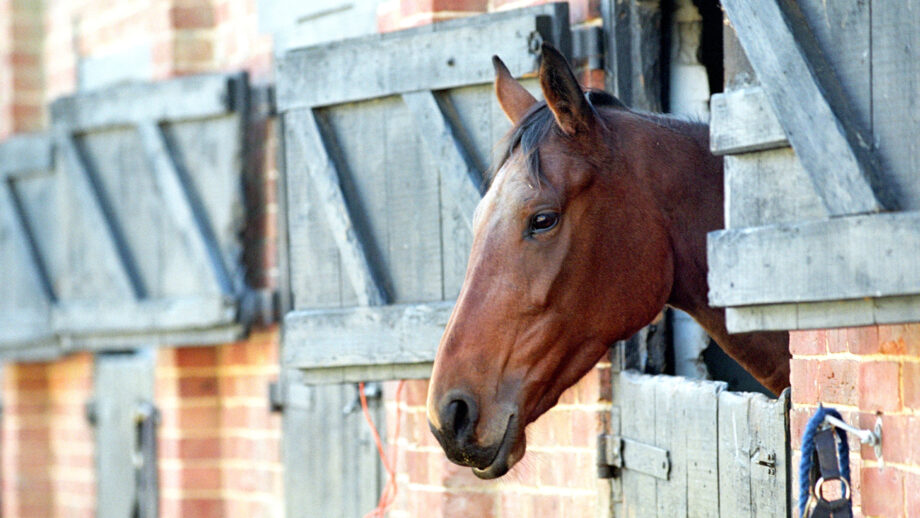
6 ways to beat boredom in stable-bound horses
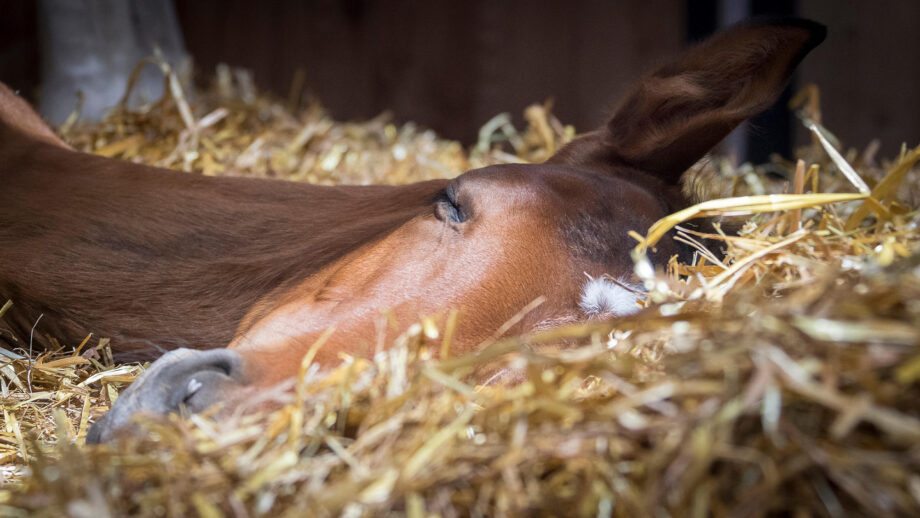
Different types of bedding and their advantages for the perfect stable setup

Loose boxes or American barns? H&H investigates the pros and cons

Subscribe to Horse & Hound magazine today – and enjoy unlimited website access all year round