Remember mixing mud pies on the beach, watching the sand sink to the bottom of a bucket of seawater? Now imagine the weight of that sludgy sediment resting deep in your horse’s stomach, and it’s easy to see why sand colic in horses is considered a medical emergency.
“Sand is heavy and will fall to the lowest point of the abdomen if ingested,” says Richard Stephenson MRCVS of Pool House Equine Clinic, explaining that sandy soil can be swallowed when grass is closely cropped.
“Over time, the sand accumulates and can silt up the colon at the base of the caecum. The sand can cause an obstruction in the narrower parts of the colon, such as the pelvic flexure, so that food can’t move around easily and gas accumulates.
“A heavy concentration of sand in the gut can dry out if the horse becomes dehydrated, setting like concrete,” he adds. “The weight can cause the colon to become displaced, or twisted, so that it can’t return to its usual position.”
(Image credit: Pool House Equine Clinic)
Sand colic in horses: warning signs
Are there ever any early warning signs to suggest that a horse is eating sand?
“Sand accumulation can cause chronic diarrhoea and sometimes loss of weight,” says Richard, explaining that the problem can be missed during weight-loss investigations. “The sand can irritate the lining of the colon, like sandpaper, creating low-grade pain and sometimes subtle colic. In most cases, however, the colic is dramatic.”
To diagnose the problem, a sample of the horse’s droppings is mixed with water in a plastic rectal examination sleeve to see if the sand settles down into the sleeve fingers. A mild case may be treatable with oral lubrication, but a heavy sand accumulation will require surgery under general anaesthetic.
Horse & Hound Newsletter
Never miss out on the latest happenings in the equestrian world
“We open the abdomen with an incision of around 30cm, before easing out the large colon,” says Richard. “We then incise the pelvic flexure and use a surgical hosepipe to flush the sand out with warm water. Surgery is usually successful, because we’re not removing any part of the gut.”
How to prevent sand colic
As with any colic, however, prevention is preferable to cure. While small amounts of swallowed sand may pass harmlessly through your horse’s system, ongoing ingestion can cause a problematic build-up.
“Sand can accumulate in the abdomen over summer as a horse grazes, but can also be eaten towards the end of winter when the grass is chewed right down to the roots,” says Richard. “Colic can follow at any time and may even occur once the horse has moved premises or to a new owner.”
Take extra care on sandy soil when grazing is sparse, he advises, and avoid feeding hay from the floor if the horse is turned out in a sand manège.
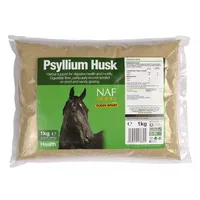
“Horses particularly prone to the problem can be fed a psyllium husk fibre supplement, as a temporary or permanent measure, to help to bind any sand in the colon,” adds Richard.
NAF Psyllium Husk Provides herbal support for digestive health and motility for horses on short and sandy grazing. Can be fed daily for maintenance, or at loaded rate for one week monthly to support natural clearance.
Sand colic in horses: a case study
When Alex Wheeler saw her 12-year-old gelding Glider lying flat-out in his field last October, she presumed he was taking a nap. However, she soon realised that things weren’t right when the Irish Sport Horse proceeded to stand up and lie down repeatedly.
“He was obviously very uncomfortable,” she says. “Richard [Stephenson, the vet] arrived and tried to do a rectal examination but couldn’t get his arm all the way in. He suspected a blockage and asked how soon I could get Glider to hospital.”
In the operating theatre, a large amount of sand was removed from Glider’s colon.
“I had bought him only a few months previously and had no idea that he was eating sand — he was looking really well,” says Alex, who has since returned to the show ring with Glider. “He was on box rest for three months after the operation. I could then start walking him in-hand and build up his fitness from there.
“He lives out 24/7 at the moment, but I bring him in every day for feed and hay,” she says. “He also has Sandout, a digestive supplement from Equine America.”
This article was first published in Horse & Hound; 28 June 2018