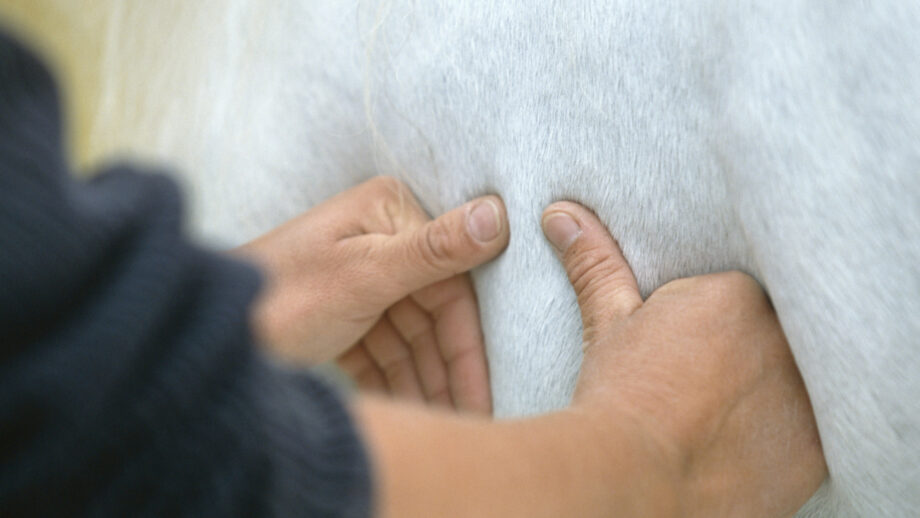
Owners have been reminded of the importance of using qualified and registered practitioners when seeking musculoskeletal therapy for their horse.
Industry professionals have reported a rise in people offering treatments, with little or no qualifications. In January Defra held a consultation on reforms to the Veterinary Services Act that could include regulation and protection of titles for allied professionals, including musculoskeletal therapists (news, 5 Feb).
Vet Lorna Brokenshire-Dyke is a qualified veterinary physiotherapist and president of the National Association of Veterinary Physiotherapists (NAVP). Dr Brokenshire-Dyke told H&H that she had seen clients “bypass” their vet in favour of practitioners such as bodyworkers, massage therapists or physios, some of whom operate without appropriate training and qualifications.
“Practitioners with the right training and qualifications will recognise when there’s a problem and refer back to the vet – but without that foundation, a horse can end up being treated repeatedly without the underlying issue ever being properly addressed,” said Dr Brokenshire-Dyke.
“I’ve seen what happens when treatment isn’t underpinned by appropriate training and qualifications: conditions are missed, problems are masked, horses are pushed on when they should have been rested, all at the expense of the animal’s welfare.”
Dr Brokenshire-Dyke had a case where a horse had been seen by a musculoskeletal therapist for lameness on multiple occasions – and only months later when the horse did not improve was she consulted in a veterinary capacity.
“Ultimately the horse was in pain for months because the root problem wasn’t being addressed, but the owner was being reassured by the therapist that they were doing the right thing,” said Dr Brokenshire-Dyke.
“The owner’s bank account suffered, but more importantly the horse didn’t receive the right treatment at the right time.”
Dr Brokenshire-Dyke added that any therapist should be open to being asked about their qualifications and insurance and whether they are a member of an association such as NAVP, the Register of Animal Musculoskeletal Practitioners (RAMP) or the Association of Chartered Physiotherapists in Animal Therapy (ACPAT).
“As a veterinary physiotherapist, I understand exactly why that training and qualifications pathway has to be rigorous, not optional. It’s what gives a practitioner genuine professional standing, the knowledge, judgement and accountability that proper qualification actually represents,” said Dr Brokenshire-Dyke.
Veterinary physiotherapist Emma Green told H&H she has seen an increase in unqualified individuals advertising therapy services on social media.
“There’s been various different therapy machines used within the industry for years and they offer effective results – but we’re increasingly seeing unqualified people offering treatments, in cases where it’s not appropriate,” she said, adding she believes the industry is not regulated enough.
“It’s concerning. I don’t want to discredit anybody; there is a place for various therapy types within the industry, but if an owner wants a veterinary physiotherapist, they should visit a register where they know those on it are thoroughly checked. The main concern has got to be for the welfare of the horse”.
RAMP past president and chartered physiotherapist Jo Paul told H&H that by using someone on a professional register or member of an association like NAVP or ACPAT, owners can be assured that person is qualified.
“RAMP is a voluntary register; it doesn’t mean that everybody who’s not a member isn’t qualified, but it does mean that we’ve done due diligence of who is on our register,” she said.
“Everybody is invested in doing the best for their horse, but owners need to take some responsibility.
“When somebody comes along with a new shiny machine or offering, owners need to consider whether the person providing that service has the anatomical, pathological and physiological knowledge to use the modality safely and effectively.”
- To stay up to date with all the breaking news from major shows throughout 2026, subscribe to the Horse & Hound website
You may also be interested in:’

Your ‘once-in-a-generation chance’ to have your say on changes to ‘outdated’ vet regulations

‘An urgent need for change’: calls for new veterinary law continue

Subscribe to Horse & Hound magazine today – and enjoy unlimited website access all year round