Groundwork exercises can be highly effective for building your horse’s strength as they can develop core stability, balance and muscle tone without needing to compensate for the added weight and restriction of a rider.
All horses have a dominant side – like us being right- or left-handed – and with this exercise you can target developing the weaker side as well as building overall core strength. The use of raised and angled poles make horses lift their knees and bend the hocks, think where to place their feet, engage their core and and open their shoulders.
Aims
- Develop weaker side
- Engage core and get horse working through the back
- Improve proprioception
The setup
You will need: a training halter, lunging cavesson, or your horse’s usual bridle
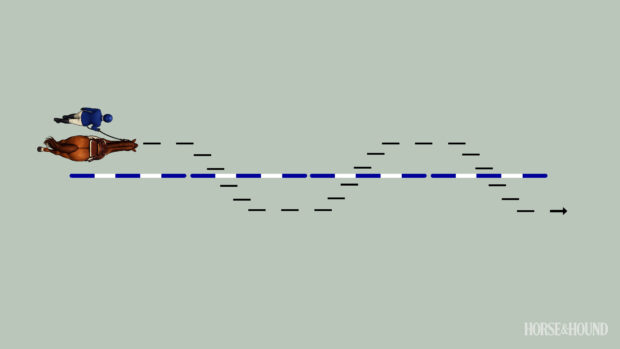
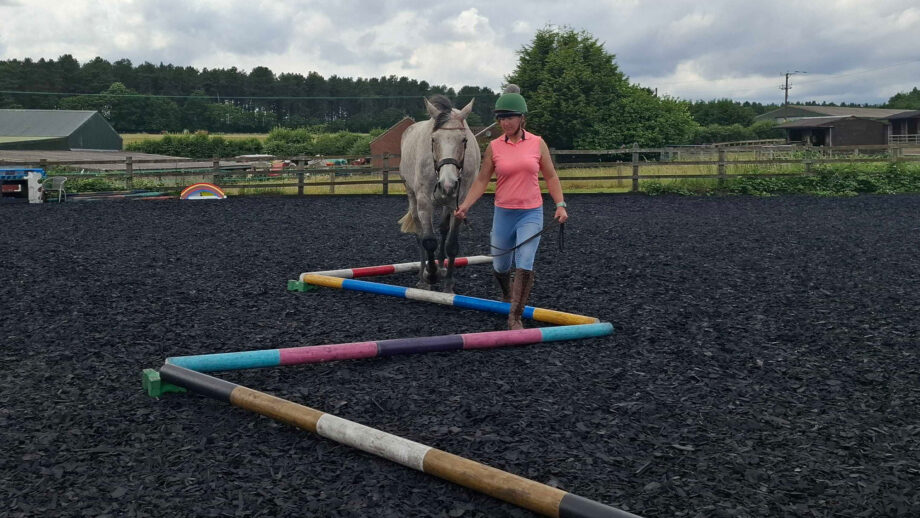
Setup: You can use as many poles as you have time to lay out, but six is a good number. Arrange them in a zig-zag as shown in the diagram, raising the points where the poles meet on to 15–20cm blocks on one side.
Because this is a walk exercise, don’t worry too much about the spacing – they can be quite close together or at right angles. It’s up to your horse to work out where to put his feet.
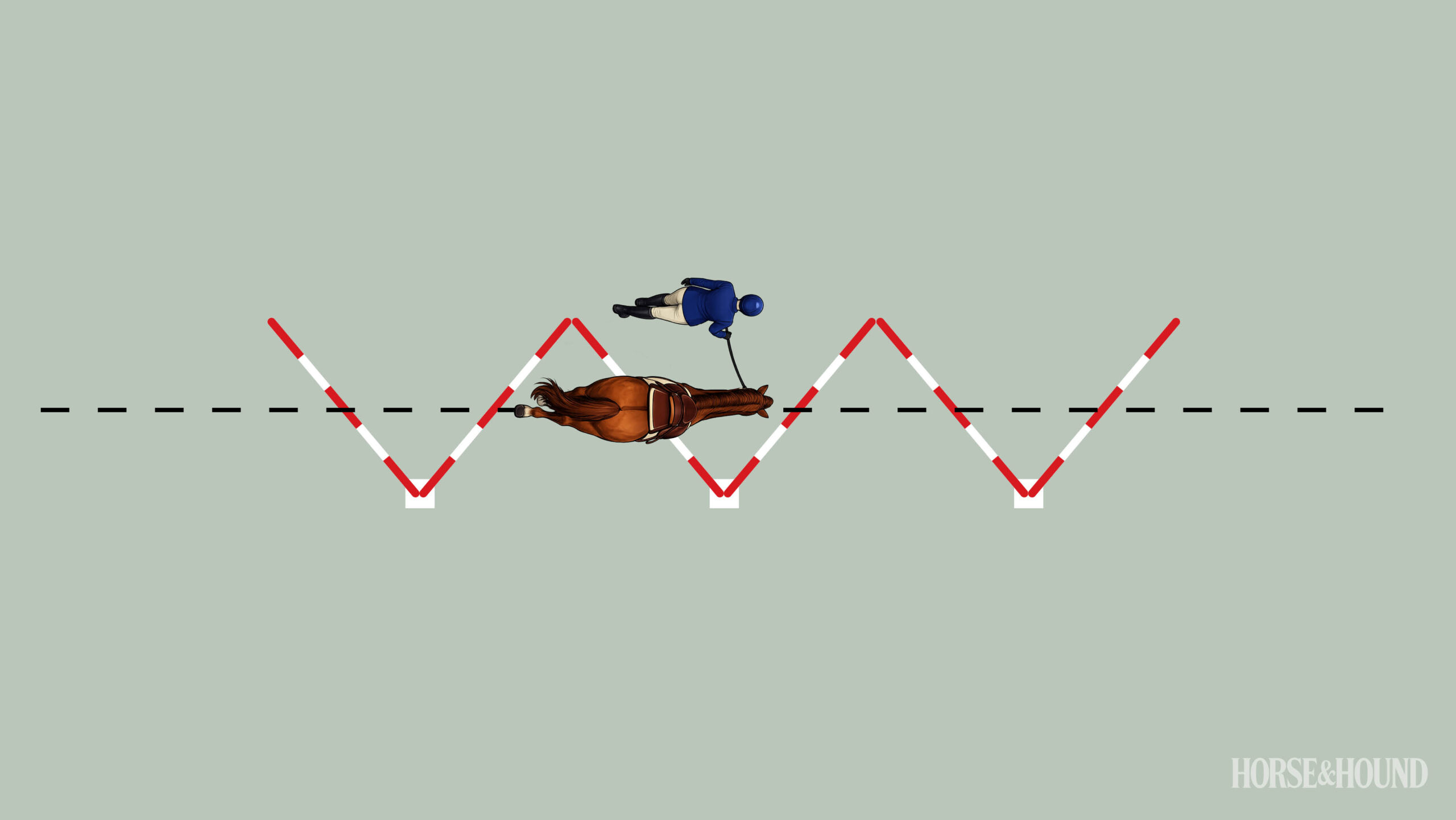
The poles are raised on blocks on one side.
How to do the exercise
- Before you try the polework exercise, warm your horse up by leading him on both reins for about 10min. You should do transitions from walk to halt, to check he is paying attention to you. You can also ask him to rein-back from the ground or do some basic lateral work. Your horse should be walking actively forwards and straight, as you would expect under saddle.
- Approach the zig-zag directly in the centre. As you are working in-hand, you should keep yourself parallel to your horse’s head but outside the poles, rather than stepping over them as this may affect how you lead and balance your horse.
- Because the spacing between the poles varies, and they are higher on one side than the other, this will encourage your horse to think about where he puts his feet, constantly adjusting his balance and stride length. Stepping over uneven, raised obstacles asks your horse to lift their core, thereby building topline.
- You should do this exercise several times in each direction, bearing in mind one side is higher than the other. To work on your horse’s weaker side, do more lines where he has to lift that side higher. For example, if his weaker side is the left, have the raised side on the left.
Tips and troubleshooting
1. Alternate raised poles
This exercise is equally effective if you alternate the raised sides, so your horse has to keep adapting as they go down the line.
2. Don’t overface
If your horse has never done this exercise before, he may find the visual challenge of a line of asymmetric poles offputting. You can build up from three poles rather than going straight into six.
Likewise, don’t underestimate the impact of this polework exercise, even though you’re not riding. It requires plenty of physical and mental effort.
3. No drifting
Although you’re leading your horse and cannot use your legs and hands to keep him straight, the asymmetric layout should do the job for you as the angled poles channel the horses into a straight line. Give them plenty of freedom with the head and neck to assess the layout and use their back.
- Enjoyed reading this? For more expert training advice from top riders and coaches, subscribe to the Horse & Hound website
You might also enjoy:
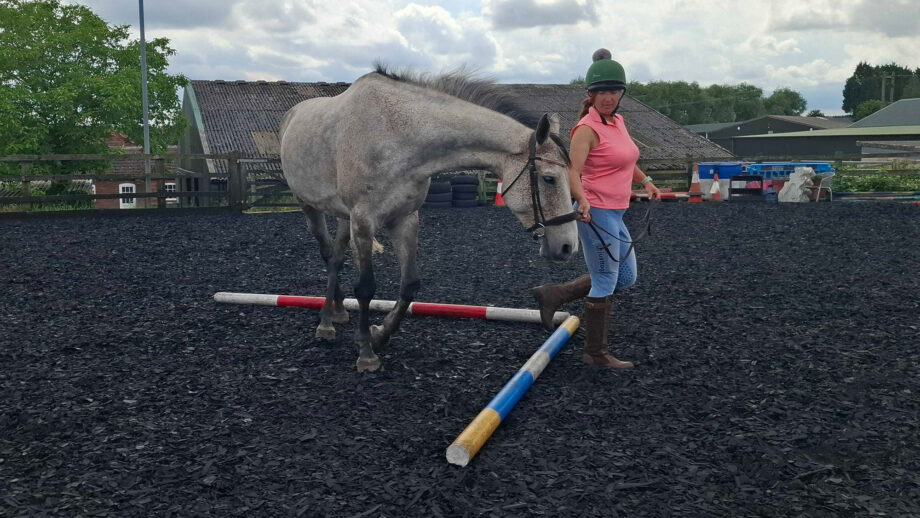
The versatile in-hand pole setup that will give your horse plenty to think about – even in walk
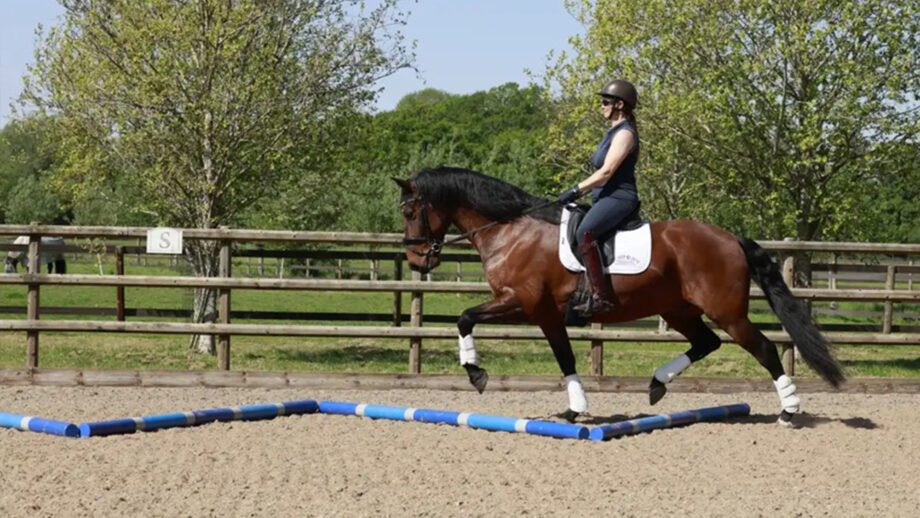
Encourage your horse to lift and lengthen with the help of this zig-zag polework layout
Try this exercise to encourage your horse to engage his hindleg from the ground
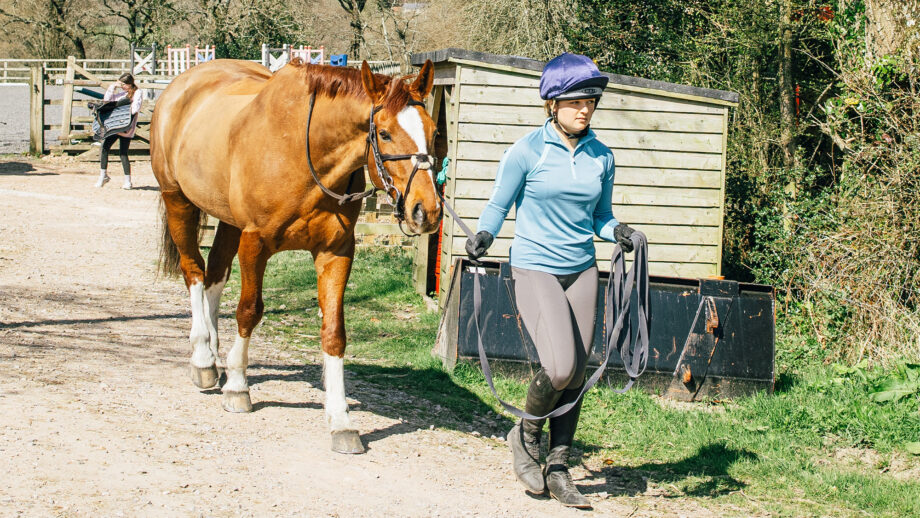
Boost your horse’s balance, symmetry and core strength with this simple in-hand polework pattern
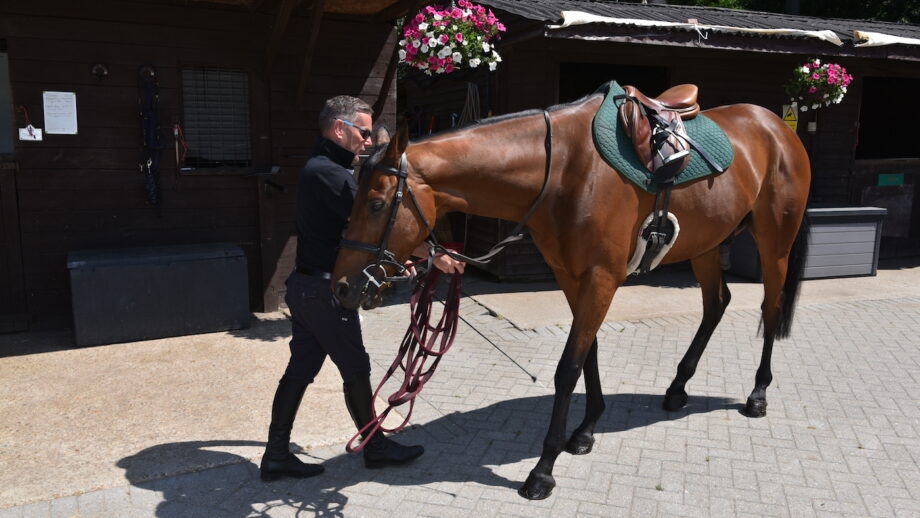
Teach your horse to rein-back from the ground to engage their core and release tension

Groundwork for horses: what it is and why it’s useful

Subscribe to Horse & Hound magazine today – and enjoy unlimited website access all year round