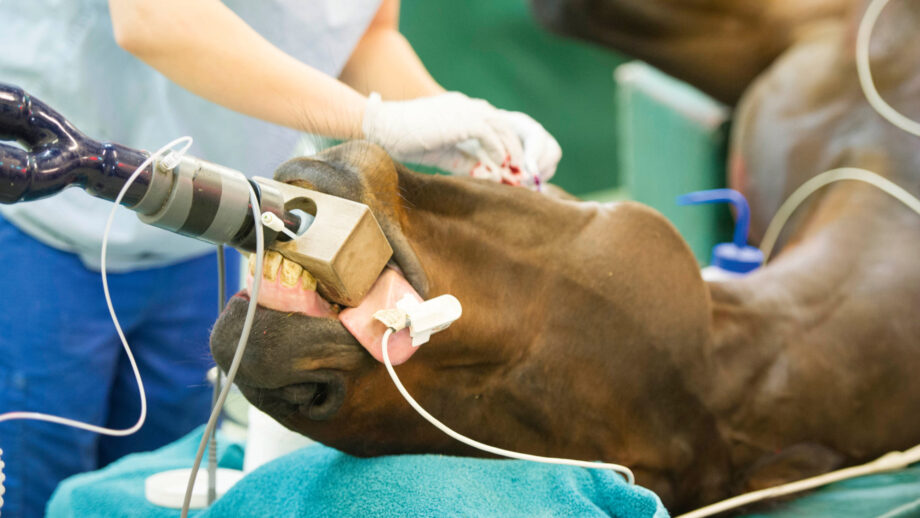
The number of equine deaths associated with general anaesthesia has declined in the last 20 years, data has shown.
Researchers – who formed the Confidential Enquiry into Perioperative Equine Fatalities Community Interest Company (CEPEF CIC) – have published their latest phase of the enquiry, CEPEF4, into general anaesthetic-related horse deaths since the 1990s. The work, published in 2025, involved analysis of data from 47,000 procedures across 93 veterinary practices and hospitals, in 23 countries and four continents.
The aim was to build on the work of the original studies published in 2002 and consider the seven-day outcome for horses following general anaesthesia. Key findings include the fact that the death rate in otherwise healthy horses – those who underwent anaesthesia for an elective procedure rather than for emergency abdominal surgery such as colic or caesarean section – has decreased from 0.9% to 0.6% since CEPEF2 in 2002. Whereas 33% of deaths in these cases previously related to cardiac arrest, this figure has dropped to around 12% in the last 20 years. This decline has been attributed to a change in some of the drugs used, new techniques and improved monitoring in equine general anaesthesia. The new data found that, in those non-colic cases, the main causes of death were fractures occurring during the recovery period (35%) followed by post-anaesthetic colic during the seven-day period (20%).
As expected, mortality in compromised patients was higher but decreased from 7.8% to 4.2% in the last two decades. The main reasons for this are the improvements in perioperative management of colic by both referring vets and the specialised treatment provided in referral hospitals.
Lead researcher Miguel Gozalo-Marcilla of the University of Edinburgh told H&H that even with this reduction in death rate, risks of anaesthetising a horse are still much greater than a dog. For example, horses are more prone to complications owing to their size and the fact of being prey animals, especially in the immediate recovery period after general anaesthesia. When they recover from a general anaesthetic, horses are more at risk of panicking and try to stand, which can lead to fractures. Good management of anaesthesia during the operation, maintaining a healthy blood circulation and respiration will reduce the likelihood of disaster such as post-anaesthetic myopathy which may lead to catastrophic recovery.
“The reduction in deaths is mainly because the drugs and techniques we are now using are safer, vets are better trained in monitoring and stabilising the more compromised patients pre-operatively in an adequate manner, apart from providing better pain management,” said Dr Gozalo-Marcilla.
“We also know more about certain risk factors – a compromised patient with colic, a pregnant mare, a very fat or skinny horse or if the anaesthetic is longer than two hours, all increase the risk of the horse not surviving the seven-day period. We were also able to identify some protective factors too, like giving a little sedation before the recovery phase to reduce the risk of the horse panicking.”
“The results are promising but there are still some unanswered questions; particularly around post-operation recovery, the critical phase. We can let a horse recover on its own, or ropes can be used to support them, but there’s still no evidence as to which is better – and whether we should be ventilating patients. We want to know how we can reduce this 0.6% death rate further.”
Dr Gozalo-Marcilla said the message to owners is that general anaesthesia in horses is very high risk – more so if a horse is unwell going into it – but that “things have improved massively in 20 years”.
“Things have changed for good, we know there have been improvements and when owners send their horses to a referral setting, they are in good hands,” he said.
Horse Trust director of research and policy Jan Rogers told H&H: “The Horse Trust was pleased to be able to fund this study, which drew data from nearly 48,000 cases across the world.
“The results are reassuring, that there are fewer horses lost under general anaesthetic than was shown in a similar study 20 years ago and that good information is available about the causes of the losses that did occur. This means we can continually improve by monitoring and supporting patients better and by careful use of pre-medication and sedation during recovery – all of which can help to lower risk factors and inform clinical decisions and patient safety.”
The CEPEF CIC are: Dr Miguel Gozalo-Marcilla (University of Edinburgh), Dr Polly Taylor (Taylor Monroe, UK), Dr Mark Johnston (Vetstream Ltd, UK), Prof Regula Bettschartt-Wolfensberger (University of Zürich, Switzerland), Prof José Ignacio Redondo García (Universidad Cardenal Herrera – CEU, Spain).
The authors would like to thank as sources of funding the Association Veterinary Anaesthetists (AVA), Kate Borer-Weir Memorial Fund and the AVA Trust, and the Horse Trust.
“Also, the open-mindedness, hard work, honesty and diligence of the personnel, ambassadors and every single user of each collaborating centre who submitted the cases for the standing sedation study,” said the authors.
- To stay up to date with all the breaking news from major shows throughout 2026, subscribe to the Horse & Hound website
You may also be interested in:

General anaesthesia in horses: all you need to know
The decision to put a horse under a general anaesthetic should not be taken lightly as one in every 100

Innovative surgery on equine fracture helps prevent catastrophic leg injury
The modern practice allows surgery to be performed without the need of general anaesthetic

Subscribe to Horse & Hound magazine today – and enjoy unlimited website access all year round