Ireland has taken an equine welfare crisis that “shook people to the core” and used it to update its frameworks to protect horses, according to its chief veterinary officer.
June Fanning, who has worked with the Irish government department of agriculture, food and the marine (DAFM) for over 20 years, addressed the 2026 National Equine Forum on 5 March, on the way the country had made progress in response to a media spotlight.
Dr Fanning covered the measures the government has taken since June 2024, when an RTÉ Investigates documentary titled Horses – Making a Killing aired.
“What people saw shook them to their core,” Dr Fanning said. “They saw gaps in the traceability system, they saw horses fraudulently re-identified. They saw animals manipulated into the food chain. But most disturbingly, they saw horrific footage of horses destined for slaughter, being beaten and abused on the premises adjacent to that slaughter plant.
“The public reaction was immediate. There were protests, parliamentary questions, countless headlines, social media outrage. I suppose there was huge intense scrutiny and criticism of the department of agriculture. But this is where I think the really important story begins.
“It’s the story of what comes next. The media spotlight was an important catalyst in igniting progress, because sometimes progress is born from criticism, and the spotlight can help illuminate your path forward.”
Dr Fanning cited the importance the equestrian sector has in Ireland, for the economy as well as the national identity.
“But people’s trust was shaken, and we can’t take public acceptance for granted in a changing world,” she said. “So we had to reassure the public and we needed to respond decisively, not only to improve welfare and to restore that trust and protect the industry, but also to protect individual horses, most importantly.”
Painful truth
Dr Fanning said the “painful” truth revealed by the documentary was that the relevant Irish systems were not robust enough or fit for purpose. Within three weeks of the documentary, the DAFM had commissioned independent expert Patrick Wall to review the systems and produce a report. H&H has reported on Professor Wall’s January 2025 report, which highlighted issues connected to a “fundamentally weak” system of recording ownership changes, late reporting of horse deaths, imported horses at risk of being “invisible” in the system and contradictory guidance for owners.
“What I think really helped to make our response successful was we did not minimise the problem,” Dr Fanning said. “We did not defend the system, and we didn’t wait for the storm to pass. We acted decisively and converted this energy in crisis into a catalyst for change.”
In March 2025, the minister published an action plan based on Professor Wall’s report.
“Really importantly, that action plan did not have vague commitments,” Dr Fanning said. “It did not use aspirational language. There were 38 concrete, tangible recommendations and actions built around five simple headings. There’s better accountability through better traceability. Part of that is to ensure there’s a responsible, accountable person for every horse, and in that way, that person is responsible for their welfare and their care.
“Stronger enforcement, which is a really important thing, built on proactive inspections, and a really important point is improved protection at end of life; a key priority for us to ensure horses are humanely treated. Optimising use of science and technology to improve traceability, and communication; consulting experts, keeping those two-way communication channels open with the industry and educating the public.”
Carrots and sticks
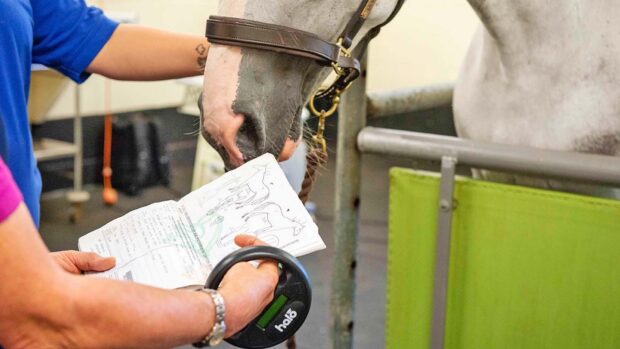
Dr Fanning said last year, 20,000 horses left Ireland, half of those for Britain. Now, horses may not leave the country unless they are registered on the central equine database and food chain information in passports had to match that on the database, regardless of the reason for export.
“In non-breeding thoroughbreds, ownership registration doubled compared to the previous year,” she said. “This was because we’d embedded a compliance requirement into a critical control point. If you want to move your horse, you have to comply. So the learning from this was, if you want a behaviour to change, you have to build it into life events.”
From this, DAFM now requires that for all life events, registering a foal, changing name or ownership, confirmation of a horse’s location must be provided, turning these events into “traceability checkpoints”. The national equine census was voluntary but the return rate was a “disappointing” 52%. So the DAFM introduced mandatory census completion for those who wanted to register foals or export horses.
“Was it inconvenient?” Dr Fanning said “Yes, it was a little, but more importantly, was it effective? It absolutely was. So we learned we do need a carrot, but unfortunately we also do need a stick.”
The DAFM has made a point of collaborating with and consulting the industry, Dr Fanning said, and has learned the importance of “champions”, people within the industry who will lead by example and have been a major part of the progress made.
She said improved enforcement has been important, to demonstrate consequences of non-compliance and show fairness, and that a major key has been the central database. This shows all premises at which horses are kept, and ensures each horse is linked to the person responsible for its wellbeing.
Future plans for horse welfare in Ireland
Future plans include incorporating sale houses and training yards in traceability checkpoints and bringing transporters into the system, as well as moving towards mandatory DNA profiling.
“This is not just a story about horses, or about Ireland,” she said. “It’s about what happens when a trusted system is exposed under harsh light. We could have responded defensively, or you can respond constructively. Any crisis tests leadership and resilience but it also reveals an opportunity, and I’m very proud of my team and our industry for their leadership and collaboration and how they’ve improved the system. In 2024 our equine sector was under intense scrutiny. In 2026 we’re building the most integrated traceability system ever. That spotlight, which felt punitive, has been very productive.
“So the most important lesson of all is that progress rarely begins in comfort, but it’s important we take the discomfort to turn it into meaningful change.”
- To stay up to date with all the breaking equestrian news throughout 2026, subscribe to the Horse & Hound website
You may also be interested in:

Changes after ‘Horses – Making a Killing’ documentary need cross-border support to protect equine welfare

New equine traceability system to launch in Ireland, as annual horse census takes place

Are horses any more traceable since the shocking ‘Horses – Making a Killing’ TV documentary… and what else needs to be done?

‘Horses let down in every way possible’: action taken after documentary exposes horrific scenes

Subscribe to Horse & Hound magazine today – and enjoy unlimited website access all year round