Horse owners and vets are being urged to report equine flu cases as experts believe true figures to be significantly higher than the number of reported outbreaks.
The Equine Infectious Disease Surveillance (EIDS) team has “strongly” encouraged vets and owners to provide permission for anonymous reporting in its latest update (25 June).
“Every outbreak reported strengthens our understanding of the disease situation and improves the information available to the industry to protect the equine population, help limit further spread and ideally bring this outbreak to a close as quickly as possible,” said an EIDS spokesperson.
EIDS has received reports of 116 laboratory-confirmed outbreaks across 53 counties since 1 April. But the latest update said that “the most significant challenge” in assessing the situation is the “growing number of confirmed cases that cannot be included in national reporting”.
“EIDS is aware of a further 50 laboratory-confirmed outbreaks for which outbreak details and/or permission for anonymous reporting have not been received. This means that while 116 outbreaks are currently included in national updates, EIDS is aware of 166 confirmed outbreaks since April,” said the spokesperson.
“In other words, nearly one third of all confirmed outbreaks known to EIDS are currently absent from published reports.
“The consequences extend far beyond outbreak numbers. Without permission to include these outbreaks in our analyses, information on vaccination status, horse movements, links between outbreaks and geographical spread is lost. These data are an invaluable component of outbreak surveillance, helping to identify risk factors, track patterns of spread and provide evidence-based epidemiological advice to the wider industry.”
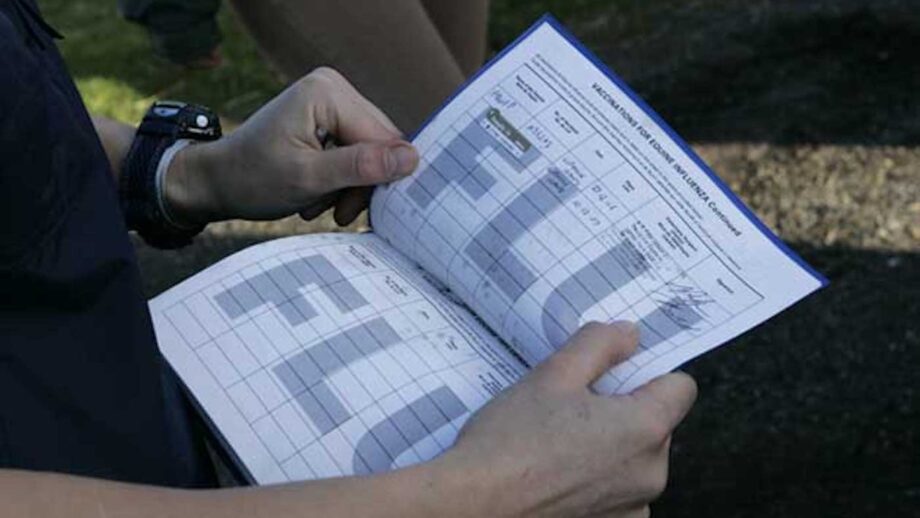
EIDS analysis of reported outbreaks highlights recent travel and lack of vaccination as the two most consistent features. Of the 116 outbreaks, 76 (66%) involved horses who had travelled before they were diagnosed, and 73 of 116 (63%) involved horses who were unvaccinated or whose vaccinations had lapsed. Only 10% of outbreaks involve vaccinated horses.
“The increasing geographical distribution of outbreaks suggests that movement-associated transmission continues to introduce infection into previously unaffected areas. Continued vigilance, prompt investigation of suspected cases and robust biosecurity measures remain essential, particularly during periods of increased horse movement and mixing,” said the spokesperson.
The British Horseracing Authority (BHA) commended the way in which a positive case in a vaccinated thoroughbred was handled last month and is urging “continued vigilance” by those working in the industry.
A horse arrived on 12 June at a yard adjacent to Mel and Phil Rowley’s licensed premises in Shropshire from the Goffs Arkle Sale in Kildare. When the infected horse arrived at the isolation yard, he was not showing any clinical signs of the virus – these developed the following evening and were confirmed by testing. He was kept in isolation, and no horses were allowed to enter or leave that yard or the licensed premises.
The BHA worked with transporters to identify other horses who travelled to Britain with the infected horse and targeted action on a case-by-case basis, depending on the level of risk. This included PCR testing and some runners being withdrawn.
Restrictions on the Rowleys’ operation have been lifted and the BHA has stressed that their proactive approach “has helped avoid what could potentially have been a much bigger and less manageable outbreak”.
Equine flu: New Forest situation
The disease is also running through the New Forest.
A spokesperson for the verderers of the New Forest told H&H the infection started in the north of the forest at Woodgreen, where the animals now appear to have recovered.
“It has steadily spread to an ever-widening area, now moving south and has reached Burley in approximately the middle of the forest. There is no reason to suppose that it won’t cover the entire area eventually,” said the spokesperson. “Veterinary advice is to leave the ponies to deal with it in their natural environment except in extreme cases. We remind riders on the open forest to stay away from forest stock, and that the infection is windblown to some considerable distance.”
Vet Alan Hough, of Celtic Equine Vets on the edge of the New Forest, told H&H on Friday (26 June) that around 10 ponies in the forest have been found dead who “were noted to have strong flu symptoms shortly before death, so the presumption is the flu did result in their death”.
He added that the vets have not been able to sample these animals yet for that to be conclusive, but are in discussion with the verderers and EIDS.
He noted that the last outbreak in the New Forest herd was 30 years ago, so the ponies have no or low immunity, and the way they live means veterinary treatments available to domestic horses are not feasible.
Mr Hough stressed this is not a case of their owners’ being at fault; rather vaccination schedules are unworkable and also chasing a sick animal into a corral with others when he is unwell is not good for his welfare or those around him.
He said that wider vaccination of the UK herd as a whole is key and encouraged governing bodies to work together and agree on six-monthly vaccinations, adding: “I think if that becomes the norm, you will have a critical number of people who have to have six-monthly, which will help drive up this level of herd immunity. Nationally we suspect only about 40% of the equine herd are vaccinated, and we need to get that nearer 75 to 80%, to try to prevent these sort of national outbreaks.
“We’ll still always have outbreaks, but they’d be very localised, just one or two horses affected. They won’t be on the scale we’re seeing at the moment.”
Equine flu: how does reporting work?
- Vet practices can report outbreaks directly through the EIDS disease reporting platform by ticking a box to confirm they have consent. Once confirmed, EIDS will circulate an International Collating Centre (ICC) report and request a TellTail text alert.
- Vet practices can also submit nasopharyngeal swabs from potential cases for complementary laboratory testing (funded by the Horserace Betting Levy Board). If a case returns a positive result under this scheme, EIDS are permitted to report it.
- Vet practices are able to sign up to these schemes by visiting: www.equinesurveillance.org
Read the latest EIDS update (25 June)
To stay up to date with all the breaking news from major shows throughout the year, subscribe to the Horse & Hound website
You may also be interested in:

‘We’re delighted to bring loyal readers this benefit’: H&H magazine subscribers get free website access
Equine flu: what horse owners need to know during the current outbreak in Britain
‘Good owners vaccinate their horses against flu for their welfare, not just to compete,’ says equine vet