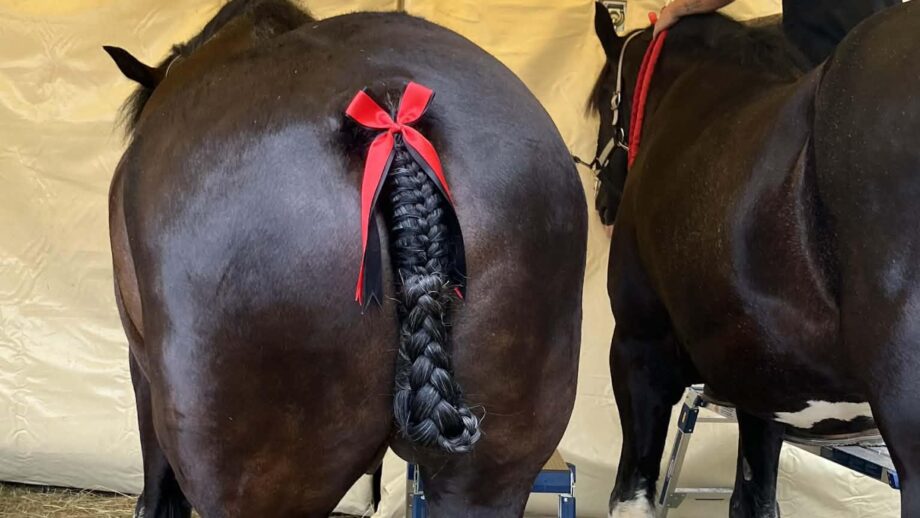
A £1,000 prize for the heavy horse with the best tail at the Great Yorkshire Show (GYS) “recognises the delicate balance between tradition, presentation and equine welfare”.
H&H reported that GYS organisers were to bring in a welfare-grounded rule this year stating that all horses must have tails. The move was a result of the number of entries in heavy horse classes with very short tail hair or shaved docks.
Now an anonymous donor has put forward the £1,000 cash prize for the heavy horse turnout classes, to go to the entry with the best turned out compliant tail.
“We are delighted that a supporter has come forward to offer such a generous prize,” GYS entries and livestock coordinator Amanda Stoddart-West told H&H.
“It is our hope that this will serve as a meaningful incentive, encouraging exhibitors to engage positively with this important progression. Change is seldom without challenge; but this award celebrates turnout that is not only impressive but responsible and functional, honouring both tradition and the fundamental principles of equine welfare.”
The rule states that all horses should have enough tail to combat flies and other insects. Tails may be plaited or wrapped “as appropriate” and some allowance will be made for horses’ age as “we recognise that tails may differ greatly in length and fullness depending on age of the animal and the growth stage of the tail”.
“Complete clipping/trimming of the hair of the dock in any horse/pony breed/type will not be permitted,” the rule states. “Shaping, pulling or thinning the upper parts of the dock hairs is permitted, leaving sufficient longer tail hair for adequate function.”
Great Yorkshire Show tail prize
Should there be a tie for the best compliant tail, the prize will be split.
Honorary show vet Julian Rishworth, who will be the judge for the prize, told H&H that in the wake of other welfare-based rules brought in by the GYS, covering issues such as rider size, whiskers and trimmed ears, concerns were raised about some of the ways tails were being managed.
“In particular, how to ensure that animals prepared for the show ring were not then compromised, in any way, for the period when they are not being shown,” he said.
“These situations are complex, steeped in tradition; practices that have evolved for a host of reasons. Similar to the whiskers issue, where people just removed them because that was what was done, it turns out that not removing them does nothing to detract from the overall aesthetic but allows the horse to retain an essential part of its ability to perceive its immediate environment around its muzzle.
“Likewise the tails issue, there is a host of justifications given for why things are done as they are, most of which don’t really stand up to proper scrutiny. This issue represents a significant piece of change management to alter some very entrenched views. Change is inevitable but has to be in a way that preserves what’s important about showing these horses while ensuring there aren’t inadvertent or deliberate adverse effects of normal functionality for the horse.”
- To stay up to date with all the breaking news from major shows throughout 2026, subscribe to the Horse & Hound website
You may also be interested in:

HOYS removes qualifiers after show stands firm on its rider-size rule

‘All horses must have tails’: major show brings in new rule on welfare grounds

Five years on, show’s rider size policy is making change

‘Bloody hell!’ Horse and rider clear huge oxer as it blows down — with a Pimm’s gazebo flying overhead
Subscribe to Horse & Hound magazine today – and enjoy unlimited website access all year round