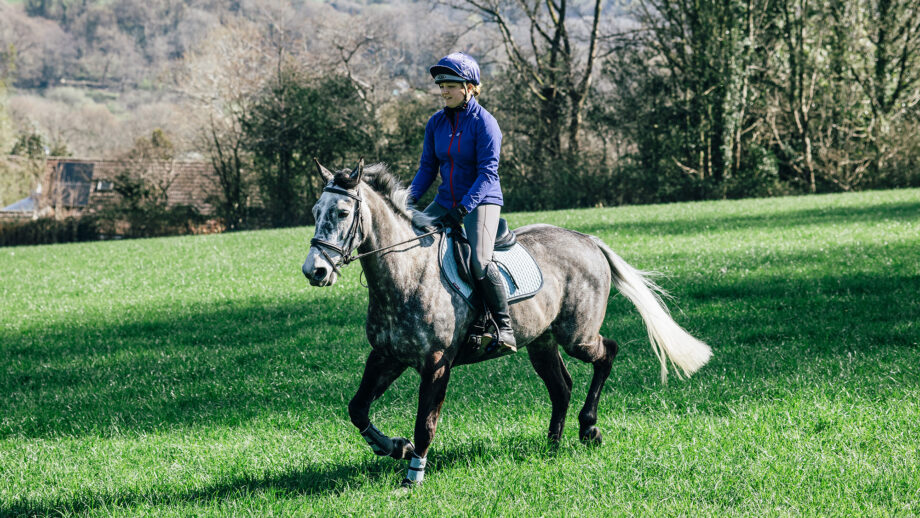
It’s all too easy when out hacking to do long stretches in one pace. By mixing it up and incorporating transitions, this will ensure your horse is listening to your aids and engaged, and improve your flatwork while you’re at it.
If you’re hacking out in company, you can still do this flatwork exercise. Count strides together and make it fun!
Aims
- Improve your accuracy in making upward and downward transitions
- Be disciplined about making the transition at the intended moment, rather than drifting into the new pace
- Ensure your horse is listening to you in a distracting environment, and that your aids are clear
The setup
No setup required. You can do this in an arena, field or out hacking.
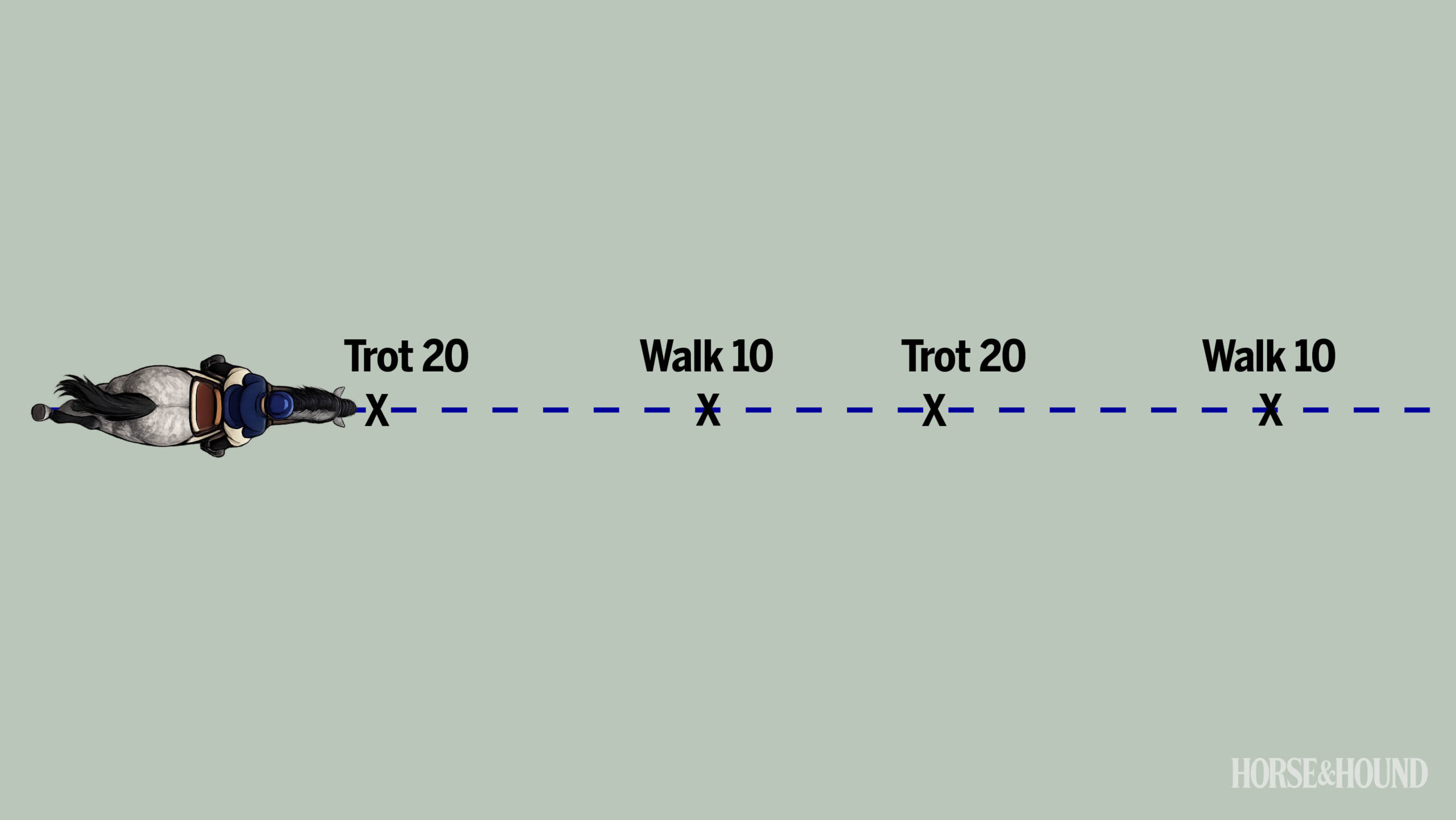
This is an example structure – you can vary the striding and paces to include canter and halt, according to what you want to practise. The important thing is to stick to what you’ve set out to do.
How to ride the exercise
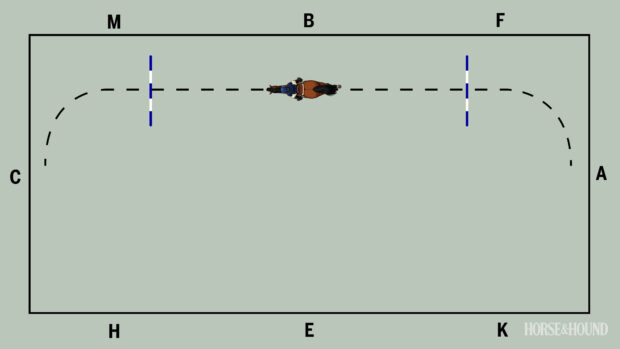
- Decide on a sequence of transitions that you will stick to. For example, trot 20 strides, walk 10 strides, trot 20 strides, walk 10 strides. You can also include canter and halt.
- Be disciplined about when the transition happens, rather than drifting into walk or trotting two strides after you intended. Prepare early, using one or more half-halts, so that your horse is ready, then execute the transition at the designated point.
- If you’ve nailed the straightforward transitions, work on transitions within the gait, for example lengthened strides, free walk to medium walk, collected trot to working, or skipping a gait, like halt to trot or walk to canter and back again.
You may find your horse is more easily distracted out hacking than he would be schooling in the arena, so this is a great way to keep him listening.
Tips and troubleshooting
1. Lack of response into trot
Your horse does not have enough impulsion. Transitions are an excellent remedy for helping the horse be sharper off the leg, so try doing more frequent transitions. Also use transitions within the gait to build responsiveness and engagement.
2. Falling into walk
This reveals a lack of engagement, and could also mean the rider is leaning forward or collapsing through their core into the downward transition. Wrap your leg around your horse’s belly, close your thighs, sit up tall and maintain a consistent contact to keep the quarters engaged as he steps forward into walk.
3. Horse hollows
Your horse may hollow its back and lift his head as you make a downward transition. This can occur when the rider blocks with the reins. Soften your hand slightly during the transition, without losing the contact completely, to allow the horse to lift its back and step under.
- For more expert training advice from top riders and coaches, subscribe to the Horse & Hound website
You might also enjoy reading:
Hone your horse’s responsiveness with this super-simple exercise you can practise anywhere
9 ways to train your horse out hacking for success on competition day
How to ride better downward transitions for top marks with advice from an Olympic medallist
Develop your core strength and balance by practising these positions in the saddle

Subscribe to Horse & Hound magazine today – and enjoy unlimited website access all year round