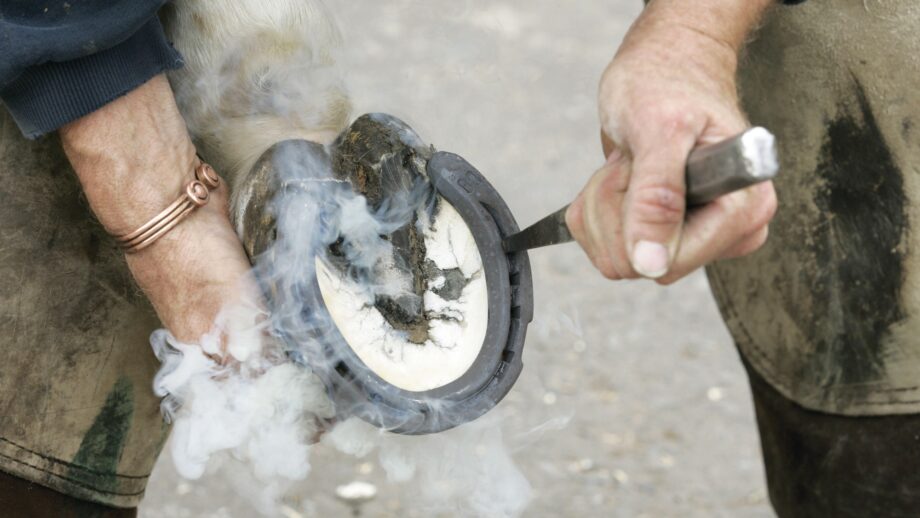
A nurse is aiming to raise awareness of and encourage research into the possible risks of hoof smoke inhalation among farriers and equestrians.
Lisa Nealen is an orthopedic scrub nurse with extensive expertise in exposure to surgical smoke. This is the smoke that can be created during certain types of surgery in hospitals, and which has recognised health risks.
Mrs Nealen, who is also a horse owner, started looking into comparisons between surgical smoke and the hoof smoke produced when hot-shoeing horses.
She said she sought guidance from the Farriers Registration Council, and has worked with four master farriers, and that her campaign has also had interest from farriers in other countries.
She found specific research involving hoof smoke and any effect it has on farriers is lacking, but that there are studies showing harmful chemicals present in surgical smoke and smoke from dehorning cattle.
Mrs Nealen told H&H that her intention is not to alarm but to raise awareness of potential risks and encourage informed decision-making among farriers and horse owners, through the EquiSmoke Awareness campaign.
She said simple, practical measures that farriers and owners could think about that may prevent exposure are working in open or well-ventilated spaces and thinking about wind direction.
“My aim is to create general awareness for farriers, and for owners as well,” she said. “Help your blacksmith out: find somewhere where you know your horse is going to be downwind, so the smoke gets blown away.”
“I don’t want to be seen as the enemy, I’m not trying to preach; this is simply about creating awareness and supporting long-term health and wellbeing.”
She also recommends regular health checks and appropriate personal protection equipment (PPE) for farriers, including gloves, eye protection and – when feasible – a properly fitted respirator that meets at least FFP3 standard. She has had reaction from farriers saying that level of PPE is not always practical – and she stresses that she is not trying to tell anyone what to do, but rather to share information so people can make their own informed choices.
Farriers’ views on hoof smoke risks
Farrier Danny Bennett told H&H this is an important topic.
He added that farriery is a dangerous job, giving examples of the serious injuries that can happen when shoeing horses, adding: “But it’s the long-term effects on the body that a lot of people don’t take into consideration.”
“When you’re 30, 40, and think ‘I feel fine’ – yes, ok, but how’s your breathing going to be at 60, 65, when you actually want to retire?” he said.
“I think there’s a lot of farriers who haven’t even thought about it, let alone the horse owners, yard owners, and everyone else.
“Every farrier knows farriery is a high risk job. You’re dealing with unpredictable large animals, but this is [potentially] going to creep up on you as a long-term thing, and I think that has to be reflected in our pricing.”
Master farrier Liam O’Hara added that as farriers and horse owners “we are all aware of the injury and risk undertaken when shoeing a horse”.
“Cuts, burns, kicks, bites and hammered thumbs are all part of the short-term aches and pains of being a farrier. But what about the long term?” he told H&H.
“The point of raising awareness isn’t to scaremonger, but to help farriers, owners and paraprofessionals be aware of the risks involved. So where possible please be mindful and help your farrier where you can.”
- To stay up to date with all the breaking news from major shows throughout the year, subscribe to the Horse & Hound website
You may also be interested in:

Genius! Farrier designs aluminium door to aid horse’s recovery from tumour

Is now the time for the barefoot trimming industry to be regulated?
Hoof boots: what they’re for, who they suit, and how to get the fit right

‘We’re delighted to bring loyal readers this benefit’: H&H magazine subscribers get free website access