What makes a former cabinet minister with almost no personal experience of trail-hunting take up its cause? H&H hunting editor Catherine Austen explains all...
“It’s our way of life,” says Sir Ben Wallace. “The rural communities are under a whole range of assaults and at the heart of it, we survive as communities because we tolerate each other.
“That’s the difference between us and the ‘London bubble’ – we don’t all shoot and we don’t all hunt, and we don’t all play football and we don’t all play rugby, but we have always accepted each other’s pastimes and how other people live.
“It is fundamental to the freedom that I think is so important to this country.”
That is the essence of this distinguished former cabinet minister’s answer when asked why he is chairing Future for Hunting, the joint initiative between the British Hound Sports Association and the Countryside Alliance, to oppose the current Government’s manifesto commitment to ban trail-hunting.
There are, after all, a great many other things after 19 years as an MP and a long, highly respected tenure as Secretary of State for Defence he could be doing that would be much more attractive and much less controversial.
But Sir Ben is passionate about rural Britain and the quirks and variety of our countryside, and believes that if he can help see off this singularly illiberal and ill-thought-out attack on its people and their pastimes, then he should.
“After this, it’ll be shooting and after shooting, it’ll be racing,” he says. “I think it’s really about a line in the sand and I’m just not prepared to abandon a whole group of people, some of whom I know very well, and run for the hills.”
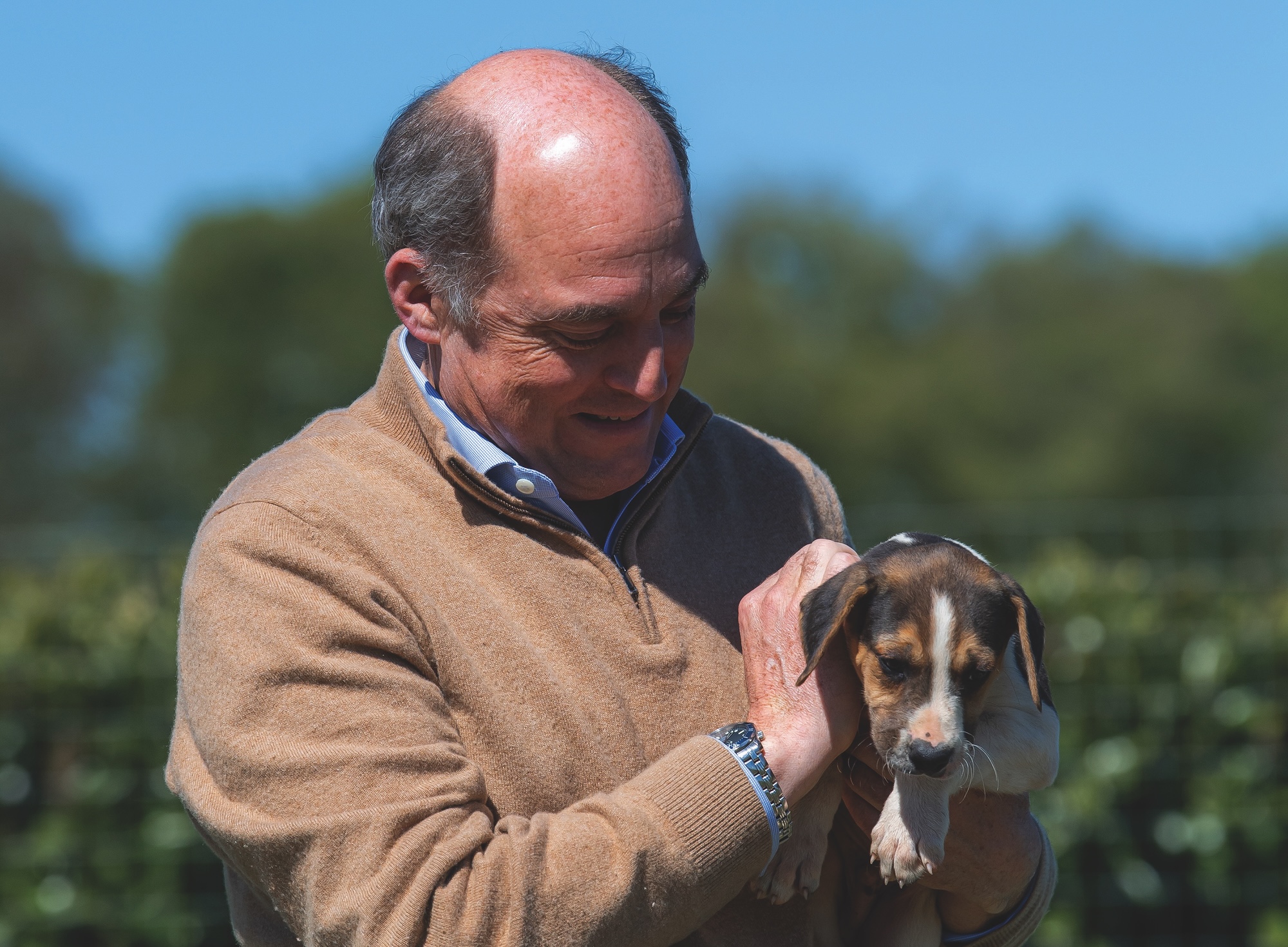
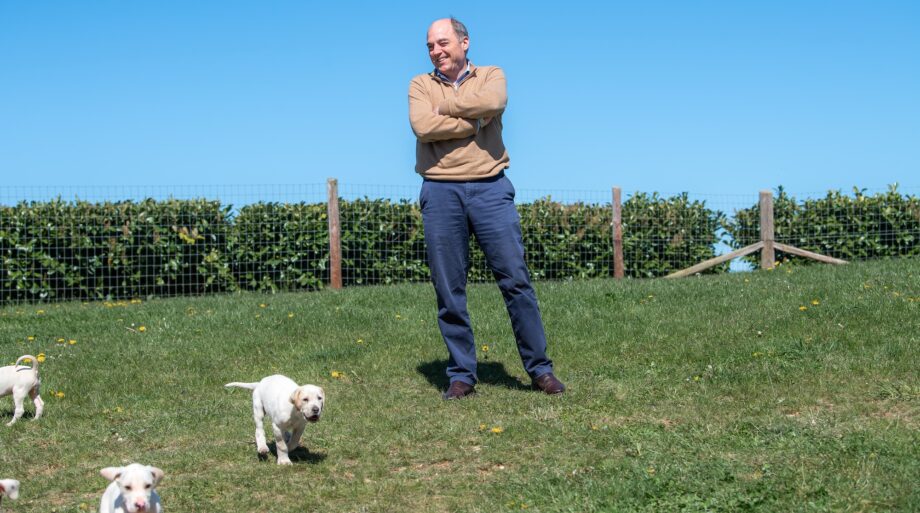
Sir Ben meets a Heythrop hound puppy. Credit: Daniel Hague
Sir Ben Wallace: “A man of the countryside”
Sir Ben says he has probably only been hunting on a horse a handful of times – he did beagle at Millfield School and at Sandhurst – but he was brought up in the village of Ditcheat.
This village in the Blackmore and Sparkford Vale country is where Paul Nicholls trains, is home to the Barber and Cobden families, and he and his sister were taught to ride by former Heythrop master and huntsman Charles Frampton’s mother.
He married into a Cheshire hunting family and has plenty of friends who hunt all across the country.
He’s a man of the countryside whose home, when he’s not in London or whizzing about the world, is in Cumbria, home of the Fell packs and his local hunt, the Vale of Lune Harriers.
After all, we have a surfeit of hunting knowledge between those fighting for our future – we don’t need that from Sir Ben; we need political acumen, experience and contacts.
He says: “I’m not trying to be the face of this campaign. What matters is that I use my political experience and whatever capital I have by going to see members of the Government and saying, ‘Do you really want this fight? This will be messy – do you really want it?’”
We are about two-thirds of the way through the consultation period that the Government announced on 26 March and which ends on 18 June.
Future for Hunting is pumping out communications to hunting communities, asking them to write to their MPs, to respond in various different ways to the consultation process, while submitting formal and detailed responses on our behalf.
Meetings are being held with key political figures, such as animal welfare minister Baroness Hayman, and funds are being raised for media campaigns and legal work.
“The Government don’t know how to ban a legitimate sport”
What happens when the consultation period ends?
“So the Government made its pledge to ban trail-hunting. What is absolutely clear is they don’t know how,” he says. “They don’t know how to ban a sport that is perfectly legitimate and which came out of their own Act [the Hunting Act 2004]. I think we have to persuade the Government now.”
He explains that sometimes governments know what they want to do once the consultation process is over, and act immediately.
“But also governments can use consultations to say, ‘This is all a bit difficult; we’ll push it into the long grass – this is easier said than done.’ That’s why governments don’t always fulfil their manifesto commitments – because it’s much harder than they thought when they were in opposition.
“It could be that at the end of this consultation, they don’t come back with anything for a year. It could be that it stalls if Keir Starmer falls under the political bus, they have a new leader, things freeze and priorities change. It could be that nothing happens at all – but it is much more likely that this Government is going to try to find some red meat to throw to the back benches, and this could be it.
“We’ll see what happens, but what’s really important is that the rural community says loud and clear to the 50 Labour MPs in rural seats that this shouldn’t be their priority right now. ‘You want to ban perfectly legitimate trail-hunting? You don’t seem to want to fix rural poverty, rural transport for schools, rural crime, pot holes… Is trail-hunting really your top priority right now?’”
Bringing the countryside together
Desperate as the hunting community is for some clarity about its fate, we’ve got to be patient, do what we are asked, reply to the consultation, lobby MPs and, importantly, unify as members of the countryside.
“We’ve got to bring the countryside together – it hasn’t always been easy in the past to get the major rural organisations to come together and be stronger in speaking out on a whole load of policy initiatives that this Government has, whether it is hunting, regulation on shooting, farm subsidies, inheritance tax and so on.
“We have to show the Government there is real political risk in what they are doing. If you view this as another attack on Britain’s identity, there’s a lot of jeopardy within Labour heartlands in that. What Jeremy Corbyn got so wrong is that outside of the London bubble, most Labour voters are deeply patriotic.
“And the other part of it is that rural people are predominantly the most law-abiding part of society, but we are now seeing a form of two-tier policing that when I was a security minister, we wouldn’t and shouldn’t have tolerated. There have been numerous failed prosecutions – there was one recently where the judge not only castigated the police, but also criticised them for falsification of evidence.
“Masked-up saboteurs – convicted bombers, people with ABH and GBH convictions – are aggressively bullying people on hunts and out in rural communities without being told to unmask. Whose side is the Government on? It’s an affront to our decency and our values. Policing should be without fear or favour.”
“We stand together or hang together,” says Sir Ben Wallace
There is a lot going on behind the scenes that cannot, publicly, be explained in detail; playing poker and telling your opposition exactly what cards you hold would be pretty stupid. This is also not the time to rake over the coals of the past regarding former strategies or in-fighting within the hunting community itself.
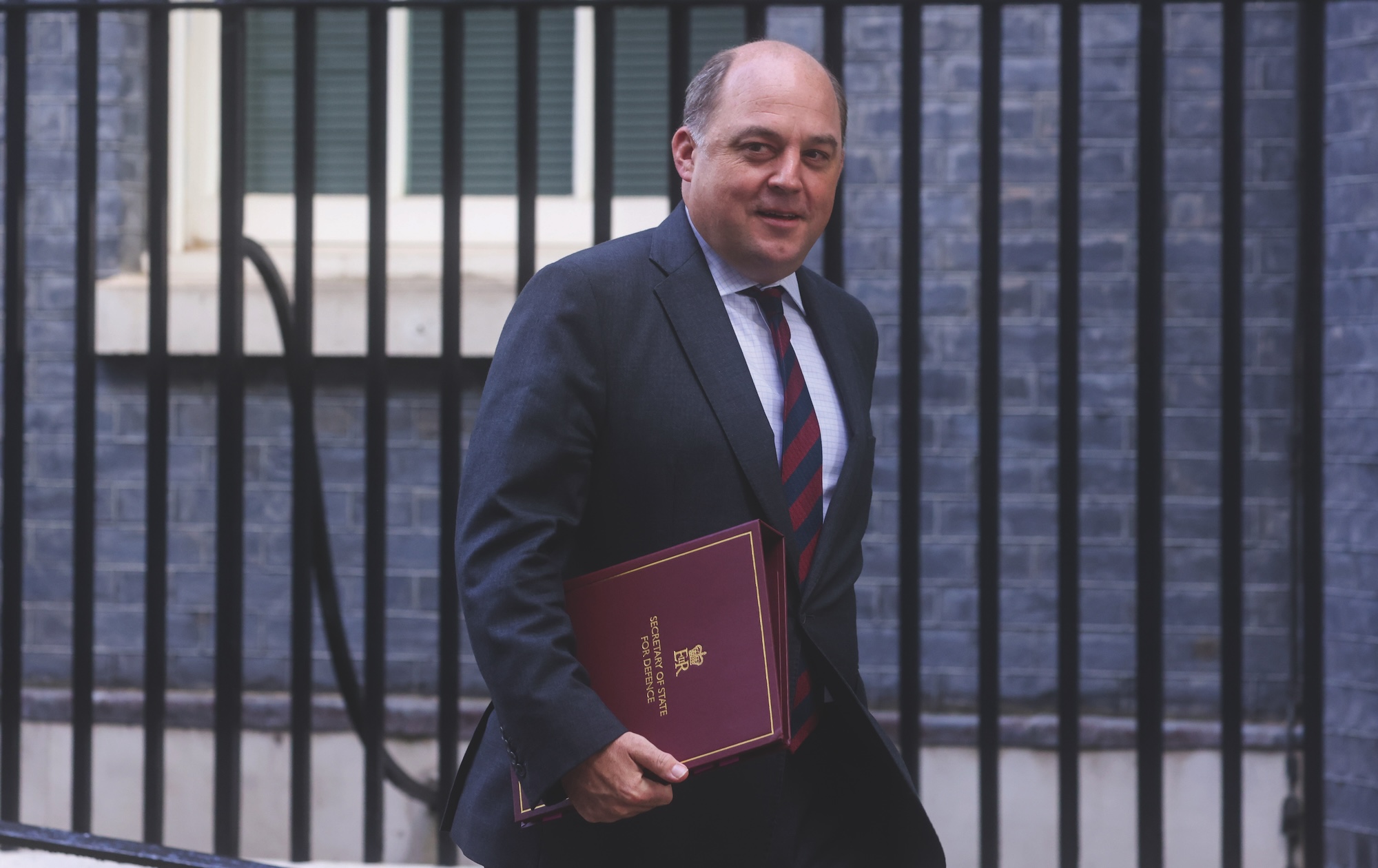
“I know how Government works”: Sir Ben Wallace plans to use his political acumen to fight Labour’s manifesto to ban trail-hunting. Credit: Getty Images
“I know how the Government works and, after many years of representing people in North Lancashire, I know that rural communities are being left behind. So I bring that [as Future for Hunting chairman], but I also don’t have favourites. I’m not sitting here with a load of history of one side of the argument [between factions in the sport] or fighting for one group within it. I’m only interested in preserving this for our grandchildren, in preserving the infrastructure.
“This Government isn’t going anywhere for three, four years, maybe. It might have a different prime minister, but I served five prime ministers as a minister.
“The reality is that at the last general election, the party with the manifesto commitment to ban trail-hunting got elected with a huge number of MPs. I can’t change that – none of us can. What we can try to do is to make sure the Government sees that this isn’t something it wants to have a big, ugly fight about. We’ve got to get to the next election – it’s as simple as that.”
Sir Ben comes across well. He is frank, direct, down-to-earth and engaging. He clearly has the appetite for this political battle and the ability to lead. If he can bring all the various countryside factions – the NFU, British Association for Shooting and Conservation, The National Gamekeepers’ Organisation, racing, those that represent the horsey community – together to oppose a trail-hunting ban because of a wider, pressing concern about how rural issues are treated, then we have real power to make the Government actually listen to us.
“We stand together or hang together,” he says, and he’s right.
- To stay up to date with all the latest news on the Government’s consultation on how to ban trail-hunting, subscribe to the Horse & Hound website
If you enjoyed reading this article, you may also enjoy…
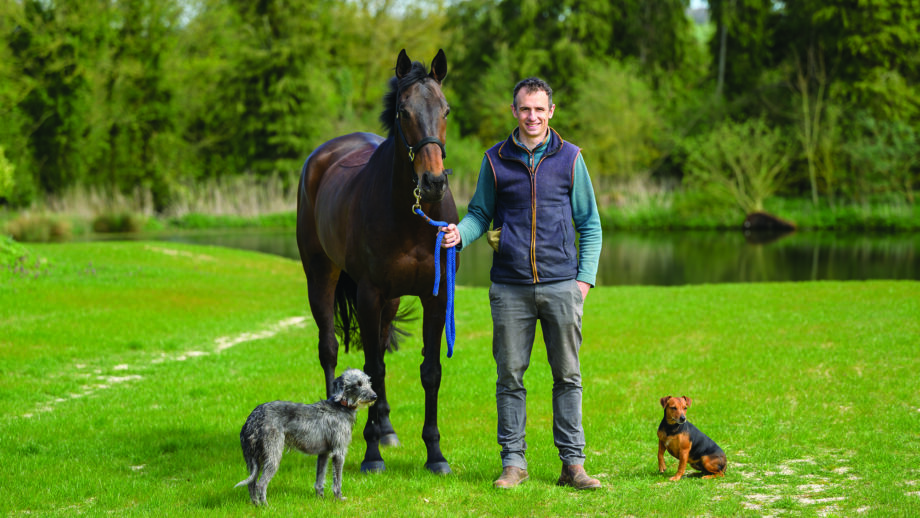
‘Hunting has given me a no-nonsense approach’: the amateur and trail-hunting fanatic taking on his first Badminton on a cheap ex-racehorse
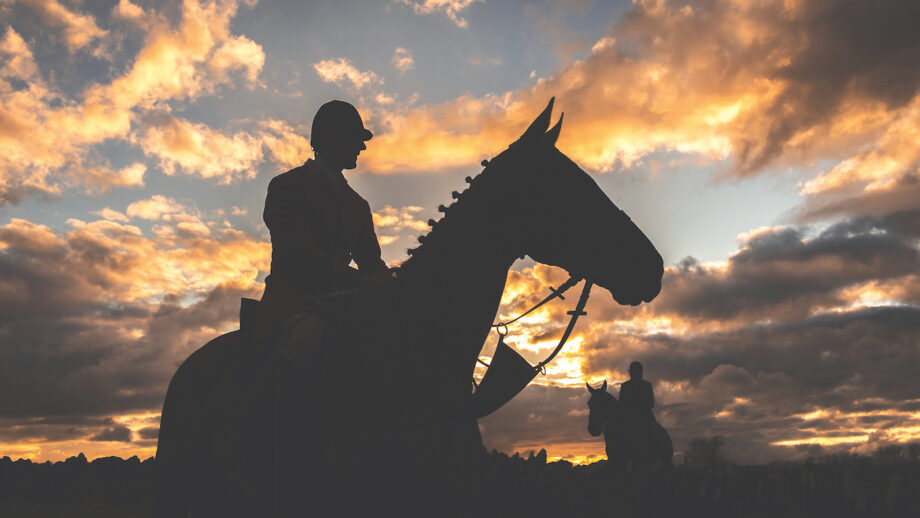
Time to stand up and be counted as consultation opens on how to ban trail-hunting

‘An all-out war on the countryside’: Government accused of ‘warped priorities’ as trail-hunting ban consultation opens

Government plans to ban trail-hunting will ‘cause even more suffering’ say experts

‘We’re delighted to bring loyal readers this benefit’: H&H magazine subscribers get free website access