In dressage, first impressions count. From the moment you turn onto the centre line, the judge begins assessing the quality of your horse and the harmony of the partnership. A straight, balanced and confident entry immediately suggests organisation, attentiveness and correct basics, setting the tone for the entire test.
I created this polework exercise to help you practise riding the perfect centre line.
Aims
- improve balance in the turn onto the centre line
- improve accuracy and straightness of centre line
- improve your horse’s engagement and suppleness
The set up
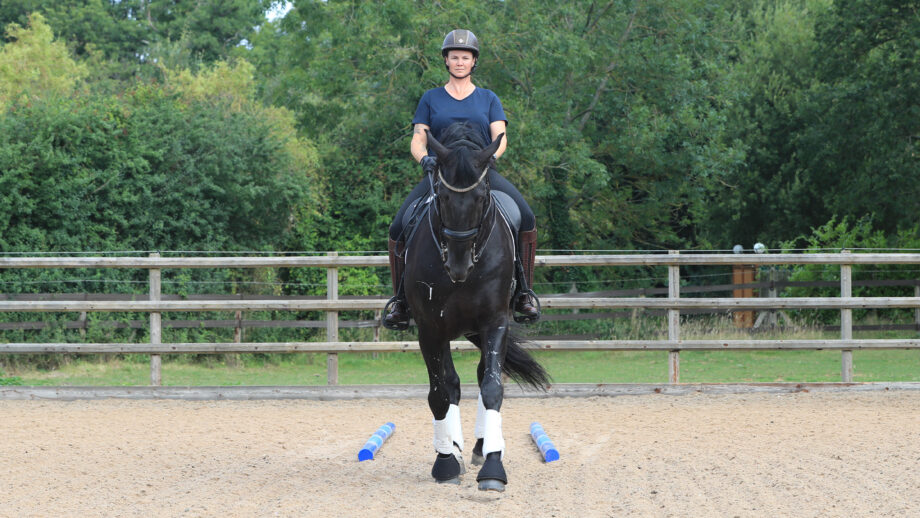
You need: two poles and two cones
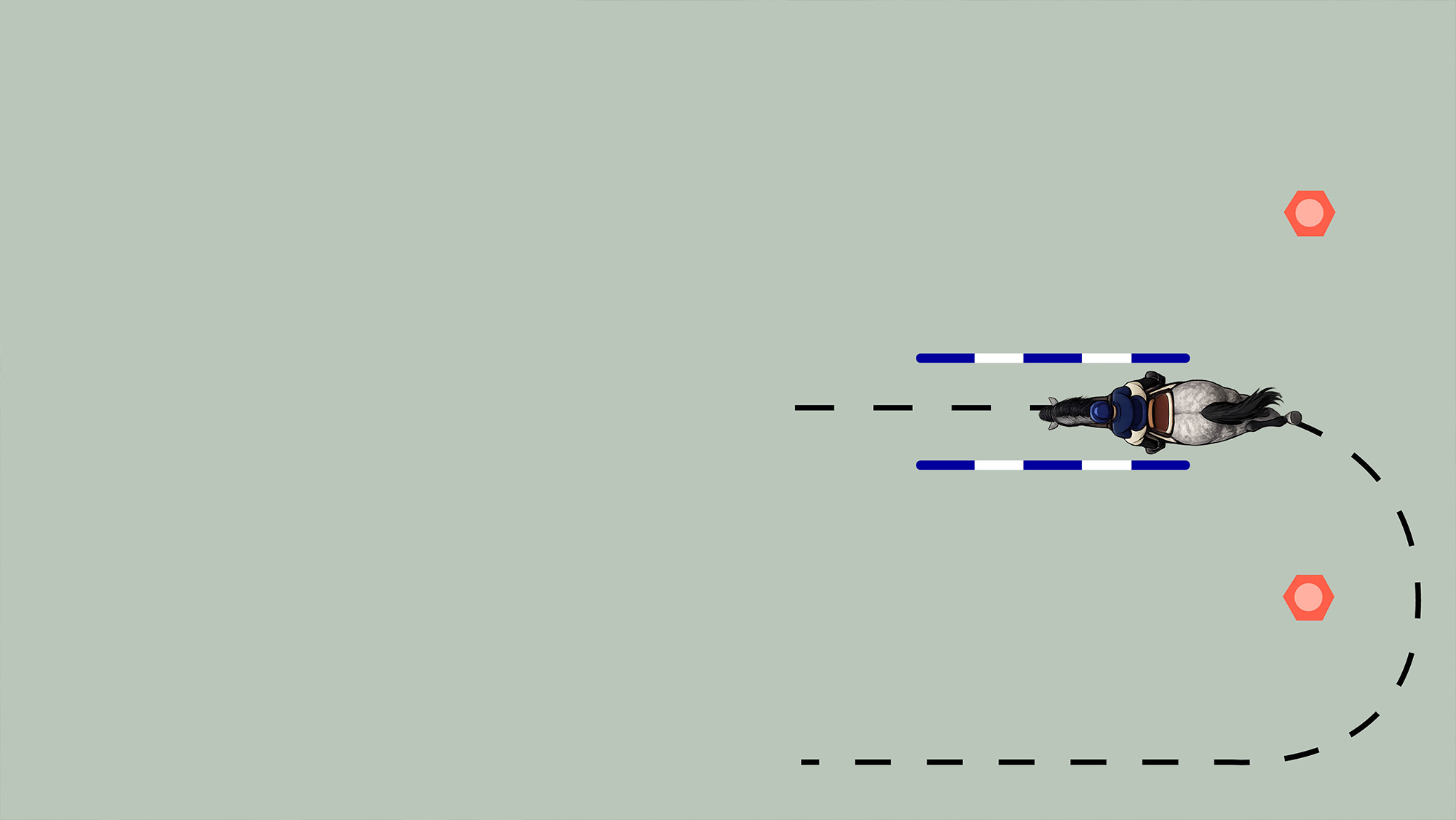
Setup: Lay the pair of poles as a tramline either side of D, and place the cones on the inside track of the short side at the ¼ and ¾ lines.
How to ride the exercise
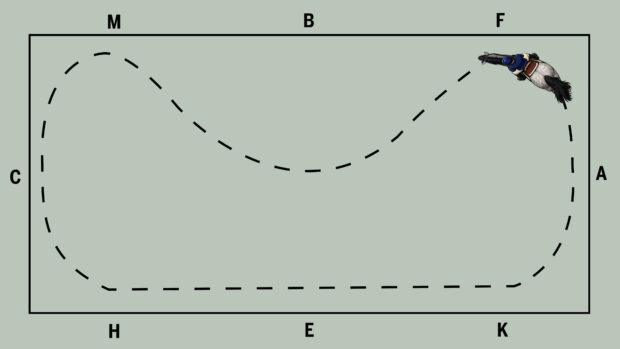
1. Starting from the corner marker, think of the turn as half of a 10-metre circle. This encourages a smoother curve and helps maintain suppleness. Use the cone as the halfway point of your turn, creating a symmetrical curve either side of it.
2. Use the pair of poles as a visual guide for riding forward from the curve and straight onto the centre line.
3. Look up towards the C marker and ride forwards towards it.
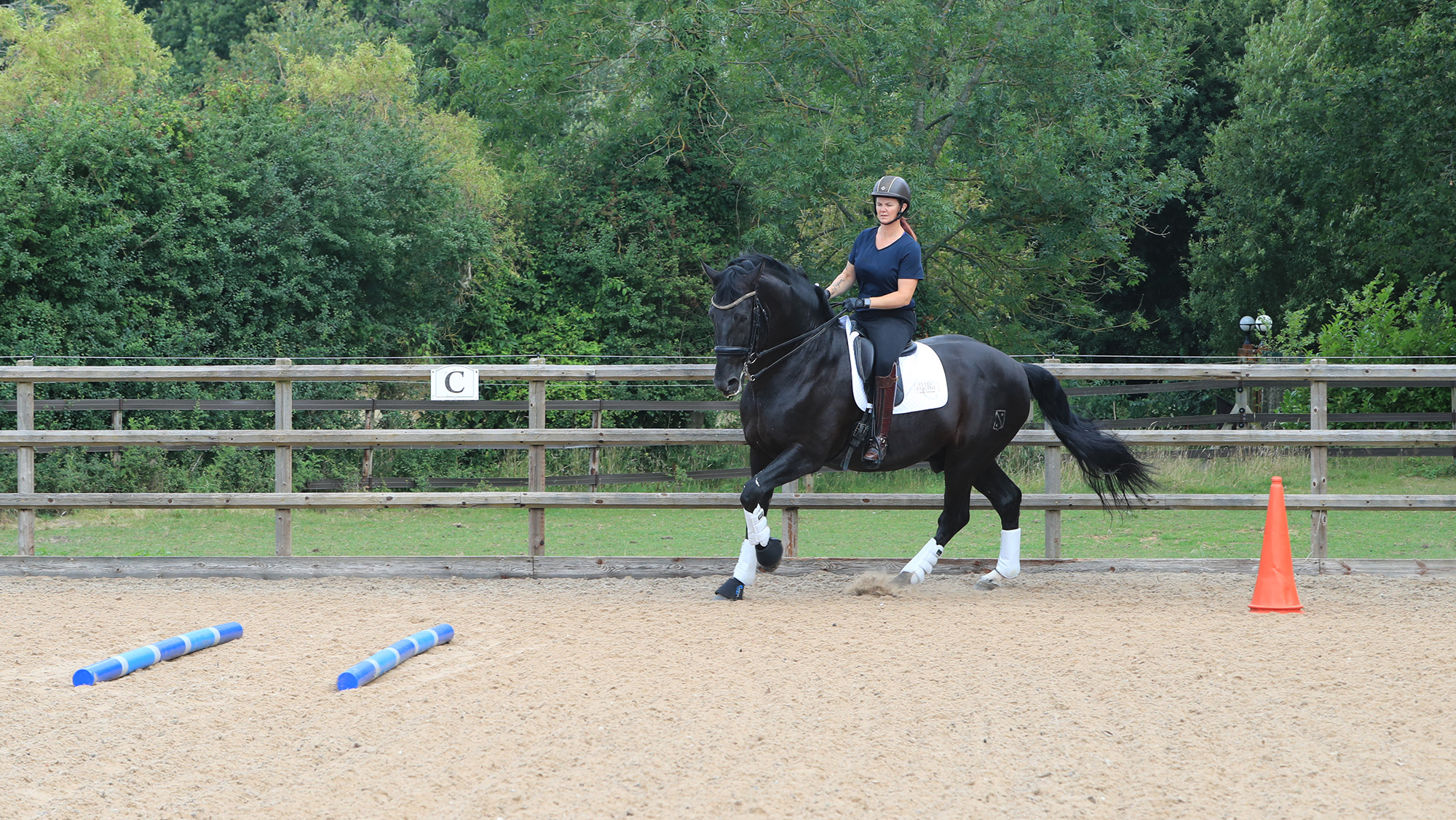
Use the cone on the ¼ line as the halfway point of your turn.
Pitfalls to avoid
1. Loss of balance in the turn
You have a crucial role in maintaining balance through the turn. Stay level through your shoulders, turning from the waist, and allow the weight to go down onto your inside seatbone without tipping your hips.
Use your outside rein and upper leg to support the horse’s outside shoulder, while the outside lower leg prevents the haunches from drifting. The inside leg at the girth maintains activity and bend. Focus on guiding your horse’s shoulders and hindquarters onto the centre line, rather than simply turning the head.
2. Loss of straightness on the centre line
True straightness means the hind feet follow the forefeet, with energy travelling forward evenly. For the rider, this requires even rein contact, softly supporting legs, and a centred, balanced seat. Focus on your hips staying level and square, a crooked horse will try to shift the riders weight or push one hip
forwards.
3. Drifting off the centre line
If your horse drifts, avoid overcorrecting with the lower leg as this often results in them simply going crooked or drifting the other way. Instead, keep your hips square, upper legs steady, and hands even. Focus on keep the upper leg and upper arm closed, potentially with slightly more pressure on the side they want to drift.
- Enjoyed reading this? For more expert training advice from top riders and coaches, subscribe to the Horse & Hound website
You might also enjoy:
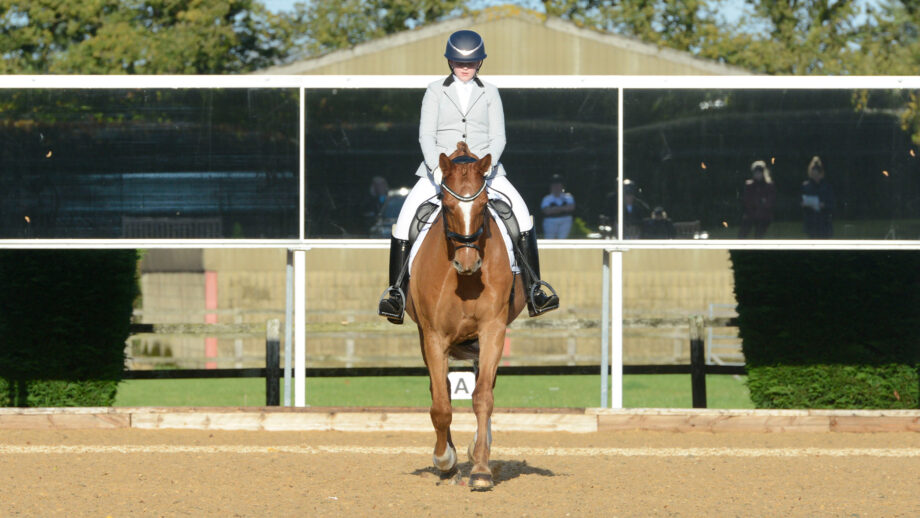
How to ride the perfect centre line, with tips from Olympic medallist Laura Tomlinson

#SundaySchool: Anna Ross — how to improve your horse’s general straightness and balance
The grand prix dressage rider offers some tried-and-tested exercises for straightening the crooked horse

Why straightness is the key to effective dressage training
Most horses are born with a preference to one side. Andrea Oakes investigates how you can combat this, and the
Subscribe to Horse & Hound magazine today – and enjoy unlimited website access all year round