An annual assessment of non-infectious diseases that affect UK horses is planned after a successful two-year pilot scheme.
Under the 10-year Equine Health and Welfare Strategy (EHWS) to improve welfare, the UK’s five main equine charities set out to ascertain whether data on problems like parasites, colic and lameness could be collected.
The results were processed by the Blue Cross.
Rosie Mogford of the Blue Cross told H&H: “For two years we have looked at the diseases affecting horses in UK rescue centres. And we can already see trends and changes.
“A survey of 1,755 horses is not going to give a 100 per cent accurate picture, but is a start.”
Professor Josh Slater, who heads the EHWS, said: “This is one of the most exciting projects around.
“If you don’t know how frequently the average horse is lame, or what the incidence of colic is, you can’t decide a normal level of welfare.
“Present disease surveillance in the UK revolves around exotic ones like West Nile Virus and African Horse Sickness, and infections such as strangles. This leaves a gap in our knowledge.”
He hopes that the annual report can be used to target research and veterinary training.
The EHWS is now keen to involve groups like riding clubs, yards and agricultural colleges, and a website where individuals can log their horses’ maladies is planned for 2010.
The charities monitored the health of their horses during May, June and July, from foals to 40-year-olds, new rescues to the fully recovered looking for rehoming.
Lameness was the biggest problem in 2008, with obesity and eye conditions next.
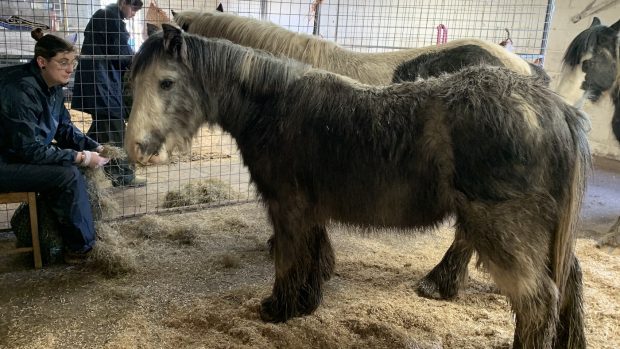
But in 2009, while lameness was again the most significant concern, the number of horses with skin parasites had increased and there were a large number of underweight horses.
“This could be linked to the increasing numbers of neglected horses being taken in by charities under the powers of the new Animal Welfare Act,” said Blue Cross spokesman Laura Dobson.
Lee Hackett, welfare spokesman for the British Horse Society, said: “This information could be particularly useful in targeting disease prevention and education. We really want to see this idea develop.”
• If your yard would like to take part in the 2010 survey, tel: 01993 825607
This article was first published in Horse & Hound (1 October, ’09)